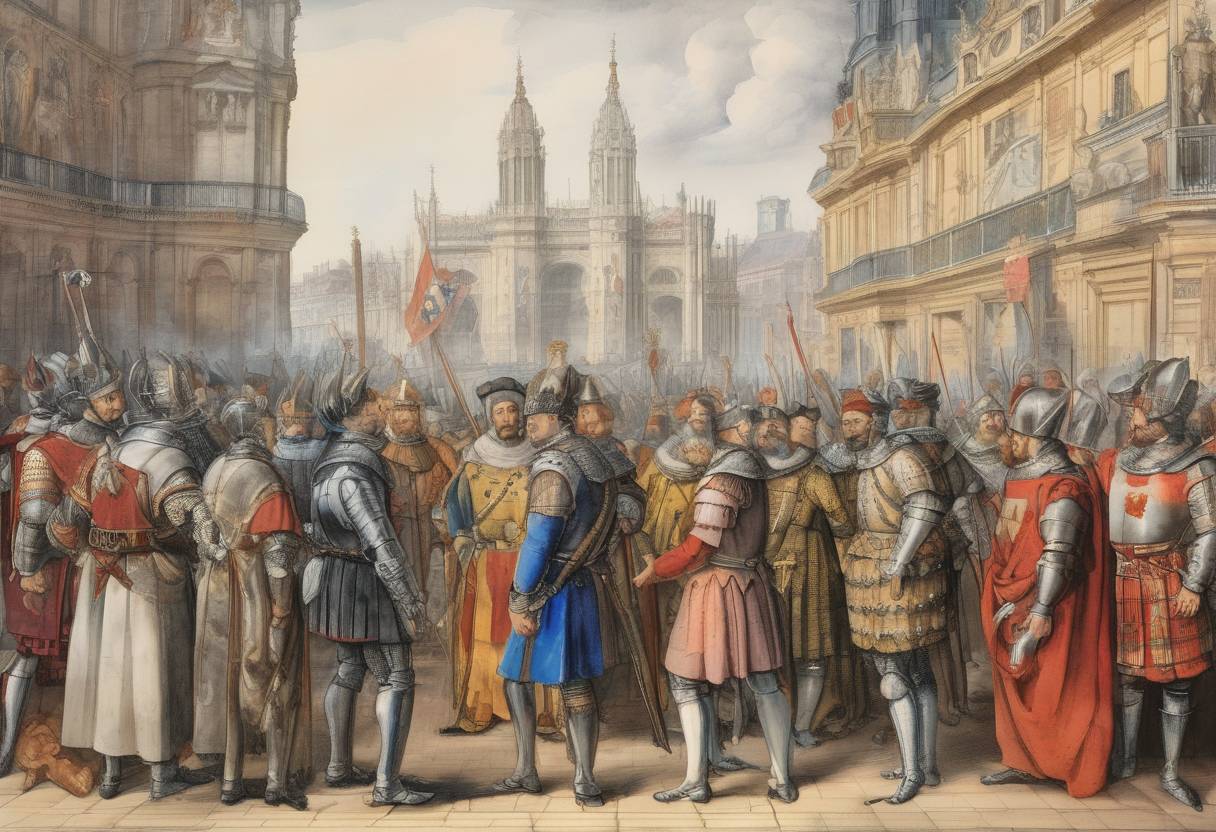
Treaty of Madrid (1526)
The Treaty of Madrid was signed on January 14, 1526, marking a significant moment in the Italian Wars, a series of conflicts involving major European powers over control of territories in Italy. This treaty followed the decisive defeat of Francis I of France by the forces of Charles V, Holy Roman Emperor, at the Battle of Pavia on February 24, 1525.
Context and Background
Battle of Pavia (1525): The battle was a critical engagement in the Italian Wars, where the French army was decisively defeated by the Imperial forces of Charles V. Francis I was captured and taken prisoner, a major blow to French ambitions in Italy.
Francis I’s Captivity: Following his capture, Francis I was held in Madrid, where he faced immense pressure to negotiate terms for his release. His captivity was a significant leverage point for Charles V.
Terms of the Treaty
Cession of Burgundy: One of the most significant terms of the treaty was the cession of the Duchy of Burgundy to Charles V. This was a substantial territorial loss for France and a gain for the Habsburgs.
Renunciation of Claims: Francis I was compelled to renounce all claims to territories in Italy, Flanders, and Artois, effectively ending French ambitions in these regions.
Marriage Alliance: The treaty included a proposed marriage between Francis I and Charles V’s sister, Eleanor of Austria, to strengthen ties between the two powers.
Hostage Exchange: As part of the agreement, Francis I’s two sons were to be held as hostages in Spain to ensure compliance with the treaty terms.
Aftermath and Consequences
Francis I’s Release: Following the signing of the treaty, Francis I was released from captivity in March 1526. However, the terms of the treaty were highly unfavorable to France and were seen as humiliating.
Repudiation of the Treaty: Upon his return to France, Francis I repudiated the treaty, claiming it was signed under duress. This repudiation led to the resumption of hostilities between France and the Habsburgs.
League of Cognac: In response to the treaty’s terms, Francis I formed the League of Cognac in 1526, an alliance with other European powers, including the Papal States, England, and several Italian states, aimed at countering Habsburg dominance in Italy.
Historical Significance
The Treaty of Madrid is a pivotal example of the intense rivalry between the Habsburgs and Valois France during the Renaissance. It highlights the complex interplay of diplomacy, warfare, and personal ambition that characterized European politics in the 16th century. The treaty’s failure to bring lasting peace underscored the ongoing struggle for supremacy in Europe, setting the stage for continued conflict in the Italian Wars.