Disbandment of the Spanish Inquisition - July 15, 1834
1834 · Madrid, Spain
The Spanish Inquisition is officially disbanded after more than 350 years of religious persecution and trials.
September 16, 1498
Tomas de Torquemada, the first Grand Inquisitor of the Spanish Inquisition, died.
Ávila, Spain | Spanish Inquisition
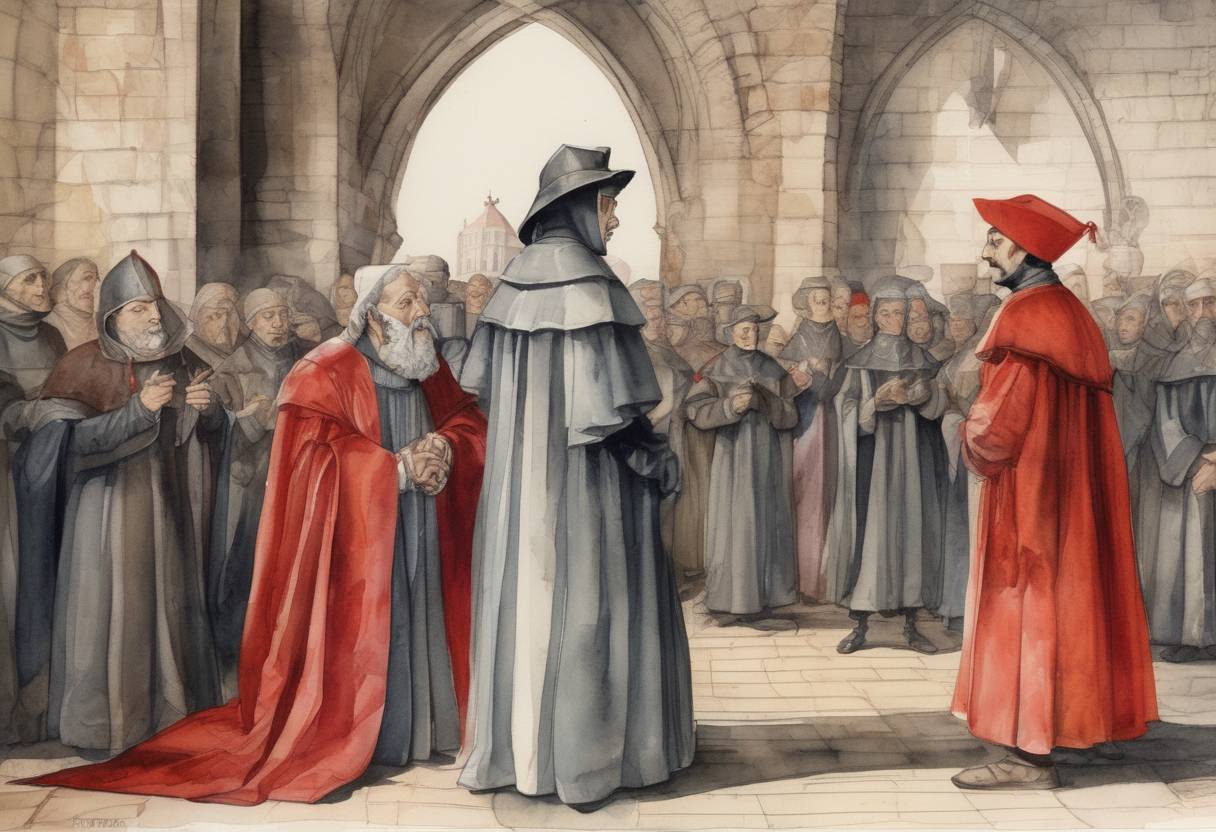
Tomás de Torquemada, a name synonymous with the Spanish Inquisition, died on September 16, 1498. His life and actions left a profound impact on Spanish history and the Catholic Church. Here is a detailed account of his life and the significance of his death.
Tomás de Torquemada was born in 1420 in Valladolid, Spain. He was a member of a converso family, meaning his ancestors were Jewish converts to Christianity. Torquemada joined the Dominican Order and quickly rose through its ranks due to his devout nature and administrative skills.
In 1483, he was appointed as the first Grand Inquisitor of the Spanish Inquisition by King Ferdinand II of Aragon and Queen Isabella I of Castile. This appointment marked the beginning of his influential and controversial role in Spanish history.
As Grand Inquisitor, Torquemada was tasked with rooting out heresy and ensuring the orthodoxy of Catholicism in Spain. His tenure was marked by:
Establishment of Procedures: Torquemada established the procedures and protocols that would define the Inquisition, including the use of tribunals and the infamous auto-da-fé, public penance rituals for those accused of heresy.
Persecution of Conversos and Jews: He was instrumental in the persecution of conversos and Jews, culminating in the Alhambra Decree of 1492, which ordered the expulsion of all Jews from Spain unless they converted to Christianity.
Use of Torture and Confiscation: Under his leadership, the Inquisition employed torture to extract confessions and confiscated the property of those found guilty, which funded the Inquisition’s activities.
Torquemada died on September 16, 1498, in Ávila, Spain. His death marked the end of a significant chapter in the Spanish Inquisition, but his policies and methods continued to influence the institution long after his passing.
Religious and Cultural Impact: Torquemada’s actions contributed to the religious homogeneity of Spain, but at the cost of immense suffering and the loss of cultural diversity.
Controversial Figure: He remains a controversial figure, often cited as a symbol of religious intolerance and fanaticism.
Enduring Influence: The structures and precedents he set for the Inquisition persisted for centuries, affecting not only Spain but also other territories under Spanish influence.
In summary, Tomás de Torquemada’s death on September 16, 1498, closed a chapter in the history of the Spanish Inquisition, but his legacy continued to shape the religious and cultural landscape of Spain for generations. His life and actions remain a subject of study and debate, reflecting the complexities of religious and political power in medieval Europe.
Source: en.wikipedia.org