The Genoa Group of Eight (G8) Summit - July 21, 2001
2001 · Genoa, Italy
The Genoa Group of Eight (G8) summit concluded in Genoa, Italy, amid widespread protests against globalization and the policies of the G8 nations.
July 18, 2001
The 27th G8 summit began in Genoa, Italy, amid widespread protests against globalization and economic inequality. The summit was marked by significant clashes between police and demonstrators, resulting in the death of a protester, Carlo Giuliani.
Genoa, Italy | G8
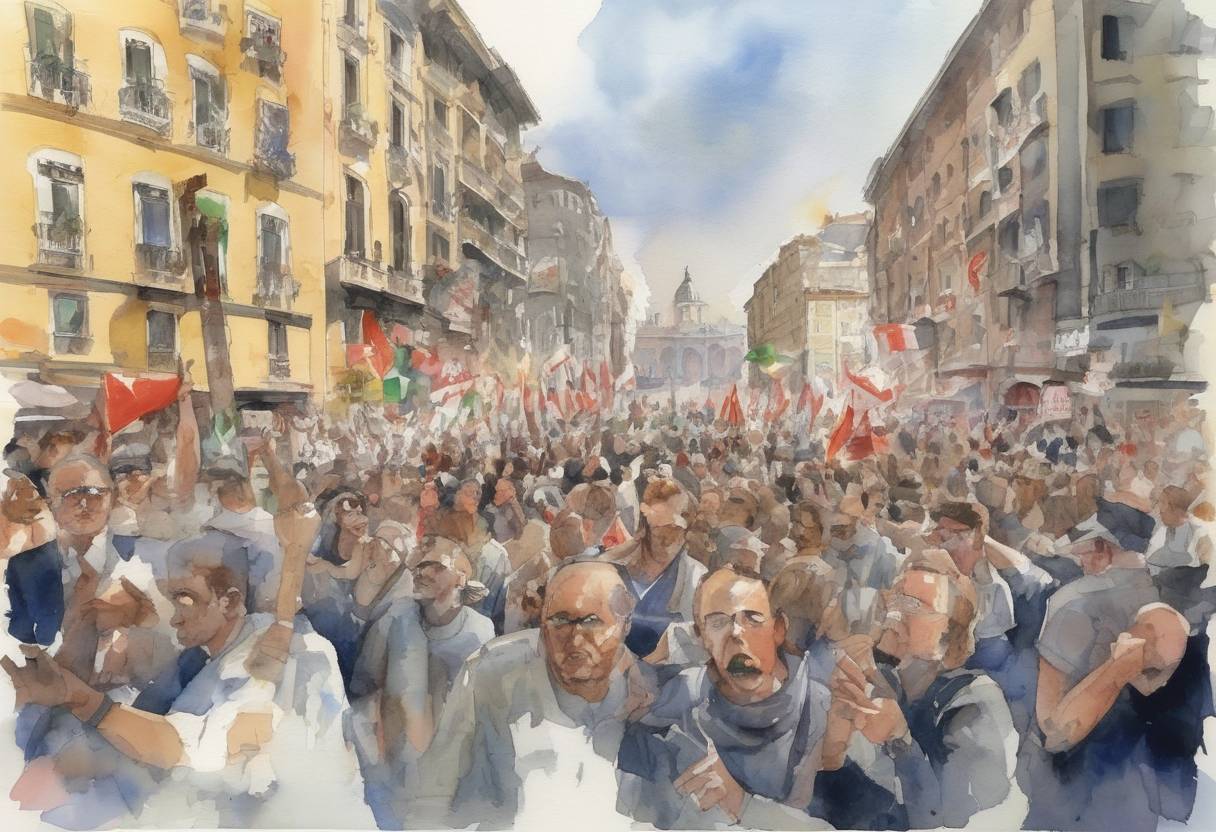
The 27th G8 Summit, held in Genoa, Italy, from July 20 to July 22, 2001, was a significant event marked by intense protests and violent clashes. This summit brought together leaders from the world’s major industrialized nations to discuss global economic policies and other pressing international issues. However, it is most remembered for the widespread demonstrations against globalization and economic inequality, which culminated in tragic violence.
In the late 1990s and early 2000s, globalization became a contentious issue, with critics arguing that it exacerbated economic inequalities and undermined local economies and cultures. The G8 summits, representing the interests of the world’s most powerful economies, became focal points for anti-globalization protests. Activists from various backgrounds, including environmentalists, labor unions, and social justice groups, converged on these meetings to voice their opposition.
Protests and Demonstrations: The Genoa summit saw one of the largest gatherings of anti-globalization protesters. Estimates suggest that around 200,000 demonstrators participated, representing a wide array of causes and organizations.
Clashes with Police: The Italian government deployed a significant security presence, including thousands of police officers and military personnel, to manage the protests. The situation quickly escalated, with violent clashes breaking out between police and demonstrators. The use of tear gas, water cannons, and batons by police was met with resistance from some protestors, leading to chaotic scenes in the streets of Genoa.
Death of Carlo Giuliani: On July 20, 2001, during a particularly intense confrontation, a 23-year-old protester named Carlo Giuliani was shot and killed by a police officer. Giuliani’s death became a symbol of the perceived heavy-handedness of law enforcement and the risks faced by activists.
Public Outcry and Investigations: The death of Carlo Giuliani and the overall handling of the protests led to widespread criticism of the Italian authorities. Investigations were launched into the conduct of the police, and the incident sparked debates about the right to protest and the use of force by law enforcement.
Impact on Future Summits: The violence in Genoa had a lasting impact on how future international summits were organized. Subsequent meetings saw increased security measures and efforts to engage with civil society groups to address their concerns more constructively.
Legacy of the Anti-Globalization Movement: The events in Genoa highlighted the growing discontent with globalization and economic policies perceived as favoring the wealthy. This movement continued to influence global discourse, contributing to the rise of various social and political movements advocating for economic justice and reform.
The 27th G8 Summit in Genoa remains a pivotal moment in the history of global protests, illustrating the tensions between powerful economic entities and grassroots movements advocating for change.
Source: en.wikipedia.org