Valentin Trujillo's Brief Presidency in Bolivia
1966 · La Paz, Bolivia
In an emblematic moment of protest, military officer Valentin Trujillo served as acting president of Bolivia but was ousted by a coup one day later.
October 8, 1967
Guerrilla leader Che Guevara and his men are captured in Bolivia by the Bolivian Army, with assistance from the CIA. Guevara is executed the following day.
La Higuera, Bolivia | Bolivian Army
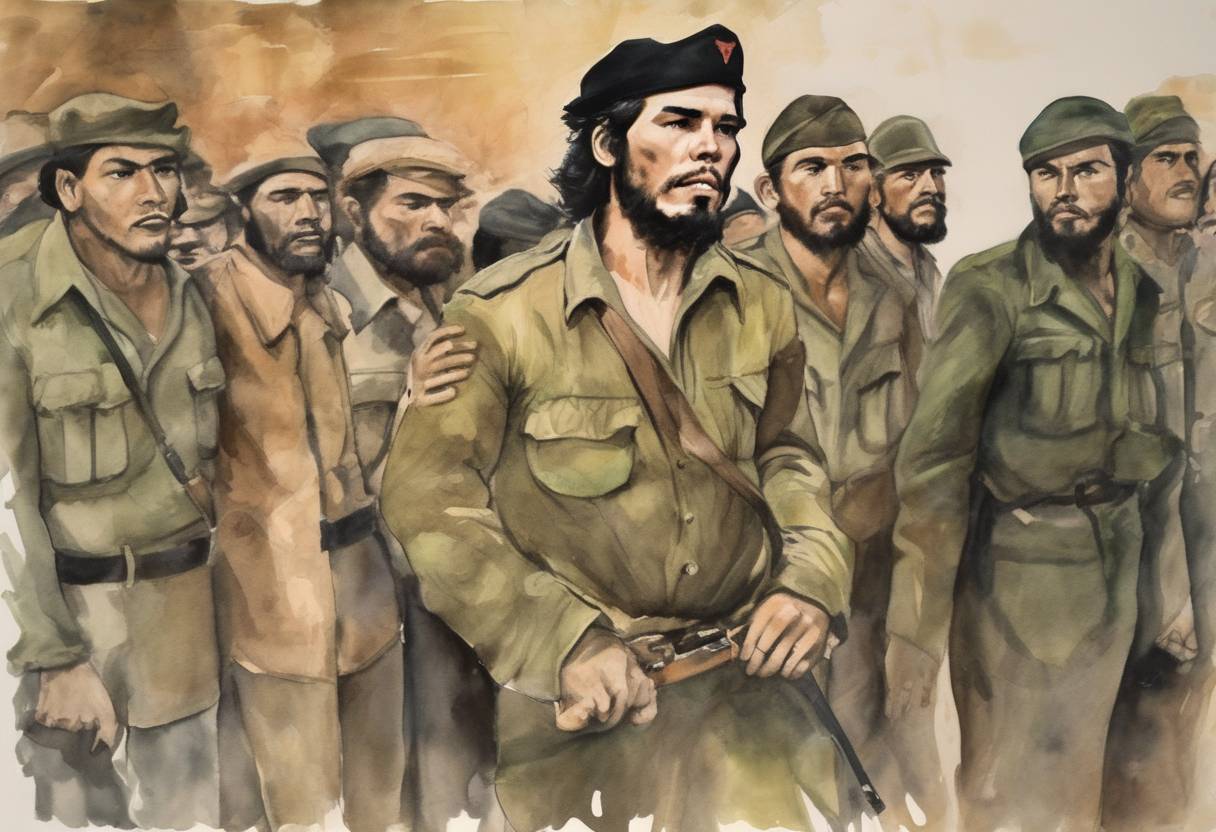
Ernesto “Che” Guevara, an Argentine Marxist revolutionary, physician, author, and guerrilla leader, played a significant role in the Cuban Revolution alongside Fidel Castro. After the revolution’s success, Guevara held several key positions in the Cuban government but eventually left to promote revolutionary activities abroad. His focus shifted to Bolivia, where he aimed to incite a similar uprising.
In 1966, Guevara arrived in Bolivia to lead a guerrilla movement against the Bolivian government, hoping to ignite a broader Latin American revolution. However, his campaign faced numerous challenges, including lack of local support, difficult terrain, and logistical issues. The Bolivian Army, with the assistance of the United States Central Intelligence Agency (CIA), was actively pursuing Guevara and his group.
On October 8, 1967, Guevara and his small band of guerrillas were surrounded by Bolivian forces in the Yuro Ravine, a remote area in southeastern Bolivia. The Bolivian Army, trained and supported by the CIA, managed to capture Guevara after a brief skirmish. He was wounded and taken prisoner, marking the end of his revolutionary campaign in Bolivia.
The following day, on October 9, 1967, Che Guevara was executed by the Bolivian Army in the village of La Higuera. The execution was carried out by Sergeant Mario Terán, under orders from the Bolivian government. Guevara’s death was intended to prevent him from becoming a martyr, but it had the opposite effect, solidifying his status as a symbol of revolutionary struggle worldwide.
Guevara’s execution had profound implications:
Martyrdom and Legacy: Che Guevara became an enduring icon of rebellion and anti-imperialism. His image and writings continue to inspire leftist movements globally.
Impact on Bolivia: The Bolivian government, with U.S. support, successfully quelled the immediate revolutionary threat. However, Guevara’s death did not lead to long-term stability, as Bolivia continued to face political and social unrest.
U.S. Involvement: The CIA’s role in Guevara’s capture highlighted the extent of U.S. involvement in Latin American affairs during the Cold War, aiming to prevent the spread of communism.
Guevara’s life and death remain subjects of extensive study and debate, reflecting the complexities of revolutionary movements and their lasting impact on global politics.
Source: en.wikipedia.org