1946 · Hanoi, Vietnam
Ho Chi Minh is elected the President of North Vietnam, marking a pivotal moment in Vietnamese history as the nation transitions towards Communist leadership.
May 19, 1890
Ho Chi Minh, the future leader of Vietnam, was born.
Kim Liên, Vietnam | none
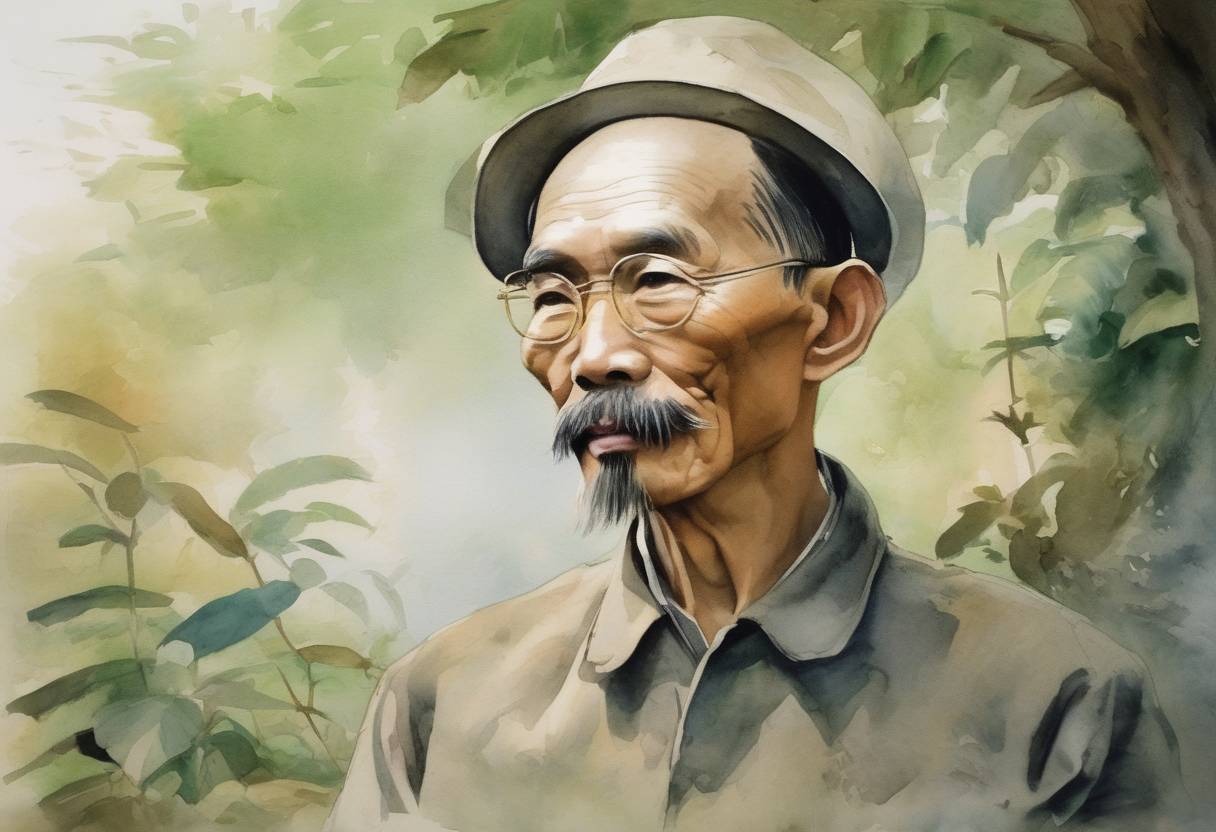
On May 19, 1890, a significant figure in 20th-century history, Ho Chi Minh, was born in the village of Hoàng Trù, in the Kim Liên commune of Nghệ An Province, Vietnam. His birth name was Nguyễn Sinh Cung, and he would later adopt the name Ho Chi Minh, which means “He Who Enlightens.”
Ho Chi Minh was born into a family with a strong Confucian tradition. His father, Nguyễn Sinh Sắc, was a scholar and teacher who instilled in him a sense of Vietnamese nationalism and a desire for education. Ho Chi Minh’s early education was influenced by both traditional Vietnamese culture and French colonial education, which exposed him to Western ideas and the harsh realities of colonial rule.
In 1911, Ho Chi Minh left Vietnam to travel the world, working on ships and living in various countries, including the United States, the United Kingdom, and France. During his time abroad, he became involved in socialist and communist movements, which shaped his political ideology. He was particularly influenced by the principles of Marxism-Leninism and the struggles of oppressed peoples worldwide.
In 1920, Ho Chi Minh co-founded the French Communist Party, marking the beginning of his formal political career. He later traveled to the Soviet Union and China, where he continued his revolutionary activities and honed his leadership skills.
In 1930, Ho Chi Minh played a pivotal role in founding the Communist Party of Vietnam, initially known as the Vietnamese Communist Party. This organization aimed to unite various nationalist groups in the struggle against French colonial rule and Japanese occupation during World War II.
Ho Chi Minh’s leadership was instrumental in Vietnam’s fight for independence. In 1941, he returned to Vietnam and established the Viet Minh, a coalition of nationalist and communist forces dedicated to achieving Vietnamese independence. Following Japan’s surrender in World War II, Ho Chi Minh declared Vietnam’s independence on September 2, 1945, in Hanoi, establishing the Democratic Republic of Vietnam.
Ho Chi Minh’s leadership and vision were central to Vietnam’s struggle for independence and unification. He served as the President and Prime Minister of North Vietnam until his death in 1969. His legacy is complex, as he is revered as a national hero in Vietnam for his role in liberating the country from colonial rule, yet his leadership also involved controversial policies and a protracted war that deeply affected the region.
Ho Chi Minh’s birth on May 19, 1890, marks the beginning of the life of a leader whose impact on Vietnam and the world continues to be felt today. His dedication to Vietnamese independence and his role in shaping the country’s modern history remain significant chapters in the story of Vietnam.
Source: en.wikipedia.org