Dissolution of the Soviet Union: December 26, 1991
1991 · Moscow, Russia
The Supreme Soviet of the Soviet Union formally dissolved the Soviet Union, marking the end of the Cold War.
August 29, 1991
The Supreme Soviet of the Soviet Union suspended all activities of the Communist Party, effectively ending its political dominance and marking a significant step towards the dissolution of the Soviet Union.
Moscow, Russia | Supreme Soviet of the Soviet Union
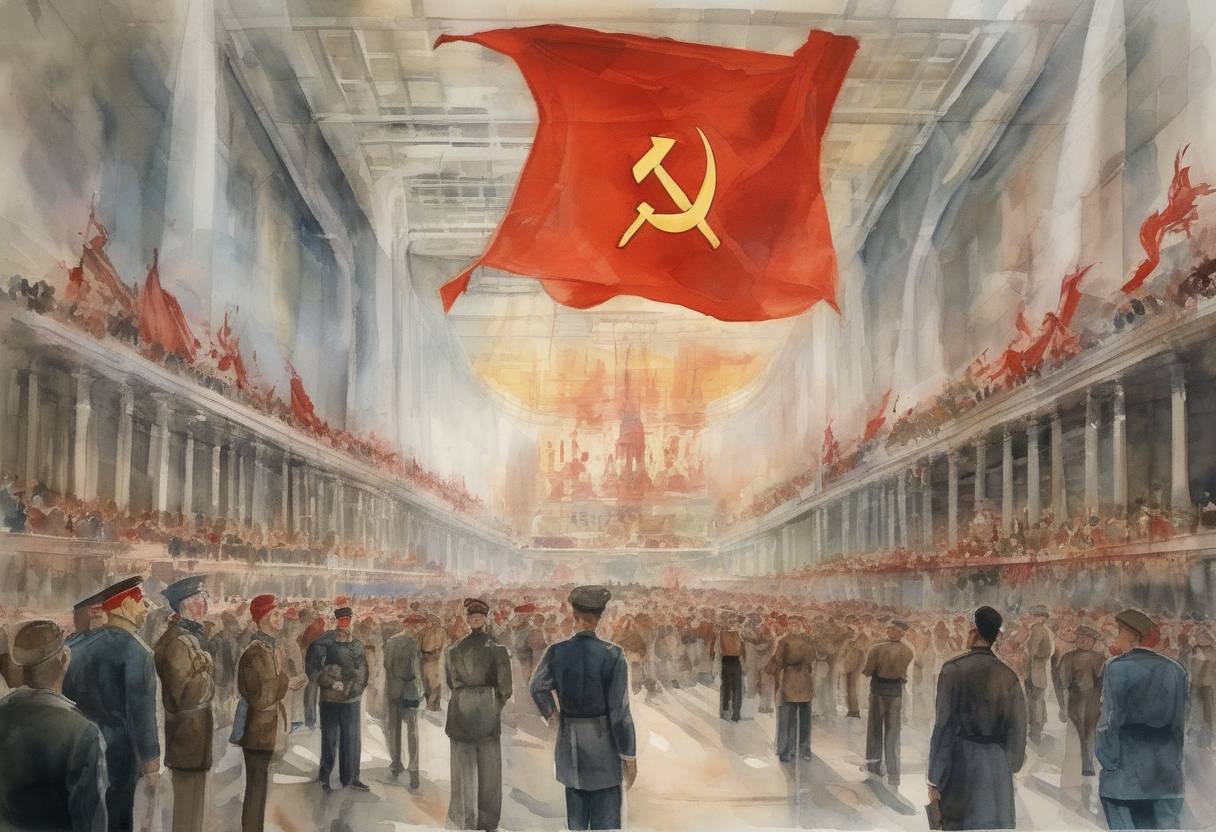
On August 29, 1991, the Supreme Soviet of the Soviet Union took a decisive step by suspending all activities of the Communist Party of the Soviet Union (CPSU). This action marked a pivotal moment in the political landscape of the Soviet Union and was a significant step towards its eventual dissolution.
The late 1980s and early 1990s were a period of profound change and instability in the Soviet Union. Under the leadership of Mikhail Gorbachev, the policies of glasnost (openness) and perestroika (restructuring) were introduced in an attempt to revitalize the Soviet economy and society. However, these reforms also unleashed forces that weakened the central control of the Communist Party and emboldened nationalist movements within various Soviet republics.
The failed coup attempt by hardline Communist Party members from August 19 to August 21, 1991, further destabilized the situation. The coup aimed to reverse Gorbachev’s reforms and restore the party’s dominance but ultimately collapsed due to lack of support and widespread public resistance, notably led by Boris Yeltsin, then President of the Russian Soviet Federative Socialist Republic (RSFSR).
In the aftermath of the coup, there was a significant backlash against the Communist Party, which was seen as complicit in the attempt to seize power. On August 29, 1991, the Supreme Soviet, the highest legislative body in the Soviet Union, voted to suspend all activities of the CPSU. This decision effectively ended the party’s political dominance, which had been unchallenged since the Bolshevik Revolution of 1917.
The suspension was a response to the widespread demand for political reform and accountability. It reflected the growing power of reformist and nationalist forces within the Soviet Union, as well as the diminishing influence of the Communist Party.
The suspension of the Communist Party’s activities was a crucial step towards the dissolution of the Soviet Union, which formally occurred on December 26, 1991. The decision paved the way for the emergence of new political structures and the independence of several Soviet republics.
The event underscored the irreversible decline of Communist ideology as the guiding force of Soviet governance and marked a shift towards more democratic and market-oriented systems in the former Soviet states. It also highlighted the increasing influence of leaders like Boris Yeltsin, who would play a central role in the post-Soviet transition.
In summary, the suspension of the Communist Party’s activities on August 29, 1991, was a landmark event that signaled the end of an era and the beginning of a new chapter in the history of the region.
Source: www.britannica.com