The Death of Pope Gregory I (Gregory the Great) - March 12, 604
604 · Rome, Italy
Pope Gregory I, also known as Gregory the Great, dies. He was instrumental in the early medieval church, known for his writings and the Gregorian Chant.
February 16, 0600
Pope Gregory I, also known as Gregory the Great, issues a decree that would later influence the Gregorian Chant, a form of plainchant used in the Roman Catholic Church.
Rome, Italy | Roman Catholic Church
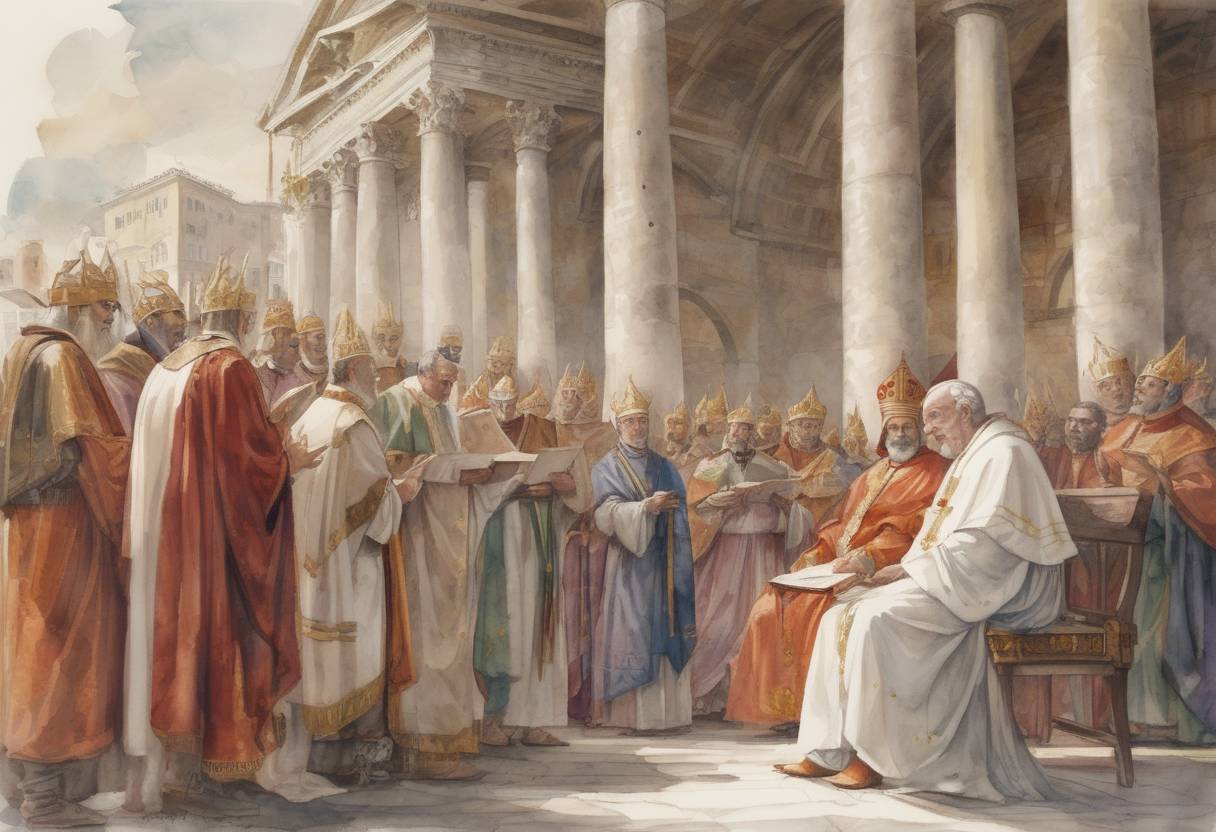
On February 16, 600, Pope Gregory I, also known as Gregory the Great, issued a decree that would have a lasting impact on the music of the Roman Catholic Church, particularly influencing what would later be known as Gregorian Chant. While the exact details of the decree and its immediate effects are not thoroughly documented, Gregory’s contributions to church music and liturgy are well recognized.
Pope Gregory I served as the Bishop of Rome from 590 to 604. His papacy was marked by significant reforms in church administration, liturgy, and music. Gregory was deeply concerned with the organization and standardization of the liturgical practices of the Church, which included the music used during services.
Gregorian Chant is a form of plainchant that became the central tradition of Western plainchant during the medieval period. It is characterized by its monophonic, unaccompanied vocal music, which follows a free-flowing rhythm and is typically sung in Latin.
While it is debated how directly Gregory himself was involved in the creation or compilation of the chants, his papacy is credited with organizing and codifying the chants used in the Roman liturgy. The association of his name with the chant likely stems from his efforts to standardize the liturgical practices and his establishment of the Schola Cantorum, a school for the training of church musicians in Rome.
The influence of Gregorian Chant extended well beyond Gregory’s lifetime. It became the dominant form of liturgical music in the medieval Church and laid the groundwork for the development of Western music theory and notation. The chants were preserved and transmitted through the centuries, becoming a symbol of the spiritual and cultural heritage of the Roman Catholic Church.
In summary, while the specific decree issued by Pope Gregory I on February 16, 600, may not be fully detailed in historical records, his overall contributions to the liturgical music of the Church were profound, leading to the development and perpetuation of Gregorian Chant as a central element of Christian worship.