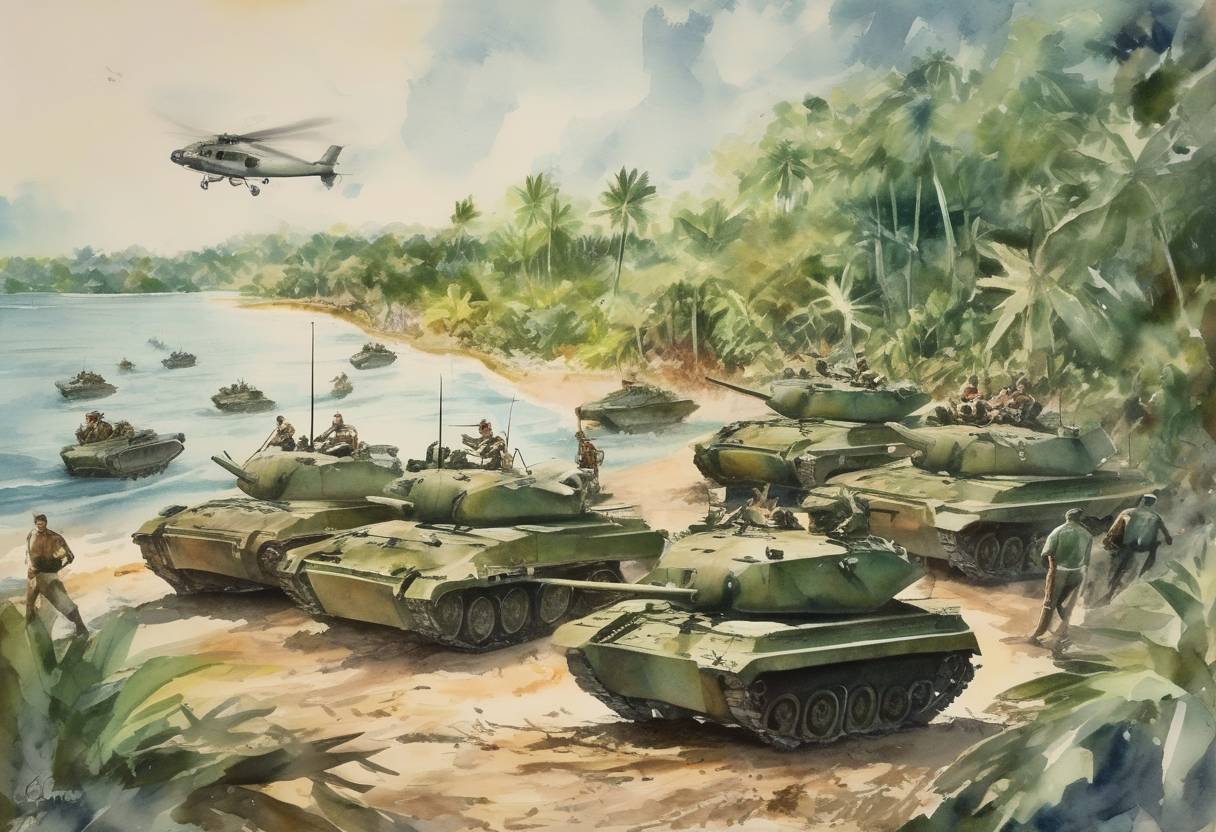
The Bay of Pigs Invasion: April 17, 1961
The Bay of Pigs Invasion was a significant event during the Cold War, marking a failed attempt by the United States to overthrow the Cuban government led by Fidel Castro. This operation was conducted by a CIA-sponsored paramilitary group known as Brigade 2506.
Background
- Cuban Revolution: In 1959, Fidel Castro led a successful revolution in Cuba, overthrowing the U.S.-backed dictator Fulgencio Batista. Castro’s government soon aligned itself with the Soviet Union, heightening Cold War tensions.
- U.S. Concerns: The United States, under President Dwight D. Eisenhower, was concerned about the spread of communism in the Western Hemisphere. The CIA began planning an invasion to remove Castro from power.
- Transition to Kennedy: When John F. Kennedy became President in January 1961, he inherited the invasion plan. Despite some reservations, Kennedy approved the operation, hoping for a swift victory without direct U.S. military involvement.
The Invasion
- Date: The invasion commenced on April 17, 1961.
- Location: The operation targeted the Bay of Pigs, a remote area on Cuba’s southern coast.
- Forces Involved: Brigade 2506 consisted of approximately 1,400 Cuban exiles trained and equipped by the CIA.
- Initial Assault: The plan involved air strikes to destroy Castro’s air force, followed by an amphibious landing. However, the air strikes failed to neutralize the Cuban air force completely.
Key Events
- Landing: Brigade 2506 landed at the Bay of Pigs but quickly encountered logistical issues and stronger-than-expected resistance from Cuban forces.
- Lack of Support: The invasion plan assumed that the Cuban population would rise against Castro, but this did not occur. Additionally, Kennedy refused to provide further air support, fearing escalation into a broader conflict.
- Defeat: Within three days, Cuban forces had defeated the invaders. Over 100 members of Brigade 2506 were killed, and more than 1,100 were captured.
Aftermath and Consequences
- Diplomatic Fallout: The failed invasion was a significant embarrassment for the Kennedy administration and strained U.S. relations with Latin America.
- Cuban-Soviet Relations: The invasion pushed Cuba closer to the Soviet Union, leading to the installation of Soviet nuclear missiles on the island and the subsequent Cuban Missile Crisis in 1962.
- U.S. Policy: The failure prompted a reevaluation of U.S. covert operations and foreign policy strategies, leading to increased scrutiny of CIA activities.
Historical Significance
The Bay of Pigs Invasion is often cited as a classic example of Cold War miscalculation and the complexities of U.S. foreign policy during this period. It underscored the challenges of interventionist policies and highlighted the risks of underestimating nationalist movements and the resolve of local populations. The event also set the stage for future confrontations between the United States and the Soviet Union in the region.