The Spanish Armada and the Battle of Gravelines: July 31, 1588
1588 · Gravelines, France
The Spanish Armada was sighted off the coast of England, leading to the Battle of Gravelines, where the English navy defeated the Spanish fleet.
July 13, 1558
The Battle of Gravelines took place during the Italian War of 1551–1559, where the Spanish forces defeated the French.
Gravelines, France | Spanish Empire
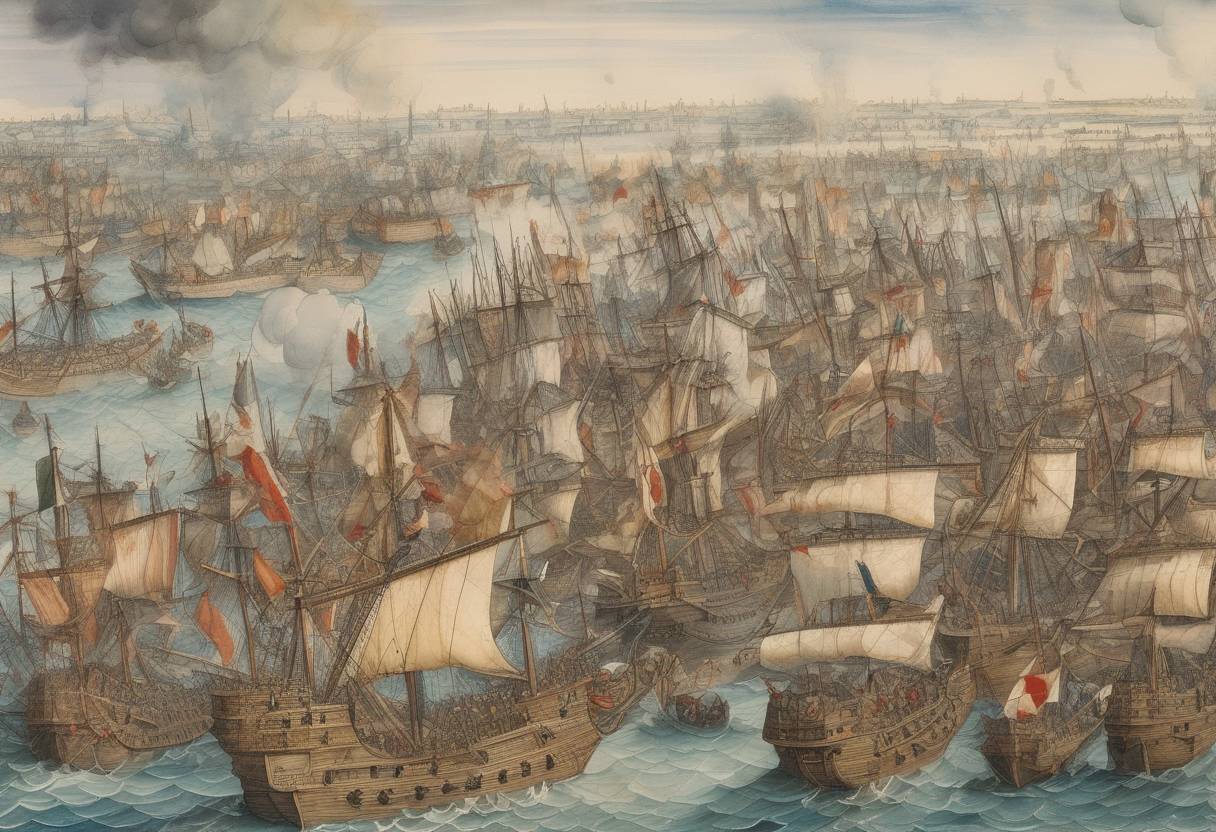
The Battle of Gravelines, fought on July 13, 1558, was a significant military engagement during the Italian War of 1551–1559, a conflict primarily between the Habsburgs and the Valois over control of territories in Italy. This battle marked a decisive victory for the Spanish forces over the French, influencing the course of the war and the eventual peace settlement.
The Italian War of 1551–1559 was part of a series of conflicts known as the Italian Wars, which saw major European powers vying for dominance in Italy. By the mid-16th century, the rivalry between the Habsburgs, who controlled Spain and the Holy Roman Empire, and the French Valois dynasty had intensified. The war extended beyond Italy, affecting regions in the Low Countries and France.
In 1557, the Spanish, led by King Philip II, had already achieved a significant victory at the Battle of St. Quentin. This victory weakened French military capabilities and morale. Despite this setback, the French sought to regain their position by launching a campaign in the Spanish Netherlands.
The Battle of Gravelines took place near the town of Gravelines, located in present-day northern France, close to the border with Belgium. The Spanish forces were commanded by Lamoral, Count of Egmont, a prominent general known for his strategic acumen. The French army, led by Marshal Paul des Thermes, aimed to capture Gravelines as part of their broader campaign to disrupt Spanish control in the region.
The Spanish forces, although outnumbered, were well-prepared and strategically positioned. They utilized their superior artillery and cavalry effectively, exploiting the terrain to their advantage. The battle commenced with a fierce exchange of artillery fire, followed by a decisive cavalry charge by the Spanish, which broke the French lines.
The Spanish victory at Gravelines was comprehensive. The French forces suffered heavy casualties, and many soldiers were captured, including Marshal des Thermes. This defeat further weakened France’s military position and morale, contributing to their eventual decision to seek peace.
The Battle of Gravelines was instrumental in leading to the Treaty of Cateau-Cambrésis in 1559, which ended the Italian War of 1551–1559. The treaty marked a significant shift in European power dynamics, with Spain consolidating its dominance in Italy and the Low Countries, while France was forced to abandon its ambitions in Italy.
The Battle of Gravelines demonstrated the effectiveness of Spanish military tactics and the importance of artillery and cavalry in 16th-century warfare. It also underscored the strategic importance of the Low Countries in European conflicts. The victory solidified Spain’s position as a leading European power and set the stage for its dominance in the latter half of the 16th century.
In summary, the Battle of Gravelines was a pivotal moment in the Italian War of 1551–1559, showcasing the military prowess of the Spanish forces and contributing to the eventual peace that reshaped the political landscape of Europe.
Source: en.wikipedia.org