Adolf Hitler's Last Public Appearance: April 20, 1945
1945 · Berlin, Germany
During World War II, Adolf Hitler makes his last trip to the surface from his underground bunker to award Iron Crosses to Hitler Youth members.
January 16, 1945
Adolf Hitler moved into the Führerbunker in Berlin, where he would spend the last months of World War II.
Berlin, Germany | Nazi Germany
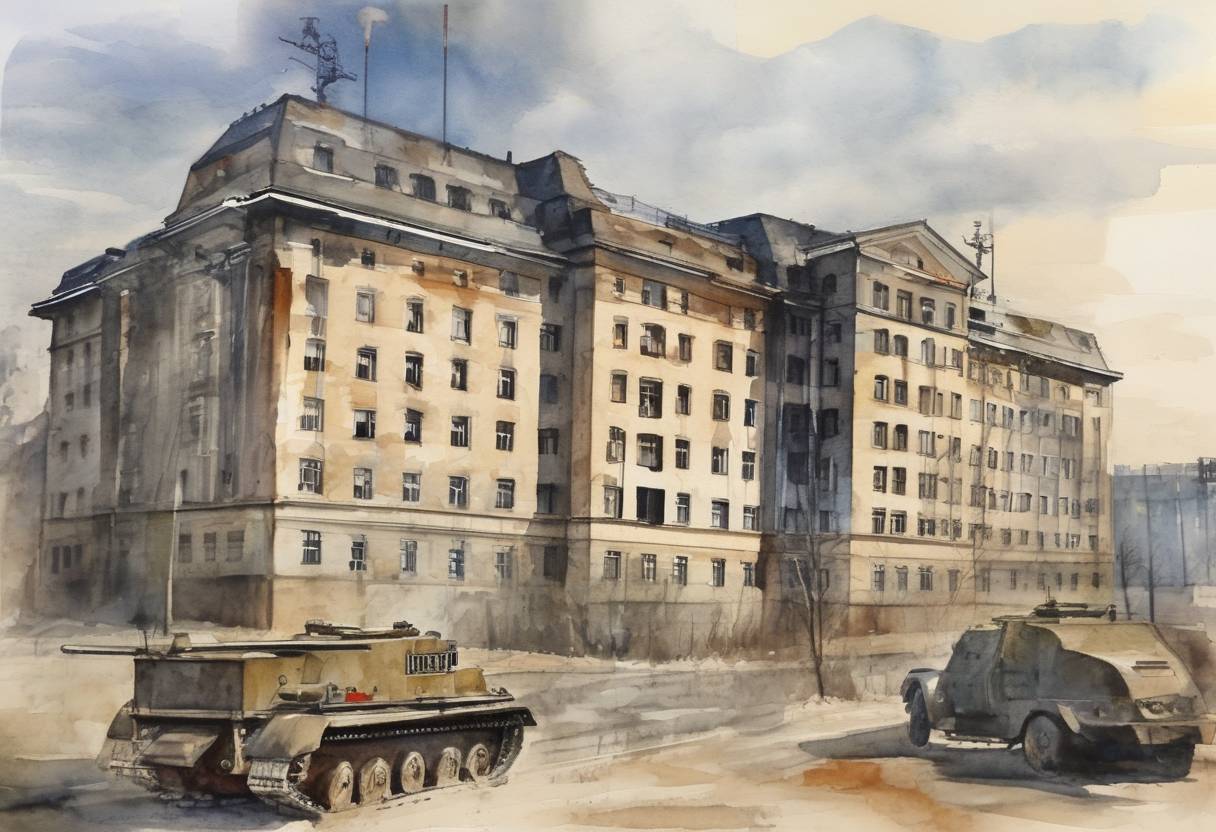
On January 16, 1945, Adolf Hitler relocated to the Führerbunker, a fortified underground bunker in Berlin, marking the beginning of the final chapter of his life and the Nazi regime. This move was a significant moment in World War II, as it symbolized the impending collapse of Nazi Germany.
As World War II progressed, the Allied forces were making significant advances on both the Western and Eastern fronts. The Soviet Red Army was rapidly approaching from the east, having launched the Vistula-Oder Offensive on January 12, 1945, which pushed them into German territory. Meanwhile, the Western Allies were advancing through France and the Low Countries after the successful D-Day landings in June 1944.
The situation for Germany was dire. The relentless Allied bombing campaigns had devastated German cities, and resources were dwindling. The Nazi leadership, including Hitler, was increasingly isolated and desperate.
The Führerbunker was part of a larger underground bunker complex beneath the Reich Chancellery in Berlin. Constructed in two phases between 1936 and 1944, it was designed to serve as a secure air-raid shelter and command center. The bunker was heavily fortified, with walls and ceilings made of thick concrete, and was equipped with basic living facilities.
Once Hitler moved into the Führerbunker, he was joined by key members of his inner circle, including Joseph Goebbels, Martin Bormann, and Eva Braun, among others. The bunker became the center of Nazi operations as the war drew to a close.
Life in the bunker was marked by a sense of impending doom. Hitler’s health and mental state were deteriorating, and he became increasingly detached from reality. Reports from those who were present describe a tense atmosphere, with Hitler often erupting in fits of rage and issuing unrealistic military orders.
As the Soviet forces closed in on Berlin, the situation inside the bunker grew more desperate. By April 1945, the Red Army had encircled the city, and the fall of Berlin was imminent. On April 30, 1945, Hitler committed suicide in the Führerbunker, alongside Eva Braun, whom he had married the day before.
The move to the Führerbunker and the events that unfolded there were pivotal in the final months of World War II. Hitler’s death marked the end of Nazi Germany, and shortly thereafter, on May 8, 1945, Germany officially surrendered to the Allied forces, bringing an end to the war in Europe.
The Führerbunker itself became a symbol of the downfall of the Third Reich. After the war, the bunker was partially demolished, and the area was redeveloped. Today, it serves as a reminder of the destructive consequences of totalitarian regimes and the devastation of war.
In summary, Hitler’s move to the Führerbunker on January 16, 1945, was a critical moment in history, encapsulating the final days of a regime that had brought unprecedented destruction to Europe and the world.
Source: www.britannica.com