Thurgood Marshall Sworn in as Supreme Court Justice
1967 · Washington, D.C., United States
Thurgood Marshall was sworn in as the first African American Justice of the United States Supreme Court.
May 17, 1954
The United States Supreme Court delivered its landmark decision in Brown v. Board of Education, declaring racial segregation in public schools unconstitutional and marking a pivotal moment in the American Civil Rights Movement.
Washington, D.C., United States | United States Supreme Court
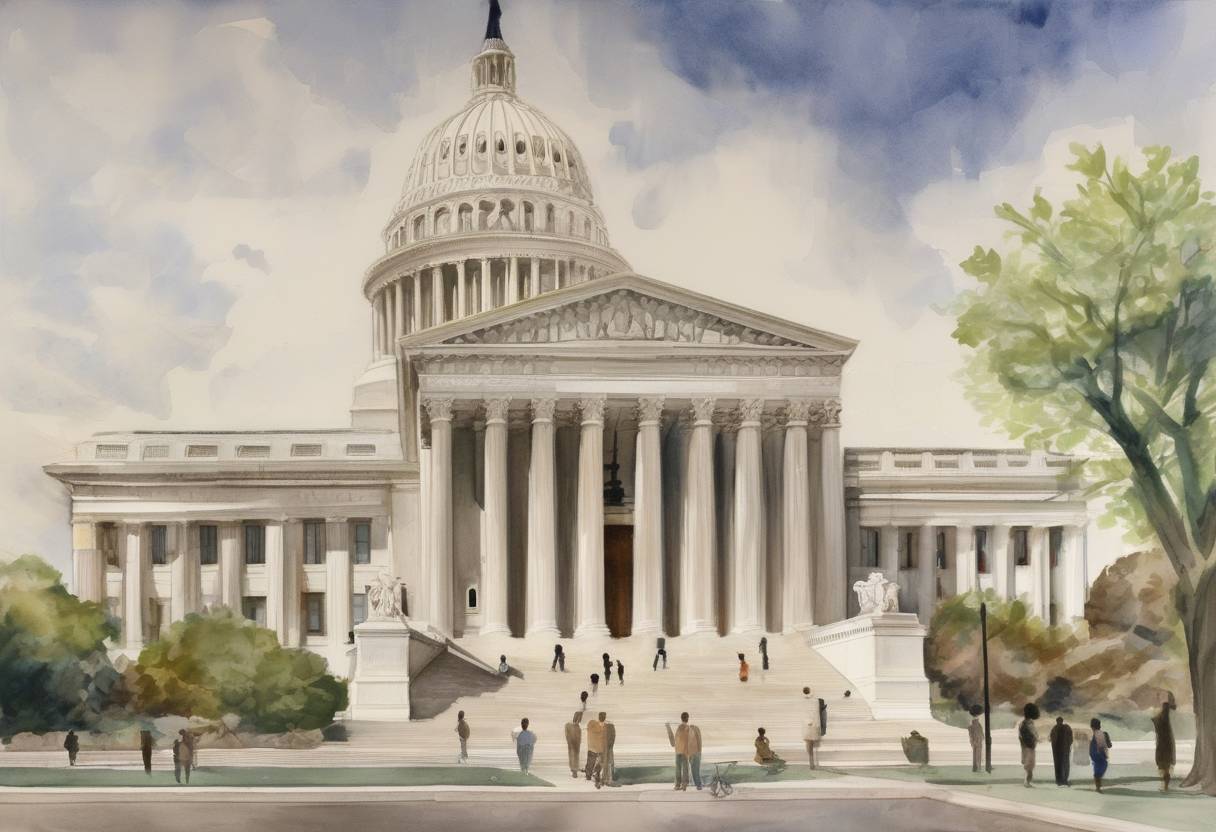
On May 17, 1954, the United States Supreme Court delivered its landmark decision in Brown v. Board of Education of Topeka, a pivotal moment in the American Civil Rights Movement. This unanimous ruling declared that racial segregation in public schools was unconstitutional, fundamentally challenging the legal framework of racial segregation established by the 1896 Plessy v. Ferguson decision, which had upheld the doctrine of “separate but equal.”
Jim Crow Laws: Following the end of Reconstruction, Southern states implemented Jim Crow laws that enforced racial segregation in public facilities, including schools. These laws were justified under the “separate but equal” doctrine, which claimed that segregated facilities for blacks and whites were permissible if they were equal in quality.
NAACP’s Legal Strategy: The National Association for the Advancement of Colored People (NAACP) played a crucial role in challenging segregation. Under the leadership of Thurgood Marshall, the NAACP’s Legal Defense Fund strategically targeted the inequality in educational facilities, arguing that segregation inherently led to unequal and inferior conditions for African American students.
Consolidation of Cases: Brown v. Board of Education was a consolidation of five different cases from Kansas, South Carolina, Virginia, Delaware, and Washington D.C., all challenging the constitutionality of racial segregation in public schools.
Plaintiff: The case was named after Oliver Brown, a parent from Topeka, Kansas, who sued on behalf of his daughter, Linda Brown, who was denied entry to a white elementary school close to her home.
Supreme Court’s Decision: Chief Justice Earl Warren delivered the opinion of the Court, stating that “separate educational facilities are inherently unequal.” The decision emphasized that segregation in public education violated the Equal Protection Clause of the 14th Amendment.
Impact on Civil Rights Movement: The decision was a catalyst for the Civil Rights Movement, inspiring activism and further legal challenges against racial discrimination. It galvanized efforts to dismantle segregation and promote equality across the United States.
Resistance and Implementation: Despite the ruling, many Southern states resisted integration, leading to a prolonged struggle for civil rights. The Court’s decision in Brown II (1955) mandated that desegregation occur “with all deliberate speed,” but vague language allowed for delays and resistance.
Legacy: Brown v. Board of Education remains a cornerstone of civil rights jurisprudence. It set a precedent for future rulings that expanded civil rights and challenged discriminatory practices, reinforcing the principle that state-sanctioned segregation is incompatible with the values of equality and justice.
This historic decision marked a turning point in American history, laying the groundwork for subsequent civil rights advancements and affirming the federal government’s role in enforcing equal protection under the law.
Source: en.wikipedia.org