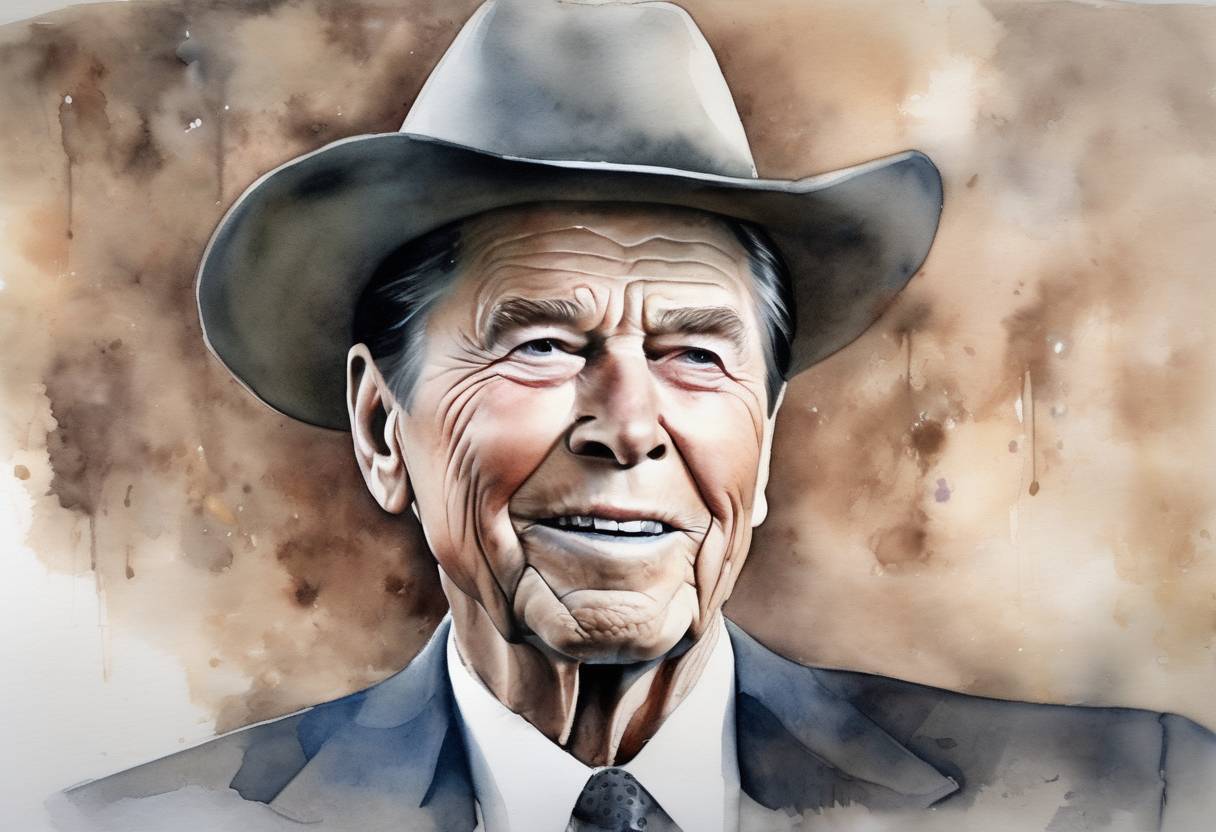
Ronald Reagan’s Passing on June 5, 2004
On June 5, 2004, Ronald Wilson Reagan, the 40th President of the United States, passed away at the age of 93. His death marked the end of a long battle with Alzheimer’s disease, a condition he had been diagnosed with in 1994. Reagan’s passing was a significant moment in American history, as he was a transformative figure whose presidency left a lasting impact on both domestic and international affairs.
Early Life and Career
Ronald Reagan was born on February 6, 1911, in Tampico, Illinois. Before entering politics, he had a successful career as a Hollywood actor and served as the president of the Screen Actors Guild. His political career began in earnest when he was elected as the Governor of California, serving from 1967 to 1975.
Presidency (1981-1989)
Reagan was elected as the President of the United States in 1980, defeating incumbent Jimmy Carter. He was re-elected in 1984, winning a landslide victory against Walter Mondale. His presidency is noted for several key policies and events:
Economic Policies: Known as “Reaganomics,” his economic policies focused on tax cuts, deregulation, and reducing government spending. These policies aimed to stimulate economic growth but also contributed to a significant increase in the national debt.
Cold War Stance: Reagan took a hardline stance against the Soviet Union, famously dubbing it the “Evil Empire.” His administration increased defense spending and pursued the Strategic Defense Initiative. His efforts, alongside Soviet leader Mikhail Gorbachev’s reforms, are credited with helping to end the Cold War.
Domestic Issues: Reagan’s presidency saw significant social and political changes, including debates over civil rights, the war on drugs, and the AIDS crisis. His administration’s response to these issues has been both criticized and defended by historians.
Battle with Alzheimer’s Disease
In November 1994, Reagan publicly announced that he had been diagnosed with Alzheimer’s disease. His letter to the American people was a poignant moment, as it raised awareness about the disease and its impact. Over the following decade, Reagan lived a largely private life, with his wife, Nancy Reagan, becoming an advocate for Alzheimer’s research.
Legacy and Impact
Reagan’s legacy is a subject of extensive debate. Supporters credit him with revitalizing the American economy and playing a crucial role in ending the Cold War. Critics, however, point to increased income inequality and social issues that were exacerbated during his tenure.
Upon his death, tributes poured in from around the world, reflecting his influence and the complex legacy he left behind. His state funeral was attended by numerous world leaders and dignitaries, underscoring his status as a significant figure in 20th-century history.
Reagan’s life and presidency continue to be studied and discussed, reflecting the enduring impact of his leadership on the United States and the world.