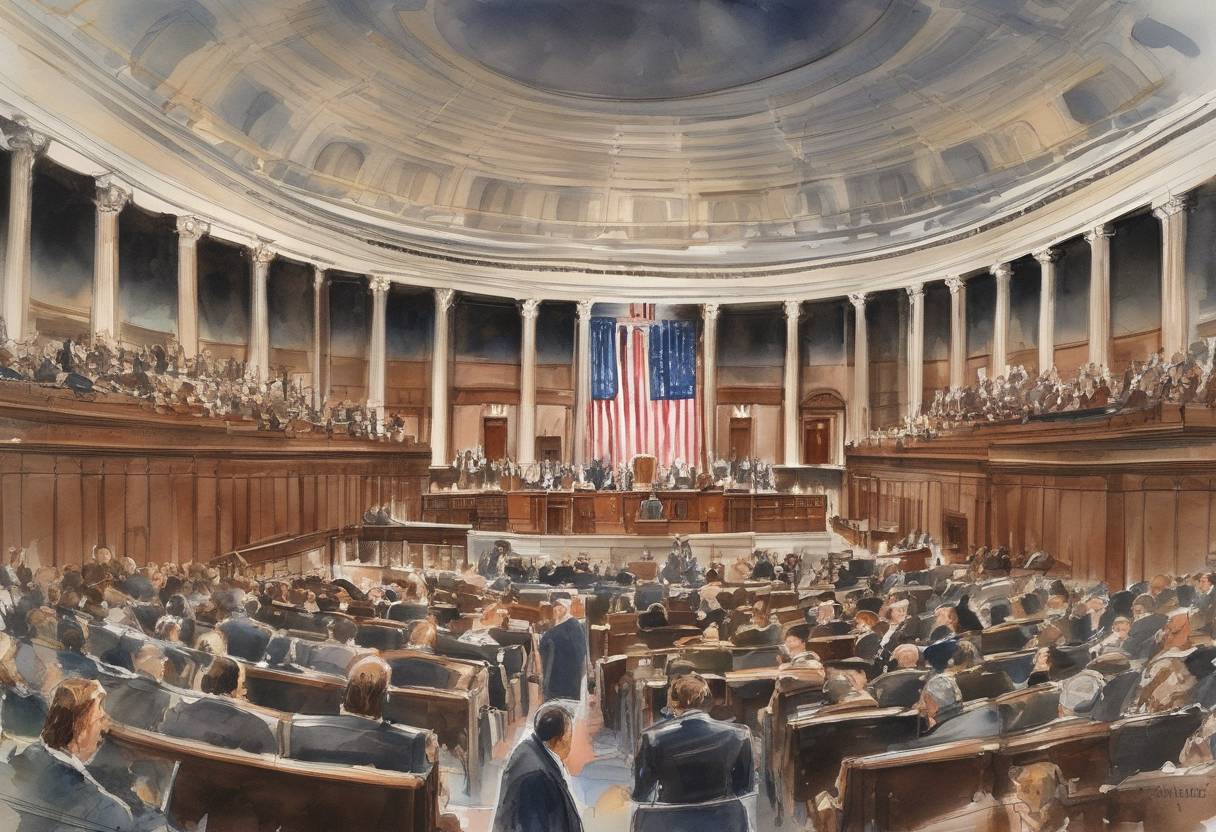
Televising the U.S. House of Representatives: March 19, 1979
On March 19, 1979, a significant step towards transparency in government proceedings was taken when the United States House of Representatives began televising its day-to-day business. This move marked a pivotal moment in American political history, as it allowed the public unprecedented access to the legislative process.
Context and Background
Before 1979, the proceedings of the House were largely inaccessible to the general public, with coverage limited to print media and radio broadcasts. The decision to televise the House sessions was part of a broader movement towards openness and accountability in government, spurred by the political climate of the 1970s. This era was characterized by a growing demand for transparency following events such as the Watergate scandal, which had eroded public trust in government institutions.
Key Events Leading Up to Televising
- Technological Advancements: The development of cable television and the expansion of public access channels made it feasible to broadcast lengthy legislative sessions.
- Political Advocacy: Several members of Congress, notably Representative Al Gore, advocated for the televising of House proceedings, arguing that it would enhance democratic engagement and accountability.
- Public Demand: There was increasing public interest in understanding the legislative process and holding elected officials accountable for their actions.
Implementation
The first televised session of the House was broadcast on March 19, 1979, on the newly established C-SPAN (Cable-Satellite Public Affairs Network). C-SPAN was created specifically to provide unedited coverage of government proceedings, ensuring that the public could witness the legislative process without media interpretation or bias.
Impact and Significance
- Increased Transparency: Televising the House sessions allowed citizens to observe debates, votes, and other legislative activities, fostering a more informed electorate.
- Enhanced Accountability: Lawmakers became more conscious of their public image and the need to communicate effectively with constituents, knowing that their actions were being broadcast live.
- Educational Resource: The broadcasts served as a valuable educational tool, helping schools and universities teach students about the legislative process and civic engagement.
Aftermath and Broader Implications
The success of televising the House led to similar initiatives in other branches of government. The Senate began limited television coverage in 1986, further expanding public access to federal legislative processes. The move also set a precedent for transparency that has influenced state and local governments across the United States.
In conclusion, the decision to televise the U.S. House of Representatives on March 19, 1979, was a landmark event that significantly enhanced the transparency and accountability of the American legislative process. It empowered citizens by providing direct access to government proceedings, thereby strengthening the democratic fabric of the nation.