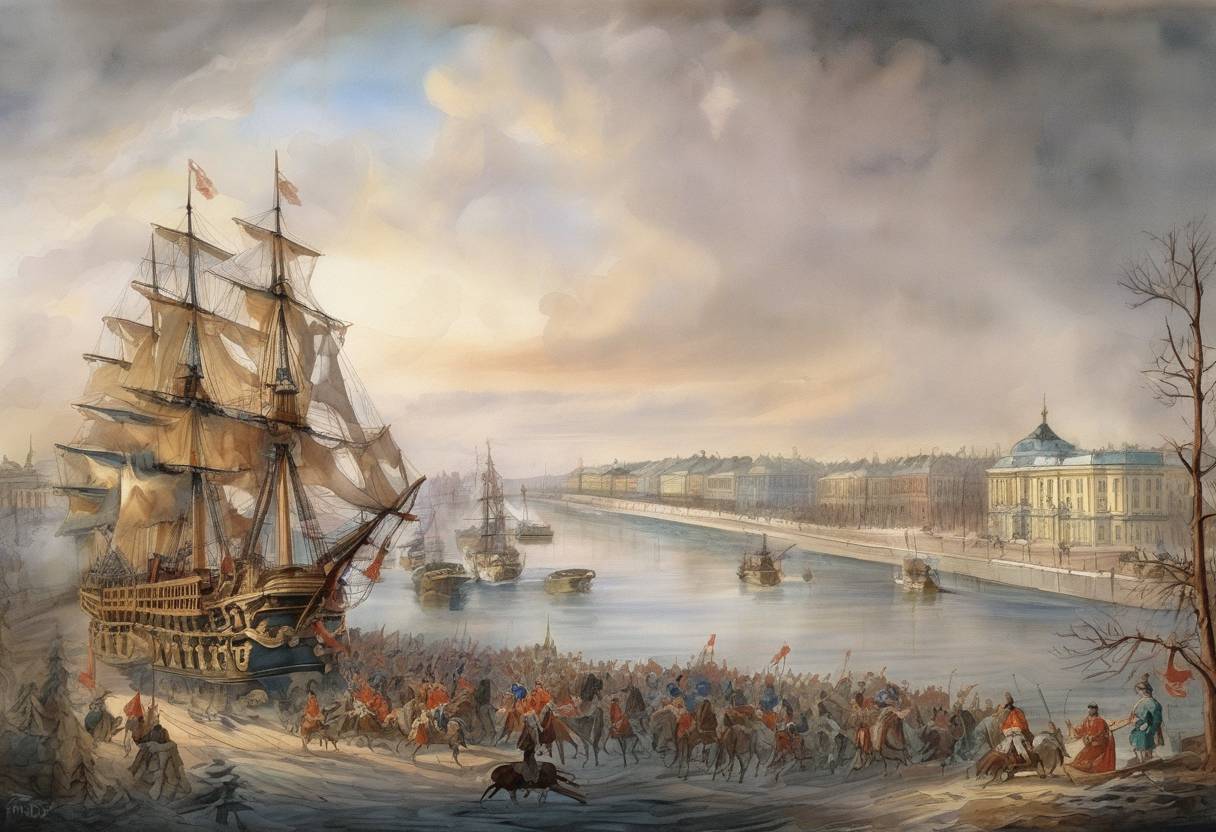
Founding of Saint Petersburg by Tsar Peter the Great
On May 27, 1703, Tsar Peter the Great founded the city of Saint Petersburg, marking a significant moment in Russian history. This event was part of Peter’s broader efforts to modernize Russia and establish it as a major European power.
Context and Background
- Peter the Great’s Vision: Peter I, known as Peter the Great, ascended to the Russian throne in 1682. He was determined to transform Russia into a modern state by adopting Western European technology, culture, and administrative practices.
- The Great Northern War: The founding of Saint Petersburg occurred during the Great Northern War (1700-1721), a conflict in which Russia sought to challenge the supremacy of the Swedish Empire in the Baltic region. The war provided the impetus for Peter to secure a maritime outlet on the Baltic Sea.
Founding of the City
- Strategic Location: Saint Petersburg was strategically located on the Neva River, near the Gulf of Finland. This location was chosen to provide Russia with a “window to the West,” facilitating trade and cultural exchange with Europe.
- Construction: The construction of the city began with the building of the Peter and Paul Fortress on Zayachy Island. The fortress was intended to protect the new city from Swedish attacks and served as the nucleus around which the city developed.
- Design and Architecture: Peter invited European architects and engineers to design the city, resulting in a unique blend of Russian and Western European architectural styles. The city’s layout was inspired by Amsterdam, reflecting Peter’s admiration for Dutch urban planning.
Significance and Consequences
- Capital of Russia: In 1712, Saint Petersburg became the capital of Russia, a status it held until 1918. The move from Moscow to Saint Petersburg symbolized Russia’s shift towards European engagement and modernization.
- Cultural and Economic Hub: Over time, Saint Petersburg developed into a major cultural and economic center. It became home to numerous institutions of art, science, and education, contributing to Russia’s cultural renaissance.
- Legacy: The founding of Saint Petersburg marked a turning point in Russian history, as it played a crucial role in Peter the Great’s efforts to transform Russia into a formidable European power. The city remains a symbol of Russia’s historical and cultural evolution.
Saint Petersburg’s establishment was a testament to Peter the Great’s ambitious vision for Russia, and its enduring legacy continues to influence Russian society and culture today.