The Gunpowder Plot: Foiling of a Conspiracy on November 5, 1605
1605 · London, England
The Gunpowder Plot was foiled when Guy Fawkes was arrested while guarding explosives placed beneath the House of Lords.
January 27, 1606
The trial of Guy Fawkes and other conspirators involved in the Gunpowder Plot begins in London.
London, England | English Government
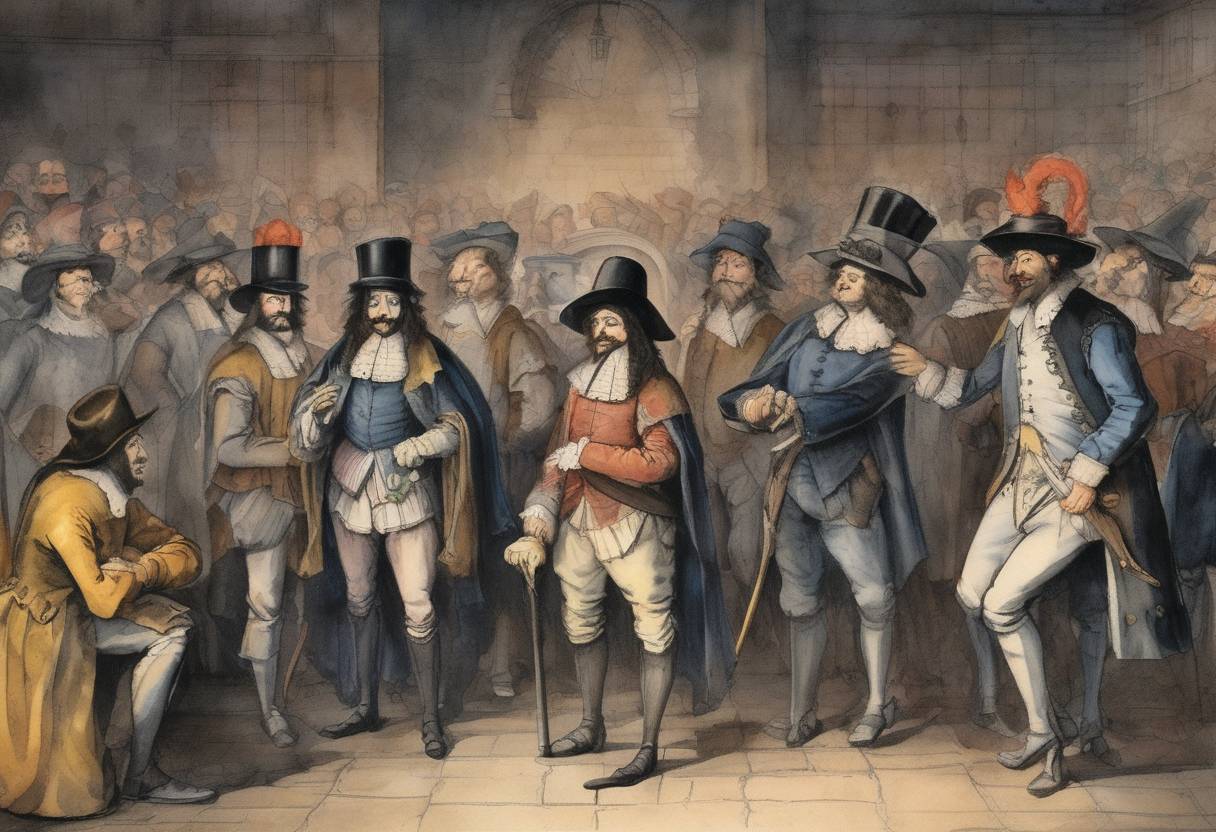
On January 27, 1606, the trial of Guy Fawkes and his fellow conspirators in the infamous Gunpowder Plot began in London. This event marked a significant moment in English history, as it was the culmination of a failed attempt to assassinate King James I and blow up the House of Lords.
The Gunpowder Plot was a Catholic-led conspiracy aimed at ending Protestant rule in England by killing King James I and replacing him with a Catholic monarch. The plot was orchestrated by a group of English Catholics, including Robert Catesby, Thomas Percy, and Guy Fawkes, among others. The plan involved placing barrels of gunpowder beneath the House of Lords, timed to explode during the State Opening of Parliament on November 5, 1605.
The plot was foiled when an anonymous letter, warning a Catholic peer to avoid the opening of Parliament, reached the authorities. This led to a search of the cellars beneath the House of Lords, where Guy Fawkes was discovered guarding the explosives. He was arrested on the night of November 4, 1605.
The trial of the conspirators began on January 27, 1606, at Westminster Hall. The accused included Guy Fawkes, Thomas Wintour, Robert Wintour, John Grant, Ambrose Rookwood, Robert Keyes, Thomas Bates, and Sir Everard Digby. Robert Catesby and several others had been killed in a shootout with authorities prior to the trial.
All the conspirators were found guilty of treason. The sentence was death by hanging, drawing, and quartering, a common punishment for treason at the time. The executions were carried out on January 30 and 31, 1606, serving as a grim warning to others who might consider similar acts against the crown.
The Gunpowder Plot had lasting repercussions in England. It led to stricter laws against Catholics and increased anti-Catholic sentiment. The event is commemorated annually on November 5th as Guy Fawkes Night, or Bonfire Night, with fireworks and bonfires across the UK.
The trial and execution of the conspirators underscored the tensions between Catholics and Protestants in England and highlighted the lengths to which some were willing to go to change the religious and political landscape of the country.
Source: en.wikipedia.org