Space Shuttle Discovery's Final Mission: STS-133
2011 · Cape Canaveral, United States
The Space Shuttle Discovery completed its final mission, STS-133, and landed at Kennedy Space Center in Florida.
July 7, 2011
The final mission of NASA's Space Shuttle program, STS-135, was launched. The shuttle Atlantis carried a crew of four to the International Space Station, marking the end of the 30-year Space Shuttle program that began with the launch of Columbia in 1981.
Cape Canaveral, United States | NASA
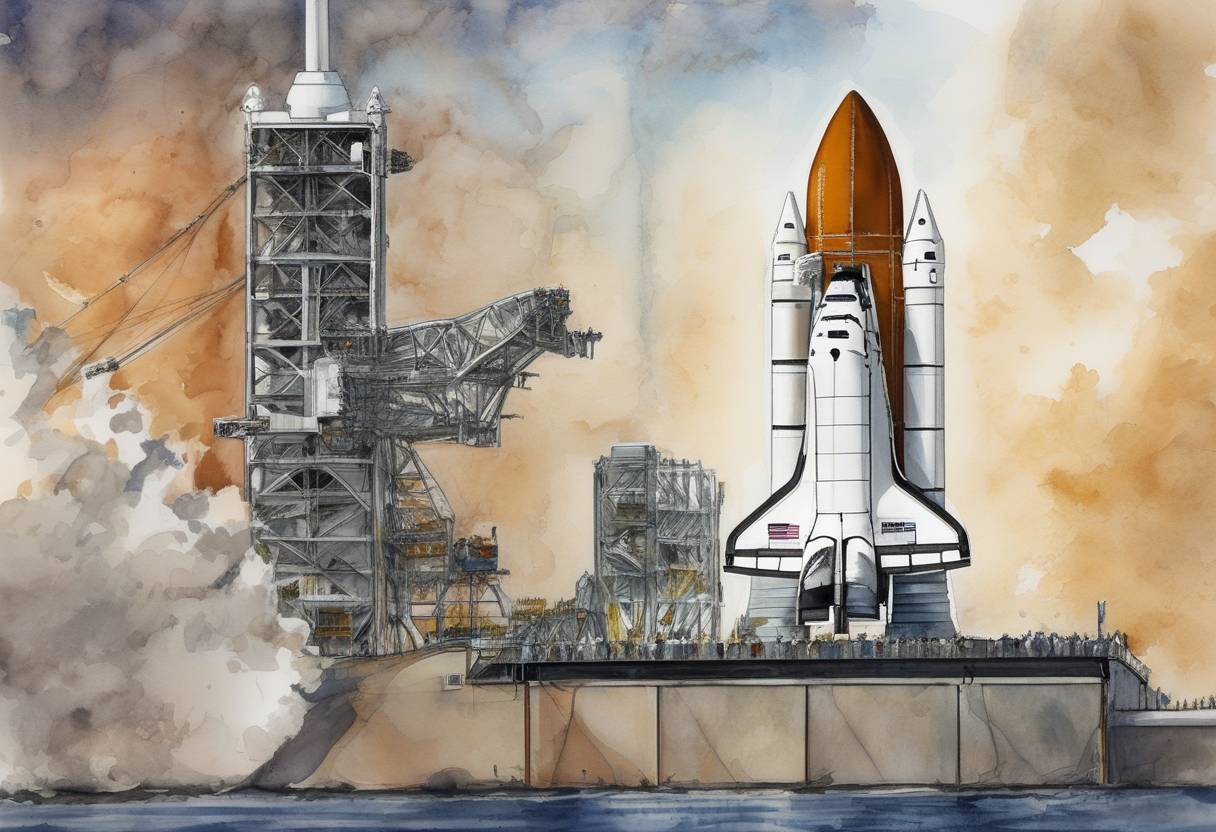
On July 8, 2011, NASA launched the final mission of its Space Shuttle program, STS-135, from Kennedy Space Center in Florida. This historic event marked the end of a 30-year era that began with the launch of the shuttle Columbia in 1981.
The primary objective of STS-135 was to deliver the Raffaello multipurpose logistics module to the ISS. This module was packed with supplies and spare parts to support the station’s operations for an extended period. The mission also included the delivery of the Robotic Refueling Mission (RRM), an experiment to demonstrate the technology and techniques needed to refuel satellites in orbit.
The Space Shuttle program was initiated to create a reusable spacecraft that could carry astronauts and cargo to and from low Earth orbit. Over its 30-year history, the program achieved numerous milestones, including the deployment of the Hubble Space Telescope and the construction of the ISS. However, the program also faced significant challenges, including the tragic losses of Challenger in 1986 and Columbia in 2003.
The conclusion of the Space Shuttle program marked a significant transition in NASA’s approach to space exploration. With the retirement of the shuttle fleet, NASA shifted its focus toward deep space exploration, including plans for missions to Mars and beyond. The end of the program also opened the door for private companies to play a more prominent role in transporting astronauts and cargo to the ISS, paving the way for the commercial spaceflight industry.
Following the completion of STS-135, the Space Shuttle Atlantis was retired and is now on display at the Kennedy Space Center Visitor Complex. The legacy of the Space Shuttle program continues to influence current and future space exploration endeavors, as NASA and its partners build on the technological and operational advancements achieved during the program’s three decades.
In summary, the launch of STS-135 was a momentous occasion that celebrated the achievements of the Space Shuttle program while ushering in a new era of space exploration.
Source: en.wikipedia.org