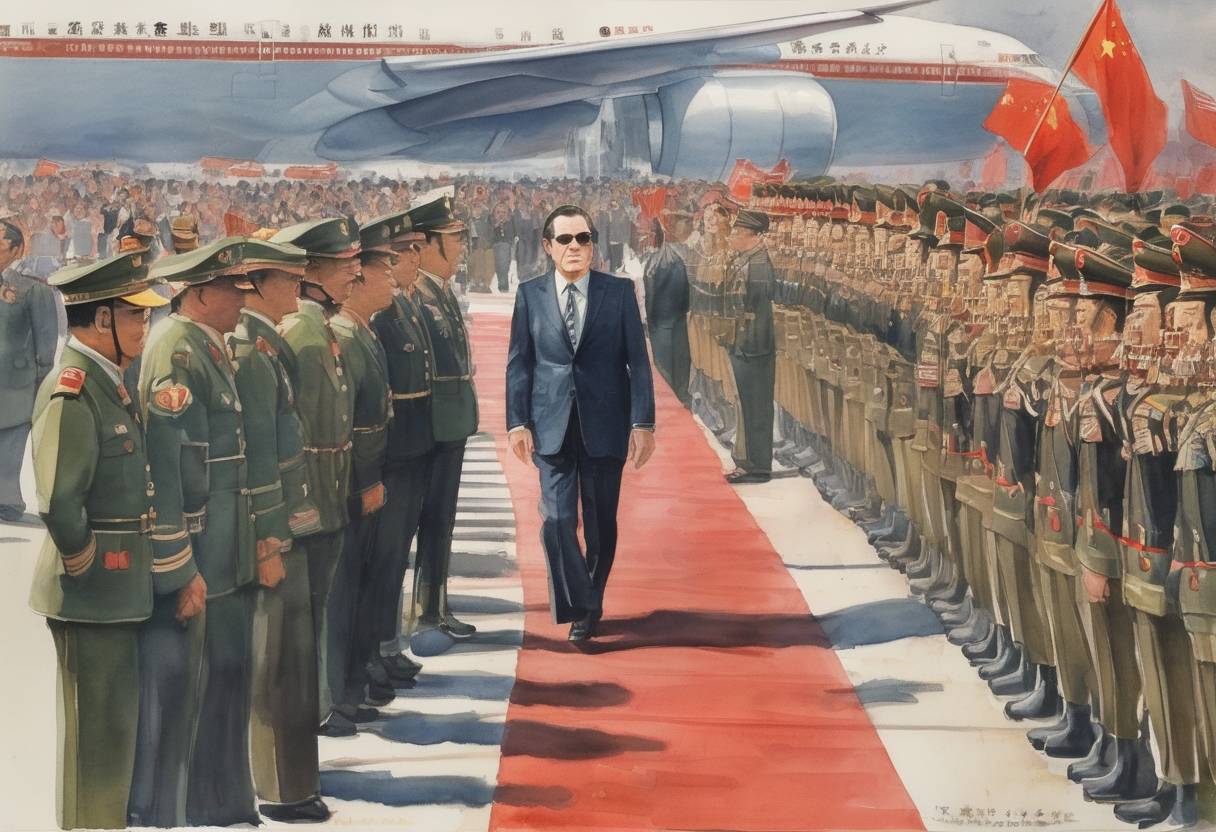
Nixon’s Historic Visit to China: February 21, 1972
On February 21, 1972, U.S. President Richard Nixon made a groundbreaking visit to the People’s Republic of China (PRC), marking the first time a sitting American president had traveled to the PRC. This visit was a pivotal moment in Cold War history and significantly altered the geopolitical landscape of the time.
Context and Background
Cold War Tensions: During the Cold War, the United States and the Soviet Union were the two dominant superpowers, and their rivalry influenced global politics. China, under the leadership of Mao Zedong, had been largely isolated from the West since the Communist Party took power in 1949.
Sino-Soviet Split: By the late 1960s, ideological and border disputes had caused a rift between China and the Soviet Union. This split provided an opportunity for the U.S. to engage with China as a counterbalance to Soviet influence.
Ping-Pong Diplomacy: In 1971, the U.S. and China began to thaw relations through “Ping-Pong Diplomacy,” where American table tennis players were invited to China. This unexpected cultural exchange paved the way for more formal diplomatic engagements.
Key Events of the Visit
Arrival in Beijing: Nixon arrived in Beijing on February 21, 1972, accompanied by his wife, Pat Nixon, and key aides, including National Security Advisor Henry Kissinger. The visit was meticulously planned and covered extensively by the media.
Meetings with Chinese Leaders: Nixon met with Chairman Mao Zedong and Premier Zhou Enlai. These discussions focused on a range of issues, including the Vietnam War, Taiwan, and the potential for future cooperation.
Shanghai Communiqué: The visit culminated in the signing of the Shanghai Communiqué on February 28, 1972. This document outlined the principles of U.S.-China relations, acknowledging differences but emphasizing the importance of peaceful coexistence and mutual respect.
Aftermath and Significance
Improved Relations: Nixon’s visit marked the beginning of a new era in Sino-American relations. It led to the eventual normalization of diplomatic relations between the two countries in 1979.
Strategic Realignment: The visit was a strategic move that shifted the balance of power during the Cold War, putting pressure on the Soviet Union and opening China to the global stage.
Legacy: Nixon’s visit is often cited as a masterstroke of diplomacy, showcasing the potential for dialogue and engagement even amidst deep-seated ideological differences.
Nixon’s visit to China remains a landmark event in international relations, illustrating the power of diplomacy in bridging divides and reshaping global alliances.