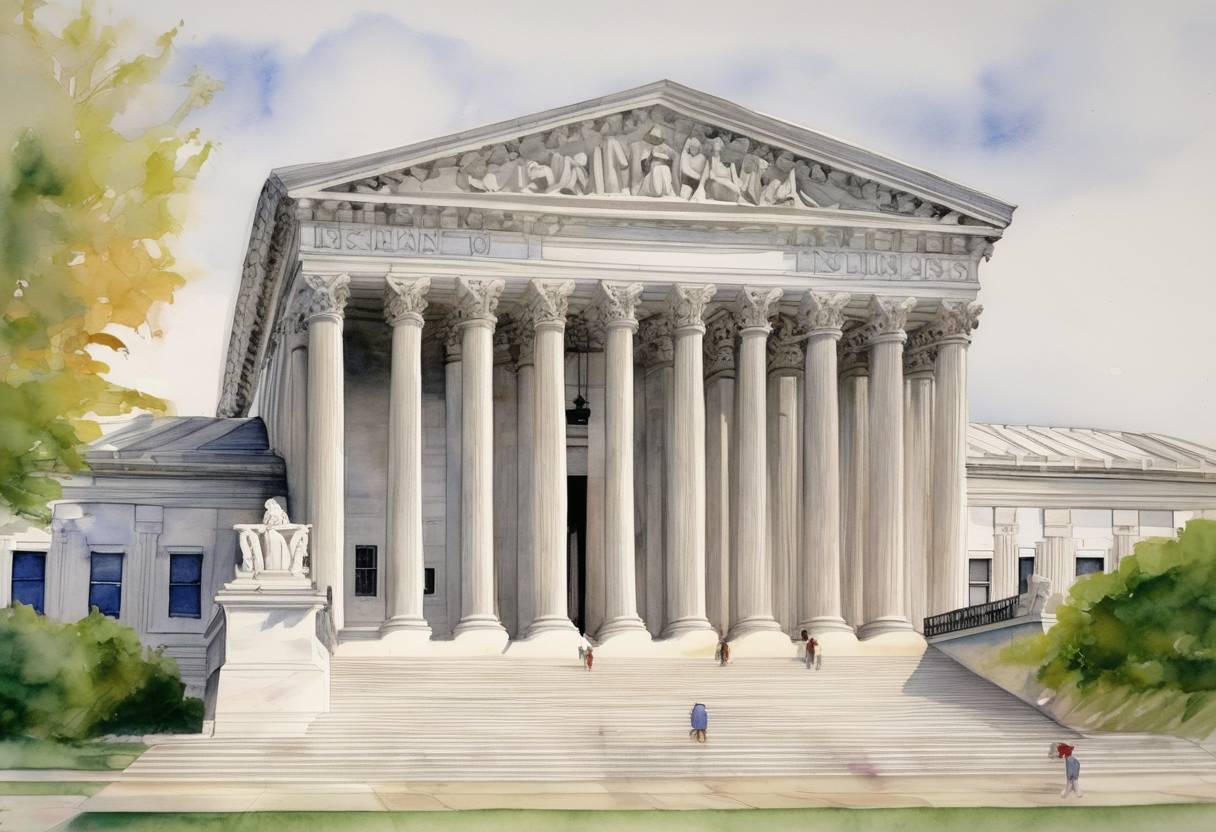
Lawrence v. Texas: A Landmark Supreme Court Decision
On June 26, 2003, the United States Supreme Court delivered a landmark ruling in the case of Lawrence v. Texas, which significantly impacted the legal landscape for LGBTQ+ rights in the United States. This decision struck down sodomy laws across the country, effectively decriminalizing same-sex sexual activity in every U.S. state and territory.
Background
Before this ruling, many states had laws criminalizing consensual sexual acts between adults of the same sex, often referred to as “sodomy laws.” These laws were rooted in historical prejudices and were used to justify discrimination against the LGBTQ+ community.
The case originated in Texas, where John Lawrence and Tyron Garner were arrested in 1998 after police entered Lawrence’s apartment and found the two men engaging in consensual sexual activity. They were charged under Texas’s “Homosexual Conduct” law, which prohibited sexual acts between people of the same sex.
The Legal Journey
- Initial Proceedings: Lawrence and Garner were convicted and fined. They challenged the conviction, arguing that the law violated their constitutional rights to privacy and equal protection under the law.
- Appeals: The case made its way through the Texas court system, eventually reaching the Texas Court of Criminal Appeals, which upheld the convictions.
Supreme Court Decision
- Arguments: The case was argued before the Supreme Court on March 26, 2003. The petitioners contended that the Texas statute violated the Due Process Clause of the Fourteenth Amendment, which guarantees the right to privacy.
- Ruling: On June 26, 2003, the Supreme Court, in a 6-3 decision, ruled in favor of Lawrence and Garner. Justice Anthony Kennedy wrote the majority opinion, stating that the Texas statute furthered no legitimate state interest and violated the due process rights of individuals to engage in private, consensual conduct.
- Overturning Precedent: The decision explicitly overturned the Court’s previous ruling in Bowers v. Hardwick (1986), which had upheld the constitutionality of sodomy laws.
Broader Impact
- Legal Precedent: The ruling in Lawrence v. Texas invalidated sodomy laws in 13 states, affirming the rights of LGBTQ+ individuals to engage in private consensual sexual conduct without fear of criminal prosecution.
- Civil Rights Advancements: This decision was a significant step forward for LGBTQ+ rights, laying the groundwork for future legal victories, including the recognition of same-sex marriage in Obergefell v. Hodges (2015).
- Cultural Shift: Beyond its legal implications, the ruling contributed to a broader cultural shift towards greater acceptance and equality for LGBTQ+ individuals in American society.
The Lawrence v. Texas decision remains a pivotal moment in the ongoing struggle for LGBTQ+ rights, symbolizing a move towards greater personal freedom and equality under the law.