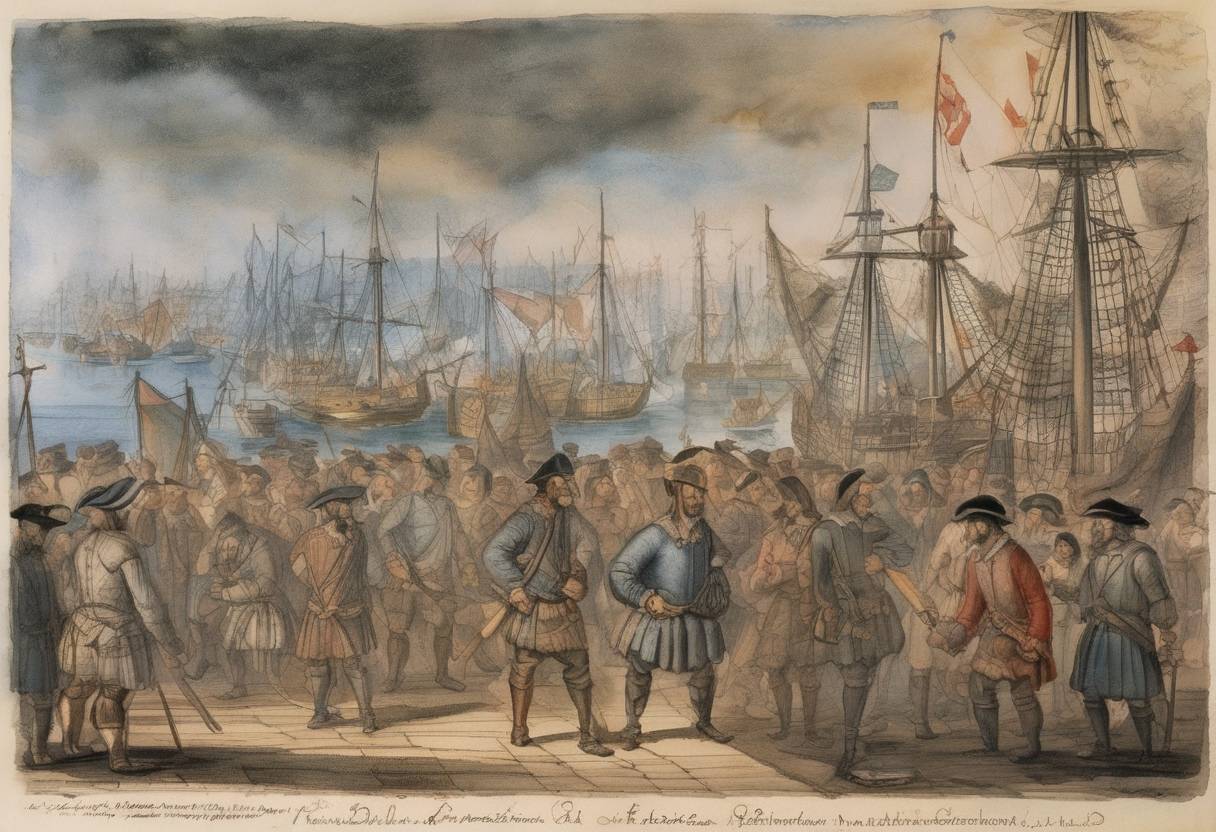
Peter Minuit’s Arrival in New Netherland - May 4, 1626
On May 4, 1626, Peter Minuit, a notable figure in early American colonial history, arrived in New Netherland, a Dutch colony in what is now the northeastern United States. His arrival marked a significant moment in the colonial administration of the region, as he assumed the role of director-general of the colony.
Background
New Netherland: Established by the Dutch West India Company in the early 17th century, New Netherland was part of the Dutch efforts to capitalize on the fur trade and expand their influence in the New World. The colony encompassed parts of present-day New York, New Jersey, Delaware, and Connecticut.
Dutch West India Company: Founded in 1621, the company was granted a charter by the Dutch government to conduct trade and colonization in the Americas and West Africa. It played a crucial role in the establishment and governance of New Netherland.
Peter Minuit
Early Life: Peter Minuit was born around 1580 in Wesel, in present-day Germany. He was of Walloon descent and became involved with the Dutch West India Company due to his business acumen and experience.
Role as Director-General: Minuit was appointed as the third director-general of New Netherland, succeeding Willem Verhulst. His primary task was to strengthen the colony’s economic and administrative structures.
Key Events
Purchase of Manhattan: One of Minuit’s most famous actions was the purchase of Manhattan Island from the Lenape Native Americans. The transaction, often cited as involving goods worth 60 guilders (equivalent to about $24 at the time), is a legendary moment in New York’s history. This purchase laid the groundwork for the establishment of New Amsterdam, which would later become New York City.
Colonial Administration: Minuit’s leadership was characterized by efforts to stabilize and expand the colony. He focused on improving relations with Native American tribes and enhancing the colony’s defenses and infrastructure.
Aftermath and Significance
Legacy: Minuit’s tenure as director-general was relatively short, ending in 1631, but his impact was lasting. The establishment of New Amsterdam as a key trading post helped solidify Dutch presence in North America.
Subsequent Career: After leaving New Netherland, Minuit continued his colonial endeavors, notably helping to establish the Swedish colony of New Sweden in present-day Delaware.
Historical Impact: Minuit’s actions in New Netherland laid the foundation for the future growth of New York City as a major urban center. His dealings with the Native Americans and his role in the early colonial administration are pivotal chapters in the history of European colonization in North America.
Peter Minuit’s arrival in New Netherland and his subsequent actions were instrumental in shaping the early history of what would become one of the most significant cities in the world. His legacy is a testament to the complex interactions between European settlers and indigenous peoples during the colonial era.