The Dutch Surrender New Amsterdam to the English: September 8, 1664
1664 · New Amsterdam (now New York City), United States
The Dutch surrender New Amsterdam to the English, who rename it New York.
September 24, 1664
New Amsterdam was formally surrendered by the Dutch to the English, and it was renamed New York in honor of the Duke of York, who would later become King James II of England.
New Amsterdam (now New York City), Dutch colony (now United States) | Dutch West India Company
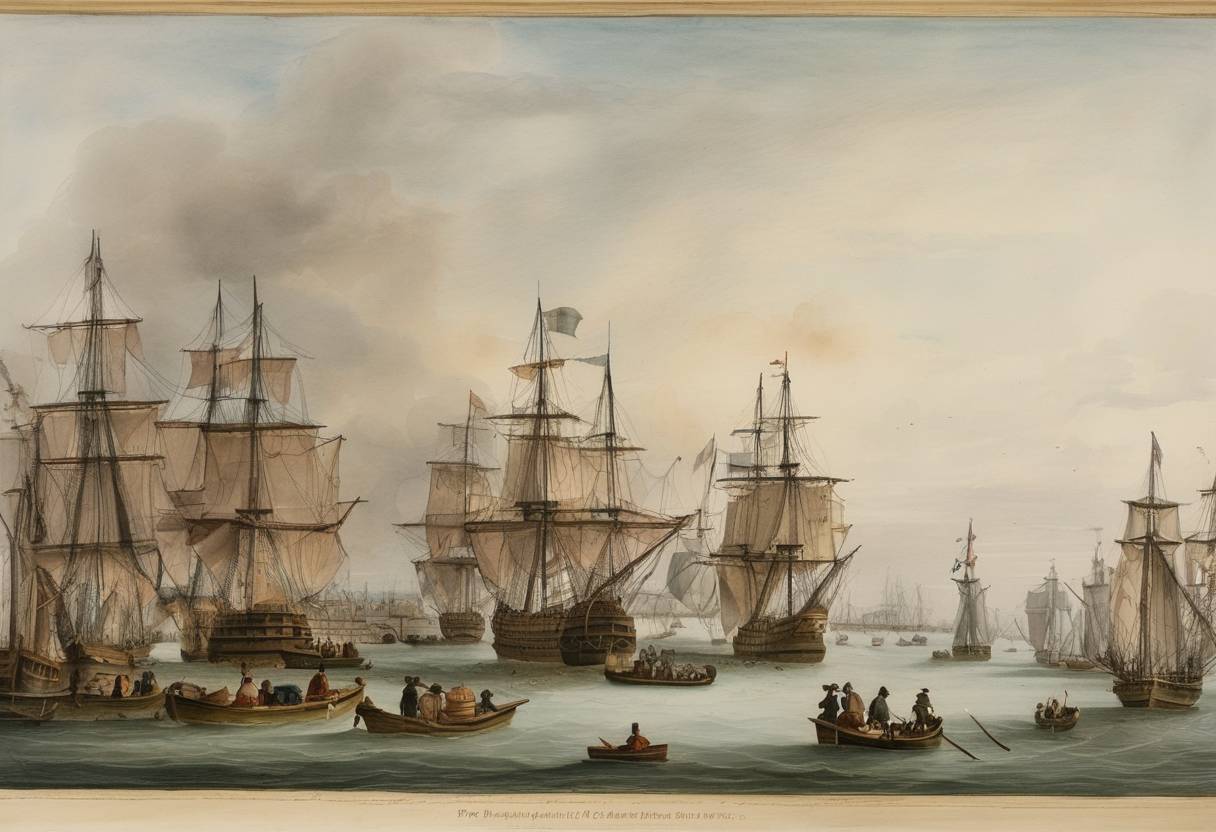
On September 24, 1664, New Amsterdam was formally surrendered by the Dutch to English forces, marking a pivotal shift in colonial control in North America. This transfer was part of a larger Anglo-Dutch conflict over trade and territories.
The Dutch had established New Amsterdam on Manhattan Island, part of the larger New Netherland, in 1624. The settlement was strategically located at the mouth of the Hudson River, serving as a key trading hub for the Dutch West India Company. However, the mid-17th century saw rising tensions between European powers over lucrative trade routes and colonial expansion. The English, eager to expand their territories and exert control over the burgeoning Atlantic trade networks, set their sights on the profitable New Netherland.
In August 1664, an English naval fleet, dispatched by King Charles II and led by Colonel Richard Nicolls, arrived in New Amsterdam. The fleet anchored in the harbor and demanded the surrender of the colony. Peter Stuyvesant, the Director-General of New Netherland, initially resisted. However, facing significant military pressure, inadequate defenses, and lack of support from his colonists—many of whom were English or unhappy with Dutch administration—Stuyvesant capitulated on September 24, 1664.
Following the surrender, New Amsterdam was swiftly renamed New York in honor of the Duke of York, King Charles II’s brother, who would later ascend to the English throne as King James II. The transfer was relatively smooth, with the English allowing Dutch settlers to remain and continue their livelihoods under new governance. The occupation marked the beginning of increased English influence in the region, integrating it into what would become a cornerstone of the British Empire’s North American interests.
The capture of New Amsterdam represented a significant realignment of colonial power in North America. It laid the foundation for New York’s future as a major economic and cultural center. Additionally, this event foreshadowed future Anglo-Dutch conflicts, given the ongoing competition for global dominance.
This episode underscores the impact of colonial competition on the shaping of modern nation-states and highlights how strategic territorial acquisitions could alter the course of history.
Source: en.wikipedia.org