Romania's Shift from Axis to Allies on August 22, 1944
1944 · Bucharest, Romania
World War II: Romania switched allegiance from the Axis Powers to the Allies, marking a significant shift in the Eastern European theater of the war.
August 26, 1944
Romanian King Michael leads a successful coup to topple the pro-Nazi government, switching sides in World War II to join the Allies.
Bucharest, Romania | Romanian Government
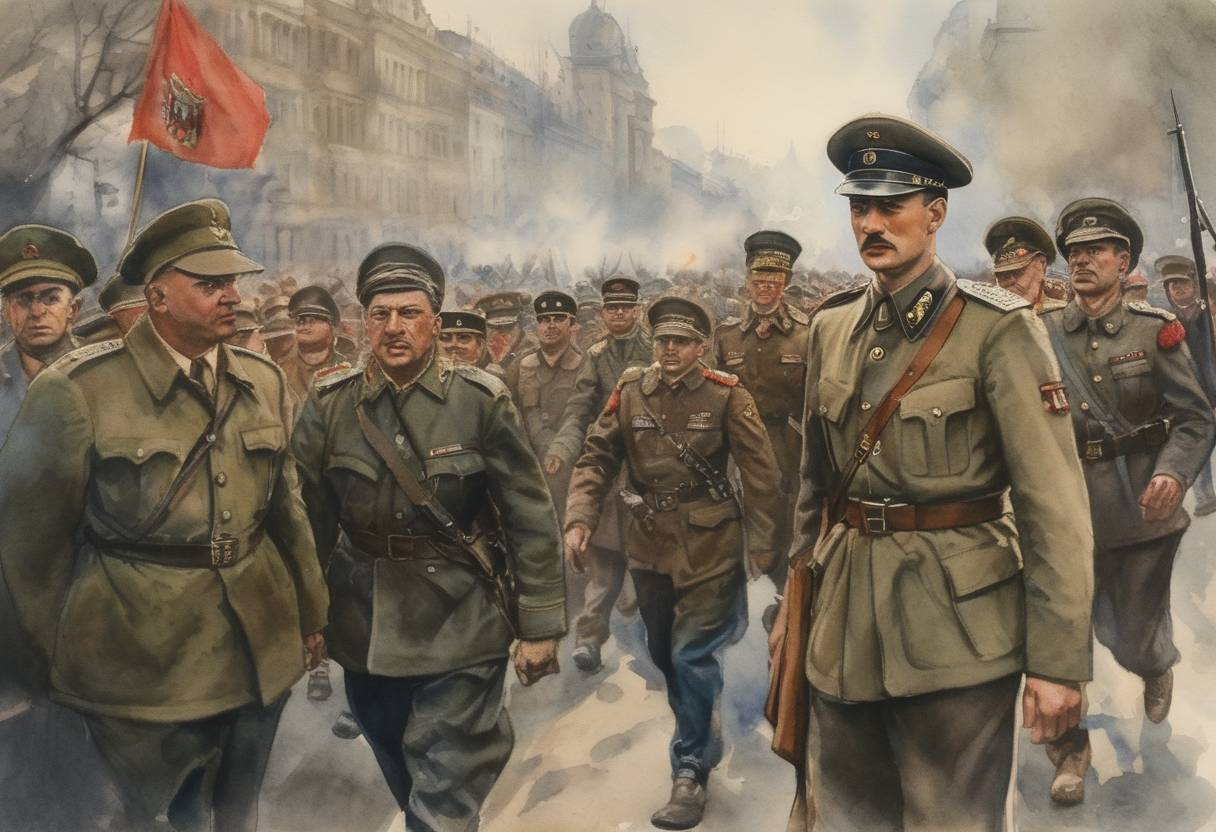
On August 26, 1944, King Michael I of Romania executed a successful coup against the pro-Nazi government led by Prime Minister Ion Antonescu. This pivotal moment marked a critical shift in the country’s allegiance during World War II, aligning Romania with the Allied powers.
During World War II, Romania was initially aligned with the Axis powers, led by Nazi Germany. The country’s leadership, under Antonescu, had committed Romanian troops and resources to support German military operations, particularly on the Eastern Front against the Soviet Union. However, as the war progressed and the Soviet Union started gaining momentum against the Nazis, there was growing discontent within Romania about the continued alliance with Germany.
Following intense pressure both from internal and external forces, King Michael I decided to act to prevent further destruction in Romania and to extricate the country from its ties with the Axis. On August 23, 1944, the king invited Antonescu to the royal palace and demanded his resignation. When Antonescu refused, he was promptly arrested.
The success of the coup was quickly solidified by gaining the support of key military and political leaders within Romania. This support was critical in maintaining order and ensuring a smooth transition of power. By August 26, the coup was fully in effect, with the king establishing a provisional government committed to negotiating peace with the Allies.
The switch in allegiance had significant consequences for both Romania and the broader theater of World War II. Domestically, the coup led by King Michael facilitated the establishment of an armistice with the Soviet Union, which was formally signed on September 12, 1944. This armistice allowed Soviet troops to cross Romanian territory as they advanced towards central Europe.
Internationally, Romania’s defection dealt a blow to Nazi Germany, depriving it of critical resources and military support. The Romanian army began fighting alongside the Soviet forces against German troops, contributing to hastening the end of the war in Europe.
King Michael’s coup is regarded as a courageous and decisive action that not only altered the course of Romanian history but also had a strategic impact on the outcome of World War II. This event underscored the importance of internal political dynamics in altering alliances and influencing the course of international conflicts. The coup also paved the way for the eventual establishment of a communist regime in Romania as Soviet influence grew in the post-war period.
These developments highlight the complex interplay of military strategy, political maneuvering, and international diplomacy that characterized World War II.
Source: encyclopedia.ushmm.org