The Spanish Armada Sets Sail - May 28, 1588
1588 · Lisbon, Portugal
The Spanish Armada, a fleet of 130 ships, sets sail from Lisbon, Portugal, under the command of the Duke of Medina Sidonia, with the intention of invading England.
December 30, 1591
A fleet of 5 Spanish galleys was caught in a storm and wrecked in the Strait of Gibraltar. This represents a significant loss for Spanish naval interests at the time.
Strait of Gibraltar, Spain | Spanish Navy
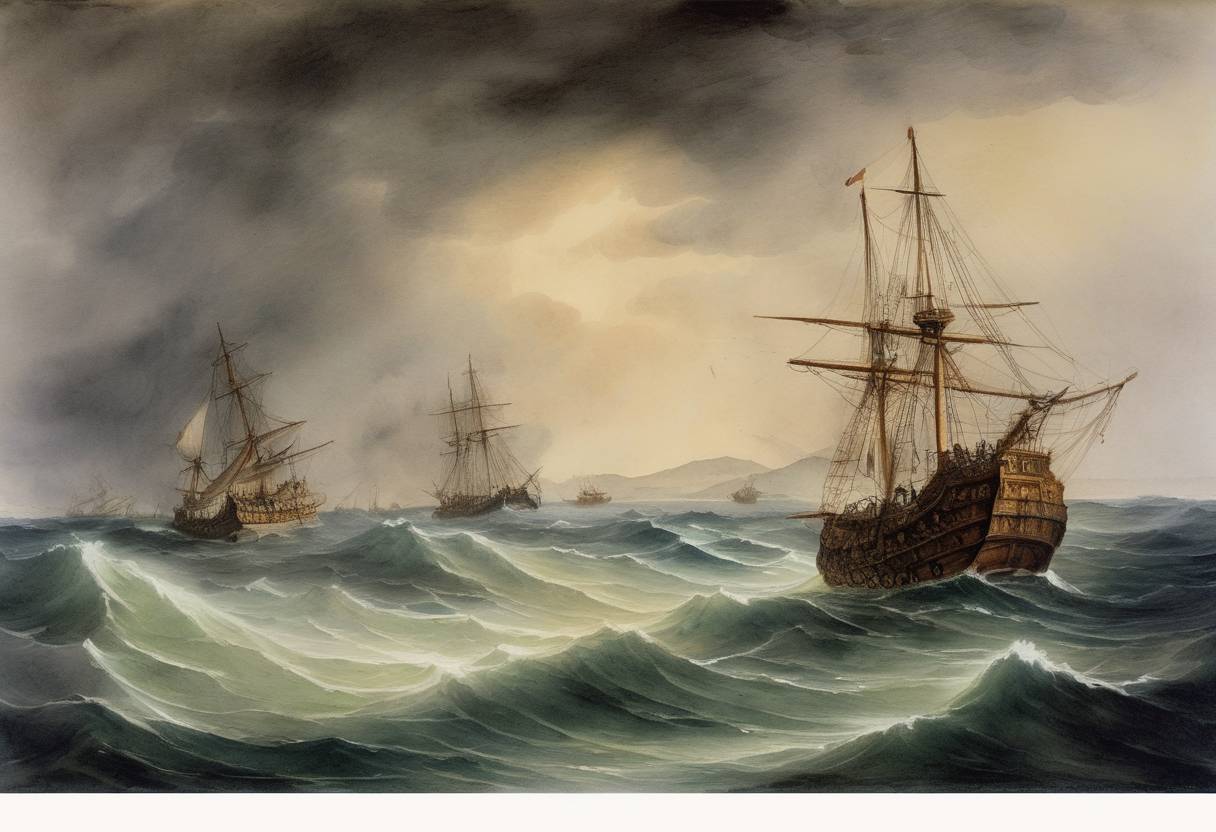
On December 30, 1591, a fleet of five Spanish galleys encountered a severe storm in the Strait of Gibraltar, leading to their catastrophic wreck. This event marked a notable loss for Spanish naval power during a period of intense maritime conflict and expansion.
During this time, Spain was one of the most powerful maritime nations in the world. Under King Philip II, the Spanish Empire had established vast global dominions, including territories in the Americas, parts of Europe, and along the coasts of Africa and Asia. The Spanish Armada had experienced its defeat against England in 1588, just a few years prior, marking a period of naval vulnerability and challenges.
The fleet of five galleys that set sail on this mission was part of Spain’s broader efforts to maintain control over its maritime routes and safeguard its territories. Galleys were vital to Spain’s naval operations, known for their speed and maneuverability, crucial in the often narrow and congested Mediterranean waters.
The specific details of the storm that struck remain sparse, but its impact was devastating. Located at the crucial maritime juncture of the Strait of Gibraltar, where the Atlantic Ocean meets the Mediterranean Sea, the region is notorious for its unpredictable weather. The loss of these galleys not only represented a significant financial and material detriment to the Spanish fleet but also underscored the inherent risks of naval dominance.
The destruction of these galleys weakened Spain’s immediate naval capabilities in the Mediterranean, a vital theater for protecting the interests of its empire. This event highlighted the vulnerability of even the mightiest states to the uncontrollable forces of nature. Furthermore, it stressed the importance of technological and strategic advancements in shipbuilding and navigation to ensure safer passage through treacherous waters.
While not as widely documented as the defeat of the Armada, the 1591 loss of the Spanish galleys in the Strait of Gibraltar serves as a reminder of the constant perils faced by seafaring nations of the time and the pivotal role that environmental conditions played in shaping historical outcomes.
Source: en.wikipedia.org