The Abdication of Emperor Puyi: The End of the Qing Dynasty
1912 · Beijing, China
The last Emperor of China, Puyi, abdicates the throne, marking the end of the Qing Dynasty and the imperial era in China.
December 2, 1908
Pu Yi was appointed Emperor of the Qing dynasty at the age of two following the death of his uncle, the Guangxu Emperor.
Beijing, China | Qing dynasty
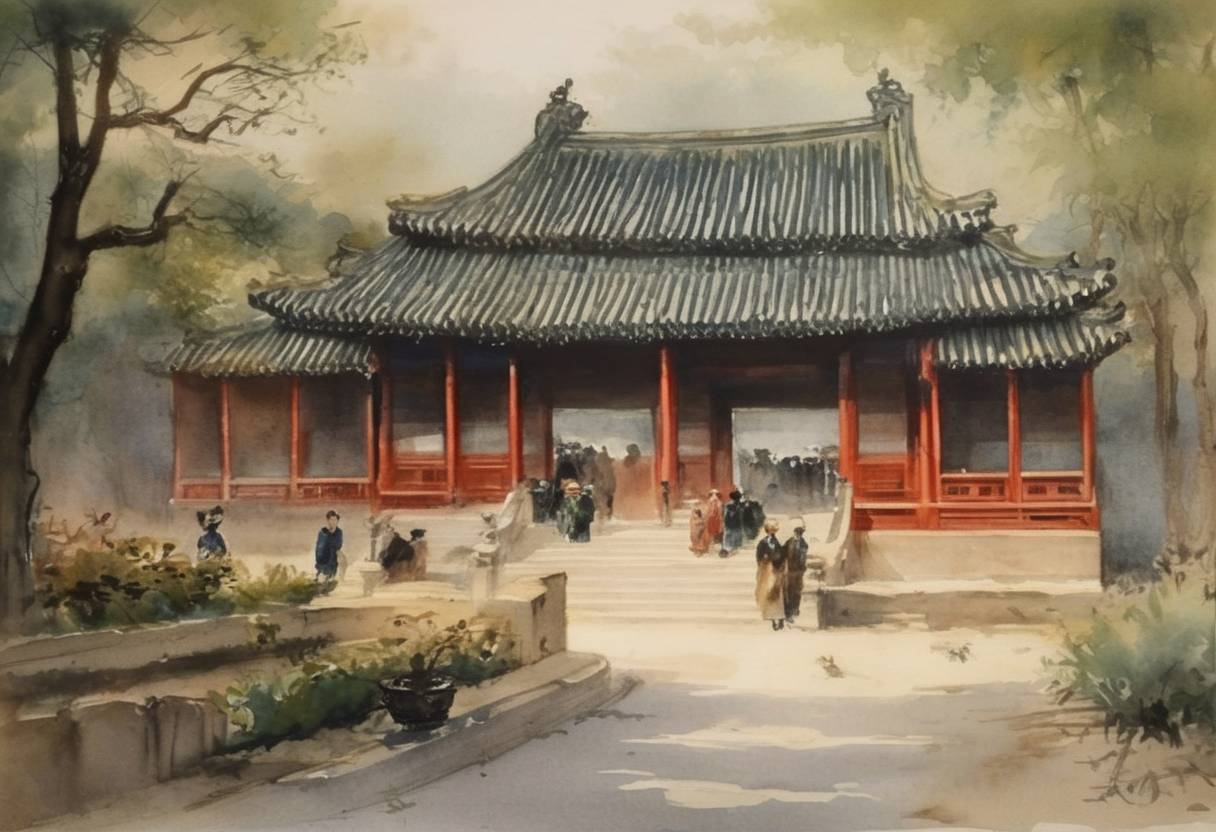
On December 2, 1908, a significant event unfolded in the history of China as Pu Yi was appointed to the throne of the Qing dynasty. This marked a pivotal moment in Chinese history as Pu Yi, at just two years and ten months old, became the Emperor following the death of his uncle, the Guangxu Emperor.
The Qing dynasty, which had ruled China since 1644, was in a tumultuous state during the late Qing period. The Guangxu Emperor, who had reigned from 1875 until his death in 1908, was a monarch under the considerable influence of the Empress Dowager Cixi, one of the most powerful women in Chinese history. The Guangxu Emperor’s reign was characterized by the failed Hundred Days’ Reform of 1898, an attempt to modernize China’s political and social systems that was suppressed by Cixi.
Cixi, who effectively controlled the Qing court, orchestrated the ascension of Pu Yi in the final days of her life to continue the line of succession.
On November 14, 1908, the Guangxu Emperor died under mysterious circumstances, and the very next day, Empress Dowager Cixi also passed away. Before her death, Cixi had named her nephew, the infant Pu Yi, as the next emperor. Thus, on December 2, 1908, Pu Yi formally ascended the throne as Xuantong Emperor.
Pu Yi’s enthronement came at a time of significant internal and international challenges for China. By 1908, the Qing dynasty faced declining power, internal rebellions, and increasing pressure from foreign imperialist powers. Pu Yi’s reign as emperor was largely symbolic, as the regency was dominated by conservative factions within the court.
Pu Yi was the last Emperor of China, and the Qing dynasty ultimately fell in 1912 following the Xinhai Revolution, leading to the establishment of the Republic of China. Pu Yi’s life after abdication was complex, as he later became a puppet ruler of Manchukuo under Japanese occupation and was eventually captured by Soviet forces at the end of World War II.
Pu Yi’s brief reign as the child emperor symbolizes the end of over two millennia of imperial rule in China. His life and reign have been subject to much historical analysis, reflecting broader themes of power, colonialism, and the profound shifts in Chinese society in the early 20th century.
Source: en.wikipedia.org