Discovery of Mass Grave in Visegrád, Hungary - July 22, 1990
1990 · Visegrád, Hungary
A mass grave containing the bodies of executed dissidents is discovered in Visegrád, Hungary.
December 12, 1408
The Order of the Dragon, a monarchical chivalric order, was founded by Sigismund of Luxembourg, the King of Hungary (later Holy Roman Emperor), to protect Christianity and the Hungarian monarchy. The founding members of this order pledged to defend the Catholic Church and honor Christian morality.
Visegrád, Hungary | Order of the Dragon
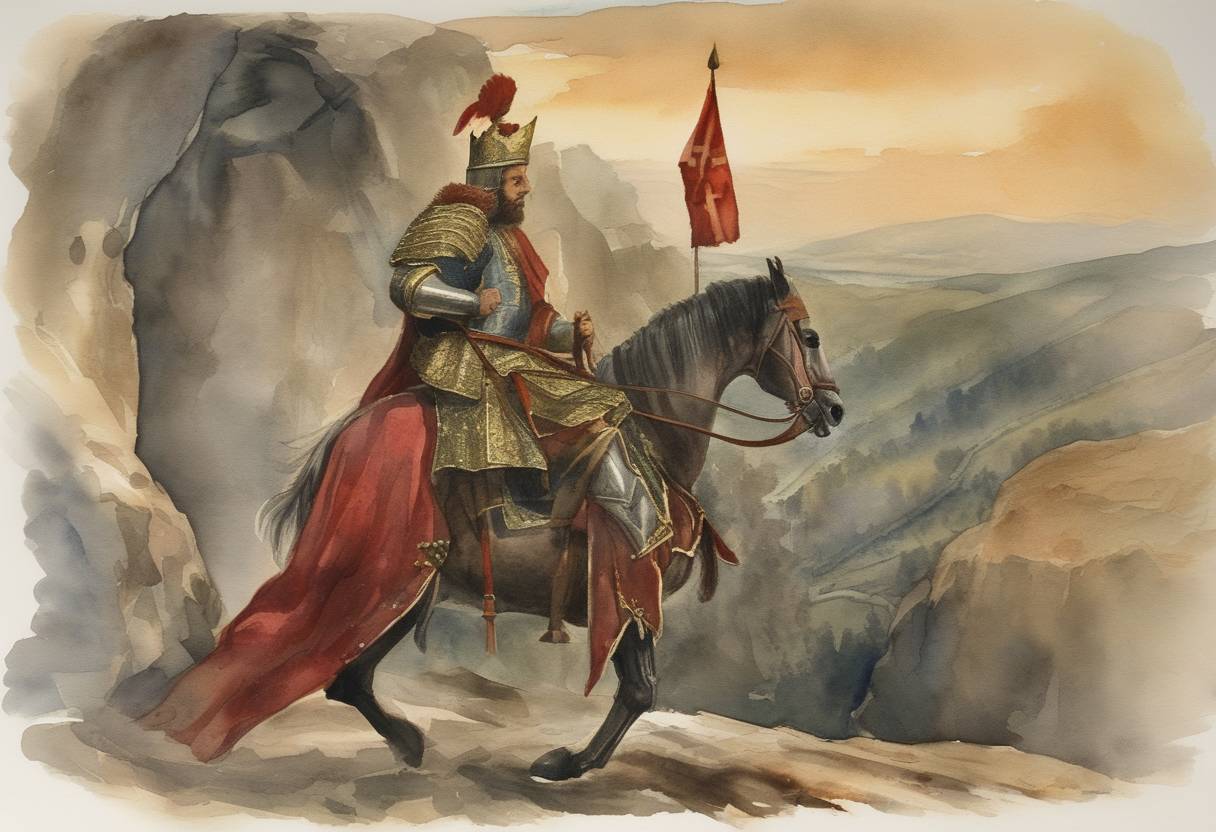
The Order of the Dragon was founded on December 12, 1408, by Sigismund of Luxembourg, who was the King of Hungary and Croatia at the time. This chivalric order was established chiefly to protect Christianity and support the consolidation of power around the Hungarian monarchy, reflecting both the religious and political motivations common to medieval Europe.
In the early 15th century, Europe was marked by significant religious and political turmoil. The Ottoman Empire’s expansion posed a serious threat to Christian territories in Eastern Europe. Sigismund, who would later become the Holy Roman Emperor, sought to create a defensive alliance among Christian nobility to counter these threats and to solidify his sovereignty.
The primary objectives of the Order of the Dragon included defending the Catholic Church against heretics and pagans and supporting the monarchy of Hungary. Its members pledged to uphold Christian values and conduct themselves with chivalry.
The order’s insignia was a dragon with its tail coiled around its neck, symbolizing the members’ sworn dedication to the order’s goals. This emblem was inspired by the dragon slain by Saint George, a storied defender of Christian virtue.
The founding ceremony on December 12, 1408, was attended by significant figures of the time, including notable Hungarian lords and regional leaders. Among its most famous members was Vlad II Dracul, the father of Vlad the Impaler. This demonstrates the order’s connections to several influential noble families across Europe.
Membership was primarily composed of Sigismund’s closest allies—a strategic decision to fortify his rule and protect his kingdoms from internal and external threats.
The Order of the Dragon played a crucial role during a period characterized by religious conflicts and territorial disputes. It exemplified the era’s blend of religious devotion and political ambition. Additionally, its influence is seen in Eastern European history and through the legacies of its members, like the notorious lineage of Vlad the Impaler, which inspired various cultural and historical narratives.
By aligning powerful nobles across Europe under a common cause, Sigismund sought to centralize authority and foster unity among Christian states against the advance of Islam. While the order dissolved in the ensuing decades, its establishment marked a significant example of how chivalric orders could be used to fortify political alliances and religious missions during the Middle Ages.
Source: en.wikipedia.org