The First Convening of the Supreme Court of the United States
1790 · New York City, United States
The Supreme Court of the United States convenes for the first time.
October 19, 1789
John Jay was sworn in as the first Chief Justice of the United States.
New York City, United States | United States Supreme Court
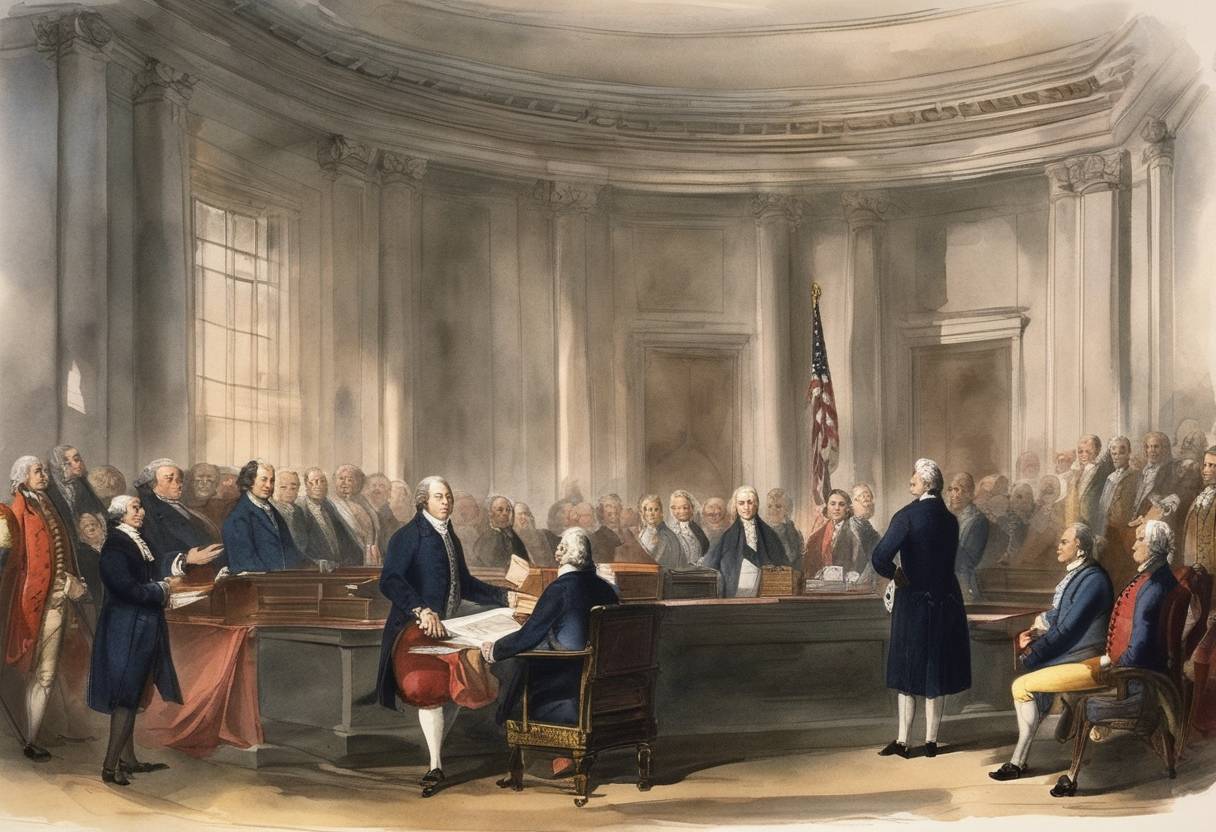
On October 19, 1789, John Jay was officially sworn in as the first Chief Justice of the United States, marking a significant event in American judicial history. Appointed by President George Washington, Jay’s induction into this role established the judicial branch as a vital component of the newly formed government under the U.S. Constitution.
Prior to his appointment, John Jay was a prominent figure in American politics and diplomacy. Born on December 12, 1745, in New York City, Jay played a crucial role in the American Revolution and was a key negotiator of the Treaty of Paris, which ended the conflict in 1783. He also served as the President of the Continental Congress and later held the position of Secretary of Foreign Affairs under the Articles of Confederation.
The Judiciary Act of 1789, passed on September 24, 1789, laid the foundation for the federal judiciary system, including the Supreme Court. This act determined the Court’s structure, jurisdiction, and the number of justices. John Jay was nominated as the first Chief Justice shortly after the passage of this act and was confirmed by the Senate.
Jay’s appointment to the Supreme Court was a move to solidify the legitimacy and authority of the judiciary branch of the government. As Chief Justice, Jay’s role was not only to preside over court cases but also to help establish important judicial precedents and interpret the Constitution for future generations.
During his tenure from 1789 to 1795, Jay established important practices and was involved in several landmark cases that helped define the role and power of the Supreme Court in the United States. Although his time as Chief Justice was relatively brief, as he resigned to become Governor of New York in 1795, his contributions to the nascent judicial system were substantial.
Jay’s impactful career continued even after his judiciary role, further contributing to the evolving vocabulary of governance in the United States. His leadership as the first Chief Justice set important precedents and helped solidify the judiciary’s coequal status with the executive and legislative branches of government.
Source: en.wikipedia.org