Hincmar, Archbishop of Reims: His Death and Legacy
882 · Reims, West Francia
Hincmar, Archbishop of Reims, dies. He was a significant figure in the Carolingian Renaissance, known for his theological writings and political influence.
September 15, 1171
After the assassination of his predecessor, Amalric of Nesle, Guillaume aux Blanches Mains is elected Archbishop of Reims.
Reims, France | Catholic Church
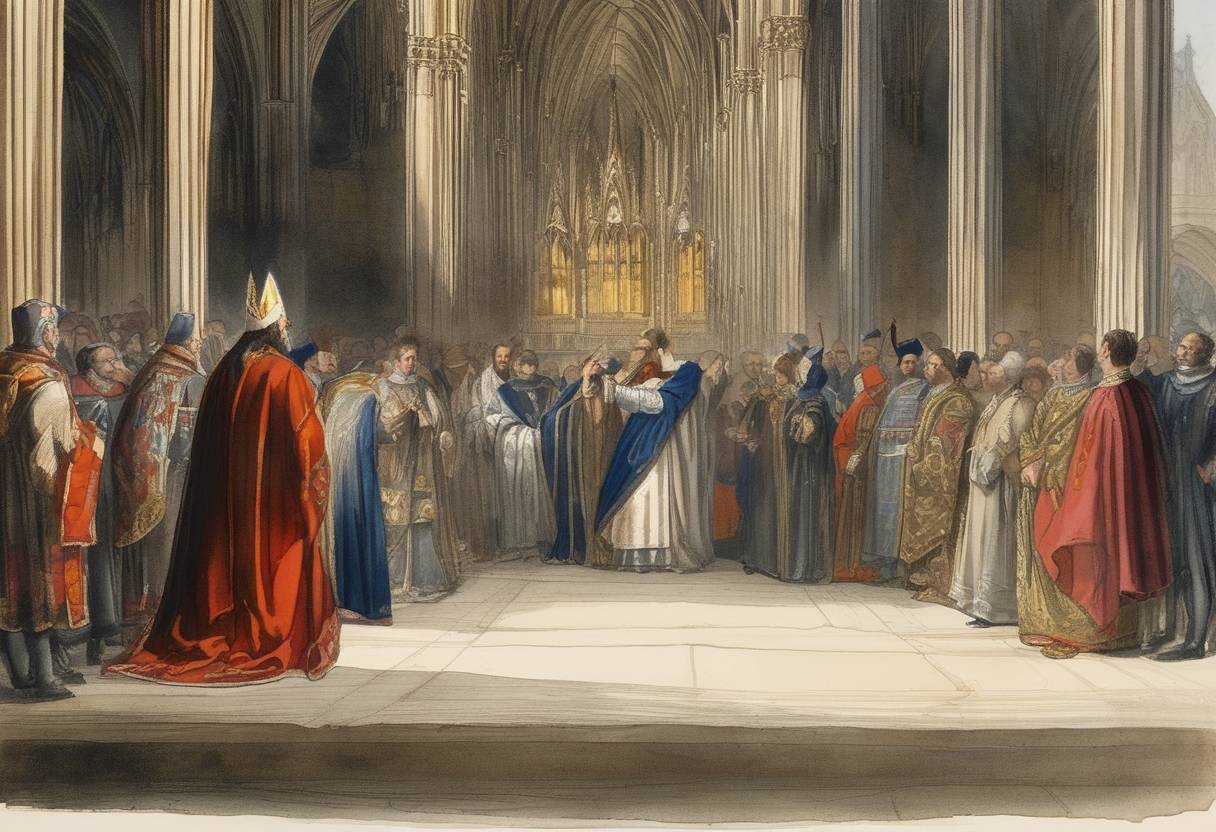
On September 15, 1171, Guillaume aux Blanches Mains was elected as the Archbishop of Reims after the assassination of his predecessor, Amalric of Nesle. This event held significance in the ecclesiastical and political realms of medieval France, as the Archbishop of Reims was a pivotal figure in the Roman Catholic Church and French coronations.
The Importance of Reims: The Archbishop of Reims played a vital role in French history. Reims was the site for the traditional coronation of French kings, thus, the Archbishop held substantial influence in both religious and political spheres.
Amalric of Nesle’s Assassination: Amalric of Nesle served as the Archbishop before Guillaume. However, he met a violent end, which necessitated the swift election of a successor to maintain ecclesiastical authority and continuity.
Early Life and Career: Guillaume, nicknamed “aux Blanches Mains” (meaning “white hands”) possibly for his noble lineage or purity, was well-connected, with family ties among the French nobility. His rise within the church was marked by steady advancement through various clerical ranks.
Impact on the Church: Guillaume’s election coincided with a period of significant church reforms across Europe. As Archbishop, he contributed to the religious and judicial functions of the church, aligning with broader Gregorian reforms aimed at increasing clerical independence and enforcing strict church discipline.
Coronation Duties: As Archbishop of Reims, Guillaume would later officiate at the coronation of several French kings, reinforcing the legitimacy of their rule through anointment and consecration.
Legacy: Guillaume aux Blanches Mains was known for his administrative skills and contributions to the church. His tenure helped stabilize the region’s ecclesiastical matters post-assassination and left a lasting legacy on the religious practices of France.
His election not only restored stability to the ecclesiastical leadership of Reims but also ensured that the historical tradition of the French monarchy’s coronation rites continued unimpeded, maintaining the deep connection between the church and the state during the medieval period.
Source: en.wikipedia.org