First Highway and Road Traffic Control Center in Cleveland, Ohio - October 31, 1913
1913 · Cleveland, United States
The first highway and road traffic control center opened in Cleveland, Ohio.
October 13, 1930
The Buenos Aires Metro, one of the oldest subway systems in the world, was inaugurated.
Buenos Aires, Argentina | Buenos Aires Metro
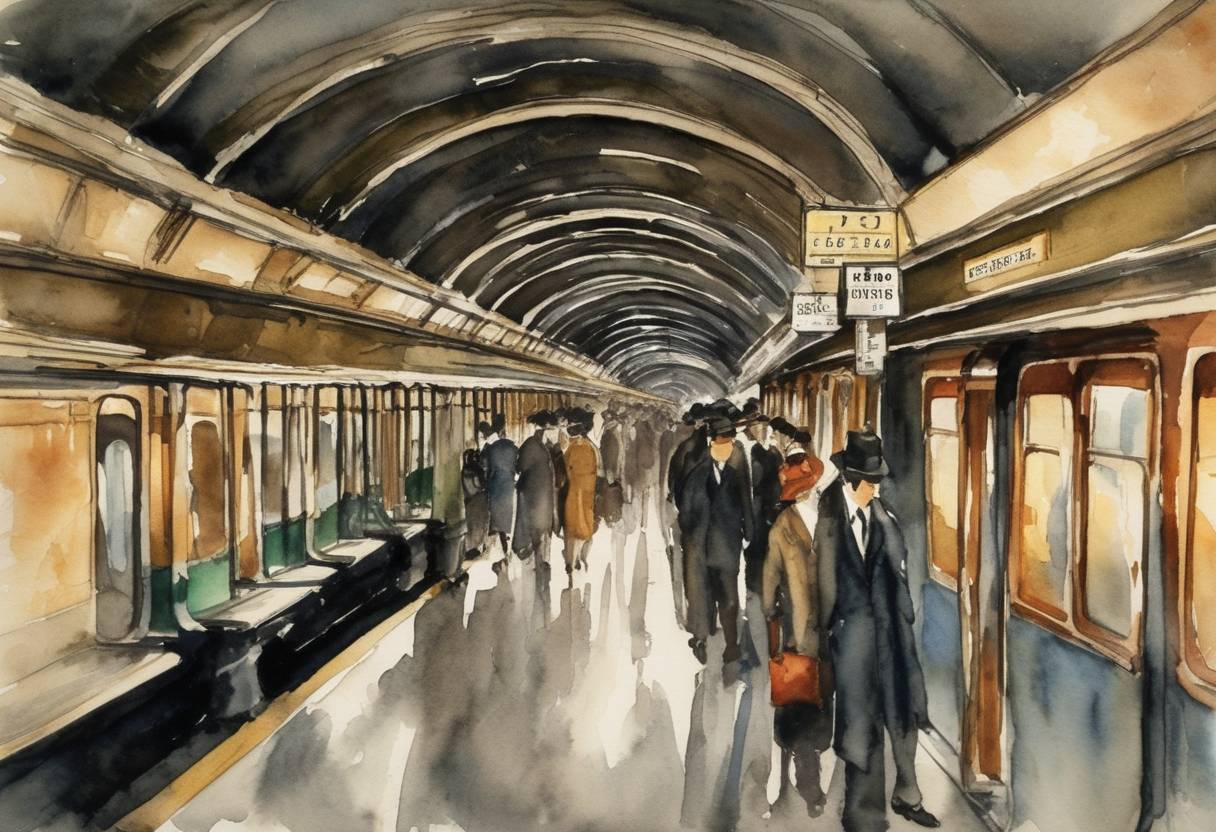
On October 13, 1930, the Buenos Aires Metro, also known as the “Subterráneo de Buenos Aires,” was inaugurated. This significant event marked the opening of the first subway system in Latin America and the Southern Hemisphere. The Metro endeavored to address the growing urban transit needs of Buenos Aires, a city that was rapidly expanding in population and economic activity during the early 20th century.
By the late 1920s, Buenos Aires was emerging as one of the most vibrant urban centers in the Americas, drawing both international attention and a continually increasing populace. This growth led to severe congestion in the city’s streets. To alleviate this, in 1911, planning for a subway system commenced, spearheaded by the Anglo-Argentine Tramways Company (Compañía de Tranvías Anglo-Argentina).
Construction of the initial line, known as Line A, began in 1911, reflecting advanced engineering efforts of the time. The work was predominantly carried out by the British and influenced by existing European subway systems, particularly London and Paris. The ambitious project focused on connecting major urban areas, facilitating economic activity, and enhancing daily commute efficiency for city dwellers.
The Buenos Aires Metro quickly became a cornerstone of public transport, dramatically transforming how residents and visitors navigated the city. Over the decades, it expanded to include multiple lines and became a model of how urban rail systems could be implemented in cities outside of Europe and North America.
The successful inception of the Metro marked the beginning of Argentina’s continuous efforts to expand and modernize its transit systems. Today, the Buenos Aires Metro remains a crucial fixture of the city’s infrastructure, reflecting both its historic roots and ongoing development to keep pace with modern transportation demands.
Source: en.wikipedia.org