The Arrest of the Knights Templar: October 13, 1307
1307 · Paris, France
King Philip IV of France ordered the arrest of the Knights Templar, leading to the eventual dissolution of the order.
September 7, 1303
The Capture of the Pope, known as the Outrage of Anagni, took place when French forces, led by Guillaume de Nogaret, arrested Pope Boniface VIII in Anagni, Italy.
Anagni, Italy | French Crown
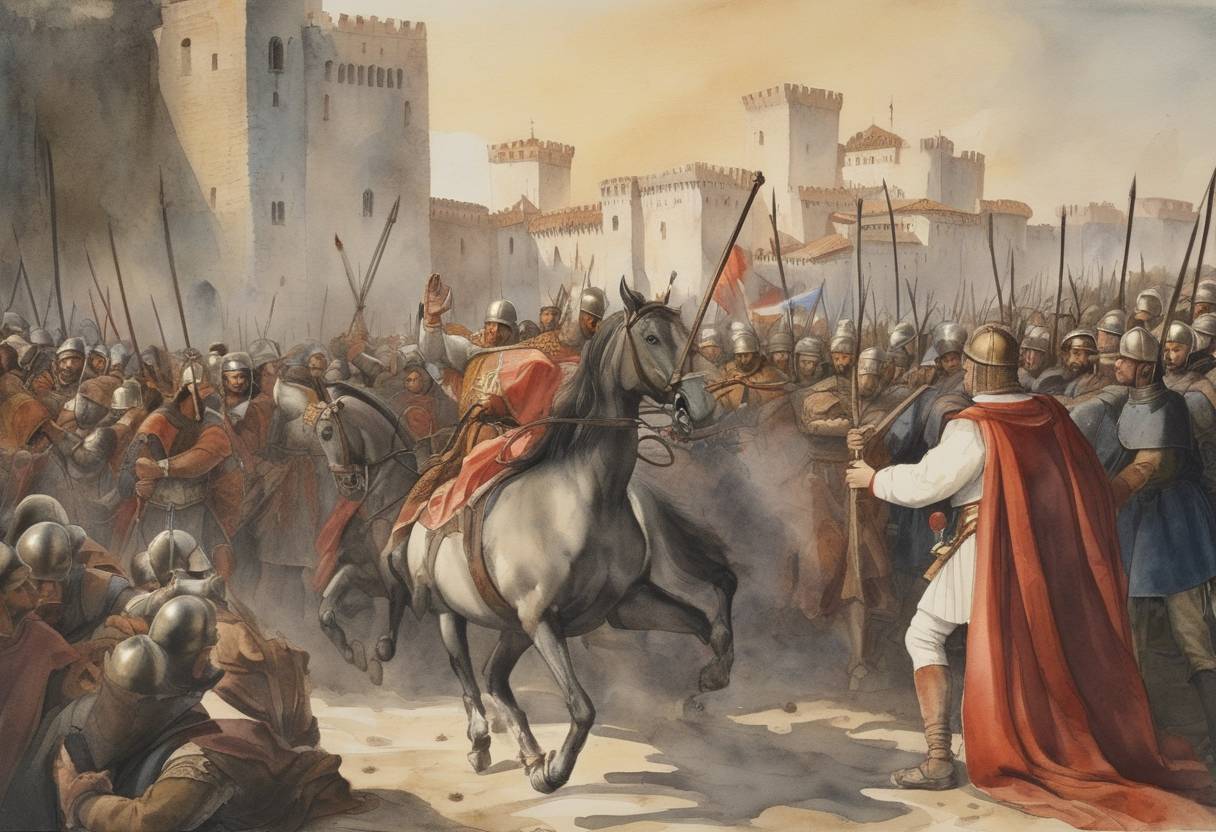
On September 7, 1303, an incident known as the Outrage of Anagni occurred, whereby Pope Boniface VIII was captured in Anagni, Italy, by French forces led by Guillaume de Nogaret. This event marked a critical moment in the long-standing conflict between the papacy and secular powers, notably King Philip IV of France.
The tension between Pope Boniface VIII and King Philip IV had been escalating for years, largely due to disputes over the authority and autonomy of the Church versus the monarchy. Boniface VIII issued the papal bull Clericis Laicos in 1296, which prohibited the taxation of the clergy without papal approval, thereby challenging the French king’s financial policies. In response, Philip IV countered with measures to limit papal influence in France.
Later, the situation worsened with the issuance of the papal bull Unam Sanctam in 1302, asserting the supremacy of papal authority over temporal powers. This bull was one of Boniface’s last attempts to assert papal supremacy, directly challenging the authority of national monarchies.
Guillaume de Nogaret, acting on behalf of King Philip IV, allied with members of the powerful Colonna family, who were adversaries of Boniface. They orchestrated a surprise attack on the papal residence in Anagni. On September 7, 1303, the French forces seized the pope, marking a rare and unprecedented attack on papal sovereignty.
The capture was not only a blatant show of defiance against papal authority but also a humiliation for Boniface VIII. However, the local population in Anagni eventually rose against the captors after three days, and the pope was released. Despite this reversal, the incident significantly weakened Boniface’s position and health.
Pope Boniface VIII died less than a month after the incident, on October 11, 1303. This event is viewed as a turning point in the struggle between the papacy and the rising tide of nation-states. It symbolized the waning power of the papacy in medieval Europe and the growing authority of secular monarchs.
The Outrage of Anagni was a precursor to the Avignon Papacy, where subsequent popes resided in Avignon under heavy French influence, further illustrating the shifting dynamics between church and state. This period is often seen as the beginning of the decline in papal political power, setting the stage for myriad changes within the church and European governance in the centuries to follow.
Source: en.wikipedia.org