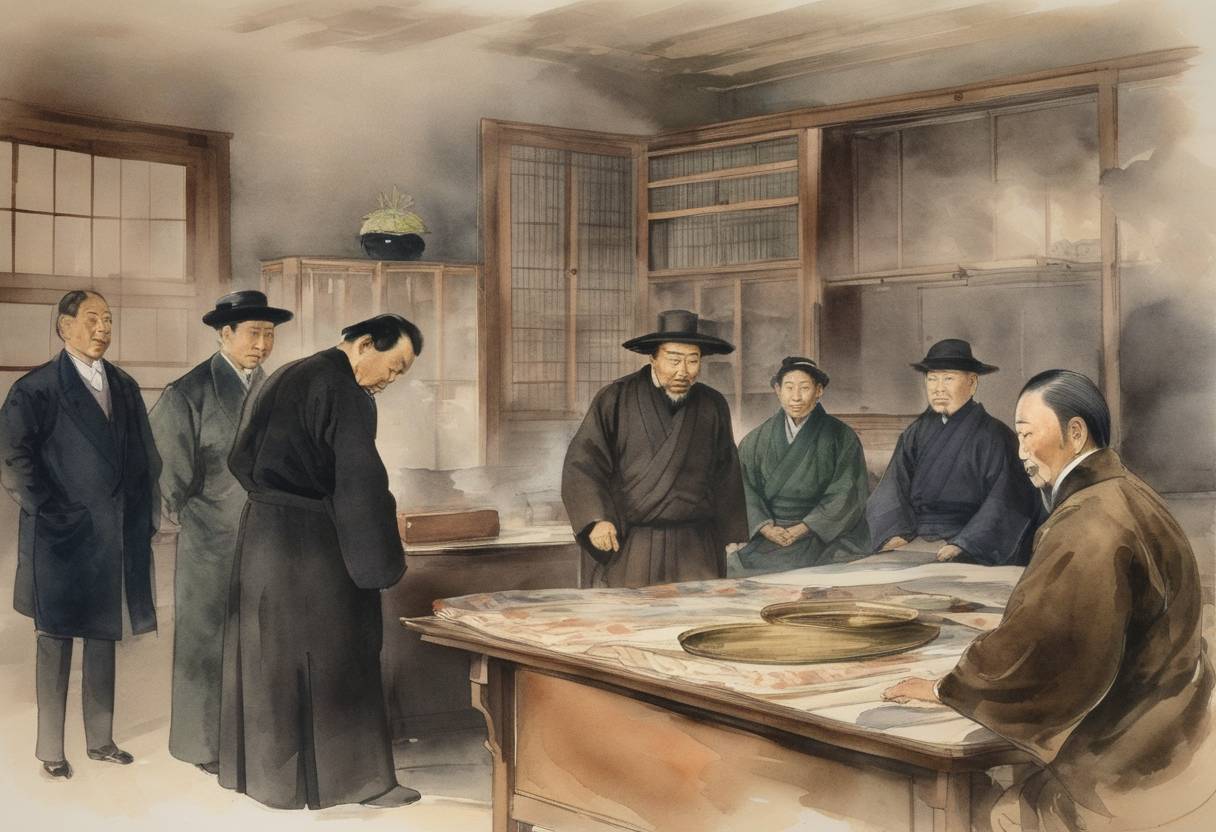
Itō Hirobumi Becomes the First Prime Minister of Japan
On December 22, 1885, Itō Hirobumi was appointed as the first Prime Minister of Japan, marking a significant milestone in the country’s governmental evolution. This appointment was a key development in the Meiji Restoration efforts, which aimed to transform Japan into a modern state by adopting Western political, military, and technological innovations while preserving traditional Japanese culture.
Context and Background
- Meiji Restoration: Beginning in 1868, the Meiji Restoration restored imperial rule to Japan under Emperor Meiji and set off profound political, social, and economic changes aimed at modernizing Japan and abolishing the feudal system.
- Ritsuryō System Replacement: Prior to Itō’s appointment, Japan was transitioning from the Ritsuryō system—an ancient Chinese-inspired bureaucratic system—to a modern state apparatus.
- Abolishment of Daijō-kan: Traditionally, Japan’s central government operations were managed by the Daijō-kan (Great Council of State). On December 22, 1885, the council was officially abolished.
- Introduction of the Cabinet System: The new cabinet system was based on Western styles of government, specifically influenced by the German model, and was a part of Japan’s attempts to revise its unequal treaties with Western powers by showcasing modernization. Itō’s appointment as Prime Minister heralded this new era.
Itō Hirobumi’s Role
- Background: Itō was a prominent statesman and samurai from the Chōshū Domain. As a key architect of the Meiji state, he was deeply involved in drafting the Meiji Constitution enacted in 1889.
- Achievements: He played a crucial role in modernizing Japan’s government institutions and foreign diplomacy. Itō’s work was pivotal in crafting Japan’s first Constitution, which established a constitutional monarchy, laying the groundwork for Japan’s modernization and its eventual emergence as an imperial power.
Aftermath and Legacy
- Political Influence: Itō served as Prime Minister four times between 1885 and 1901, significantly influencing Japan’s political landscape. His policies paved the way for Japan to become an economically and militarily powerful nation.
- Japan’s Global Standing: By demonstrating the ability to adopt and adapt Western institutional frameworks, Japan gained greater respect on the international stage, which was critical in renegotiating treaties with Western powers.
Itō Hirobumi’s ascendancy to the position of Prime Minister was not just a personal achievement but a cornerstone in the systemic governmental reforms that enabled Japan to emerge as a modern world power in the late 19th and early 20th centuries.