Constantine I and the Decree of Sunday as a Day of Rest
321 · Rome, Roman Empire
Roman Emperor Constantine I decreed that the dies Solis Invicti (Sunday) would be observed as the Roman day of rest.
December 25, 0274
The Roman Emperor Aurelian declared December 25 to be celebrated as the birthday of Sol Invictus, the 'Unconquered Sun'.
Rome, Roman Empire | Roman Empire
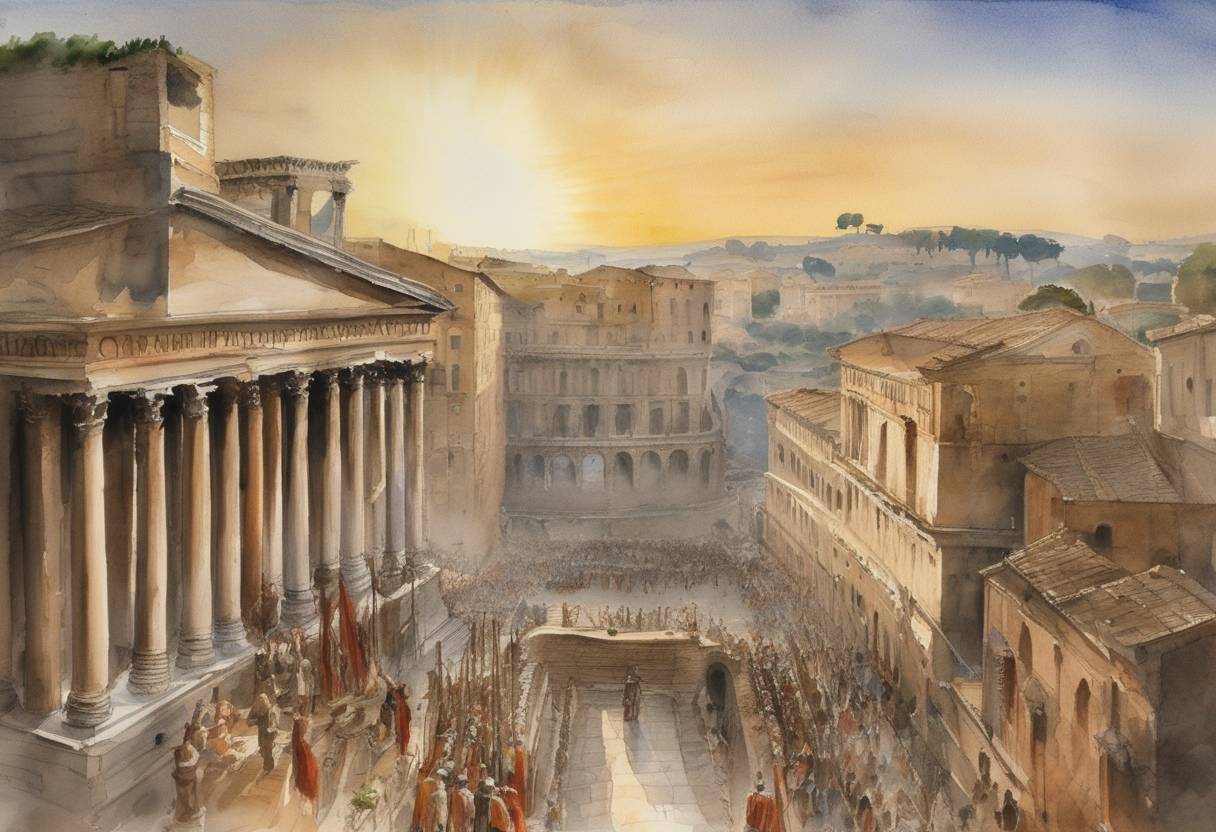
On December 25, 274 CE, Roman Emperor Aurelian declared the date to be celebrated as the birthday of Sol Invictus, the “Unconquered Sun.” This move was part of a broader effort by Aurelian to consolidate religious practices and unify the Roman Empire under a common deity associated with the power and continuity of the Roman state.
The Roman Empire, during Aurelian’s reign, faced numerous internal and external challenges, including political instability, economic difficulties, and pressure from barbarian tribes at its borders. In response, Aurelian worked toward reinforcing central authority and promoting unity. One of his strategies was religious reform.
Sol Invictus, a solar deity, had gained popularity in the Roman pantheon, reflecting a shift towards monotheism and centralized worship. The sun god was seen as a universal overseer and protector, embodying the reliability and strength that were essential during times of uncertainty.
273 CE: Aurelian returned to Rome after campaigns in the East and reinstated Roman control over the Gaul and Palmyrene Empires, consolidating empire-wide sovereignty.
Cultural Syncretism: The period saw an increasing synthesis between various regional deities and Roman gods. Sol Invictus was particularly influenced by Eastern religions, including the Syrian god Elagabalus, and became central to imperial propaganda.
Aurelian’s Reforms: Aurelian implemented several reforms to rejuvenate the empire, including reorganizing the Roman military and economy, and promoting a single state religion to reinforce loyalty to the emperor.
The selection of December 25 for the celebration was intentionally symbolic, coinciding with the winter solstice, a time when days begin to lengthen, signifying the renewal of the sun. This date would later be significant in Christian traditions as well, being adopted as the celebration of the birth of Jesus Christ.
Religious Unification: Aurelian’s establishment of Sol Invictus served to unify the various peoples under Roman rule, reinforcing the central authority of the emperor.
Cultural Legacy: The concept of the “Unconquered Sun” persisted in subsequent Roman culture and theology, influencing later religious developments.
Paving the Way for Christianity: The formation of a universal deity like Sol Invictus set a precedent for the later adoption and spread of Christianity throughout the Roman Empire, as both shared similarities in universal worship and the merging of different cultural beliefs.
Aurelian’s declaration of December 25 as the birthday of Sol Invictus illustrates the intersection of religion, politics, and cultural integration during a pivotal time in Roman history, highlighting the emperor’s role in shaping the spiritual landscape of his empire.
Source: en.wikipedia.org