Mehmed II: Accession to the Ottoman Throne
1451 · Constantinople, Ottoman Empire
The Ottoman sultan Mehmed II, also known as Mehmed the Conqueror, conquered Constantinople and ended the Byzantine Empire.
February 3, 1590
The Treaty of Constantinople was signed between the Ottoman Empire and the Habsburg Monarchy, ending the Long Turkish War.
Constantinople, Ottoman Empire | Ottoman Empire
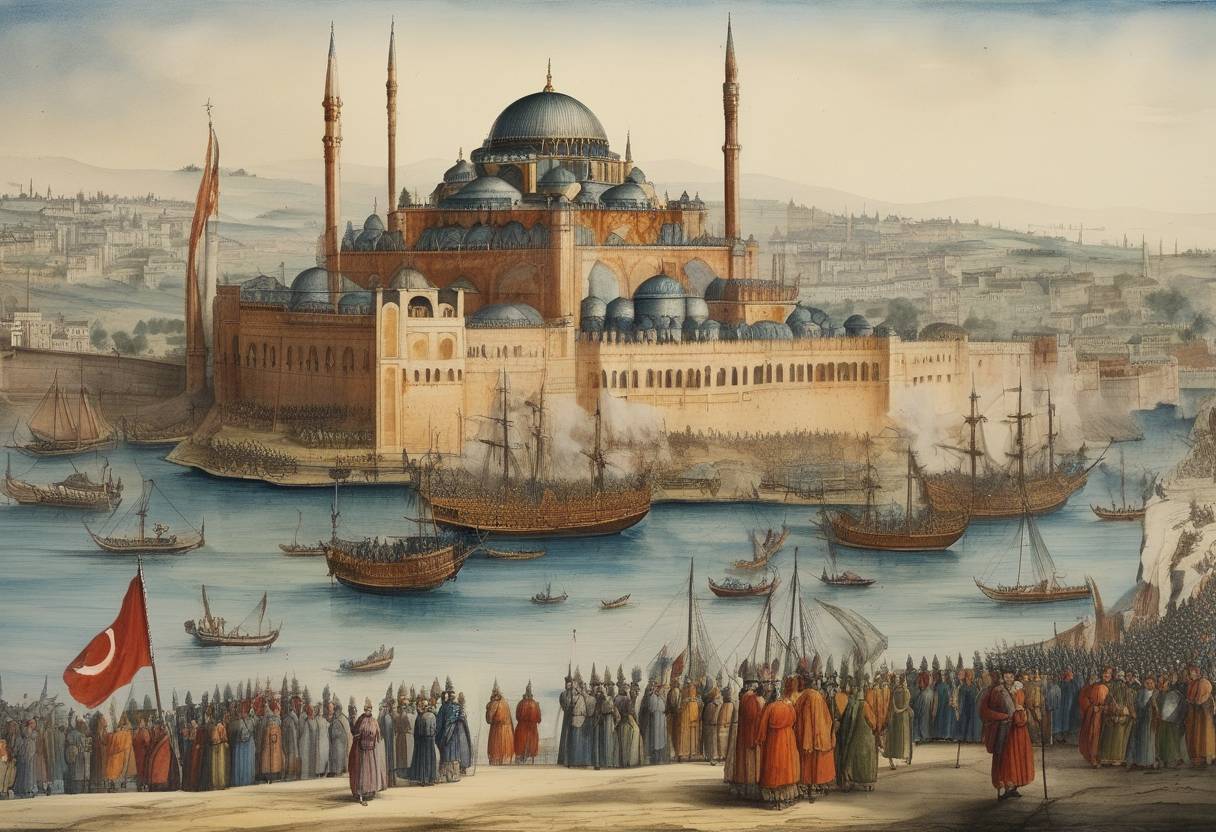
The Treaty of Constantinople, signed on March 2, 1590, marked the conclusion of the Long Turkish War between the Ottoman Empire and the Habsburg Monarchy. This accord was pivotal in redefining the political landscape of Eastern Europe and the Balkans at the time.
The Long Turkish War, also known as the Thirteen Years’ War, commenced in 1593 and was characterized by a series of protracted engagements between the Ottomans and the Habsburgs. This conflict was part of the larger struggle for dominance in Eastern Europe, which had been ongoing due to the Ottoman Empire’s expansive ambitions and the Habsburgs’ efforts to maintain their influence and territories.
Territorial Adjustments: A significant outcome of the treaty was territorial concessions made by the Habsburg Monarchy to the Ottomans. This peace reinforced Ottoman control over several disputed areas that had been sources of conflict.
Status Quo Ante Bellum: Despite various military campaigns and battles, the treaty largely returned both empires to their pre-war territorial boundaries, with minor adjustments reflecting the realities of control established during the conflict.
Peace in the Region: The Treaty of Constantinople brought a temporary peace between the two empires, allowing both to focus on internal affairs and other external challenges. It temporarily stabilized the volatile Balkan region and provided a respite from warfare.
Strategic Realignment: This agreement allowed the Habsburgs to redirect their resources and attention towards other pressing matters within the Holy Roman Empire and their Western European domains.
The Treaty of Constantinople was one of several agreements that underscored the eventual decline of Ottoman expansionist efforts in Europe. Conversely, it provided the Habsburg Monarchy a crucial opportunity to consolidate its hold over its existing territories and to prepare for future conflicts with the Ottomans and others.
The treaty demonstrated the shifting balance of power in post-Renaissance Europe, highlighting the period’s diplomatic complexities and the ongoing tension between Christian and Muslim powers in the region. This diplomatic accord is a testament to the intricate art of negotiation and the chronic turbulence of European-Ottoman relations during this era.
Source: www.britannica.com