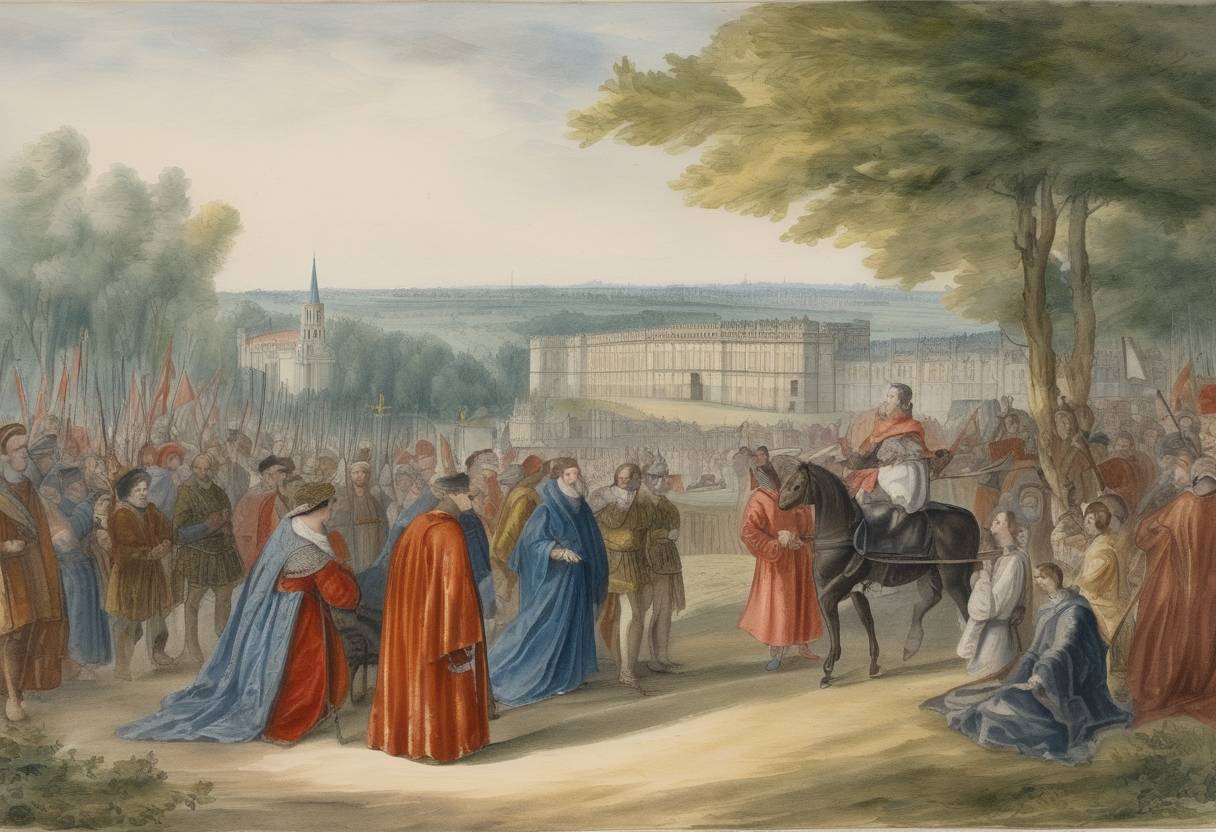
Assassination of King Henry III of France
On August 2, 1589, King Henry III of France was assassinated by a Dominican friar named Jacques Clément, marking a significant turning point in the French Wars of Religion. The assassination occurred amidst the intense conflict between the Catholic and Huguenot factions, part of the broader tumultuous period of civil wars in France from 1562 to 1598.
Context and Lead-up to the Assassination
The late 16th century was characterized by religious upheaval in France, primarily between the Catholic League and the Huguenot (French Protestant) faction. King Henry III, a Catholic, faced pressure from both Catholic hardliners demanding the extirpation of Protestant heresy and Huguenots seeking religious freedom. His policies often seemed indecisive, attempting to balance the two factions but ultimately satisfying neither.
In 1588, the Day of the Barricades led to Henry III’s fleeing from Paris, underscoring his weakened position. His decision to ally with Henry of Navarre, the Huguenot leader and his successor, further alienated hardcore Catholic supporters. This unrest paved the way for his assassination.
The Assassination
Jacques Clément, an extreme Dominican monk driven by zealot Catholicism and fervent belief in the righteousness of the Catholic cause, saw King Henry III as a tyrant and heretic for having murdered the Duke of Guise, a popularity pillar within the Catholic League, in 1588. He gained access to the king by posing as a messenger with important information and assassinated Henry III by stabbing him in the abdomen.
Aftermath and Consequences
Henry III’s assassination had immediate and significant consequences. With his death, the Valois dynasty came to an end, and Henry of Navarre ascended to the throne as King Henry IV, effectively unifying the divided factions over time, although not without extended struggle. Initially contested by Catholics due to his Protestant faith, Henry IV eventually converted to Catholicism, famously declaring, “Paris is worth a Mass,” to secure his reign and end civil strife.
The assassination highlighted the intense religious fervor and political instability of the era, serving as a cautionary tale of extremist actions influenced by deep-seated sectarian enmity. The Wars of Religion ultimately concluded in 1598 with the Edict of Nantes, establishing a measure of religious tolerance and civil peace in France.