The Paris Peace Conference: Opening on January 18, 1919
1919 · Paris, France
The Paris Peace Conference opened to negotiate peace treaties ending World War I, leading to the Treaty of Versailles.
November 10, 1918
The Western Union Cable Office received an uncoded cable from Germany requesting a ceasefire to negotiate an armistice during World War I. This request set in motion the events leading to the signing of the Armistice on November 11, 1918, effectively ending the fighting on the Western Front.
Paris, France | Western Union
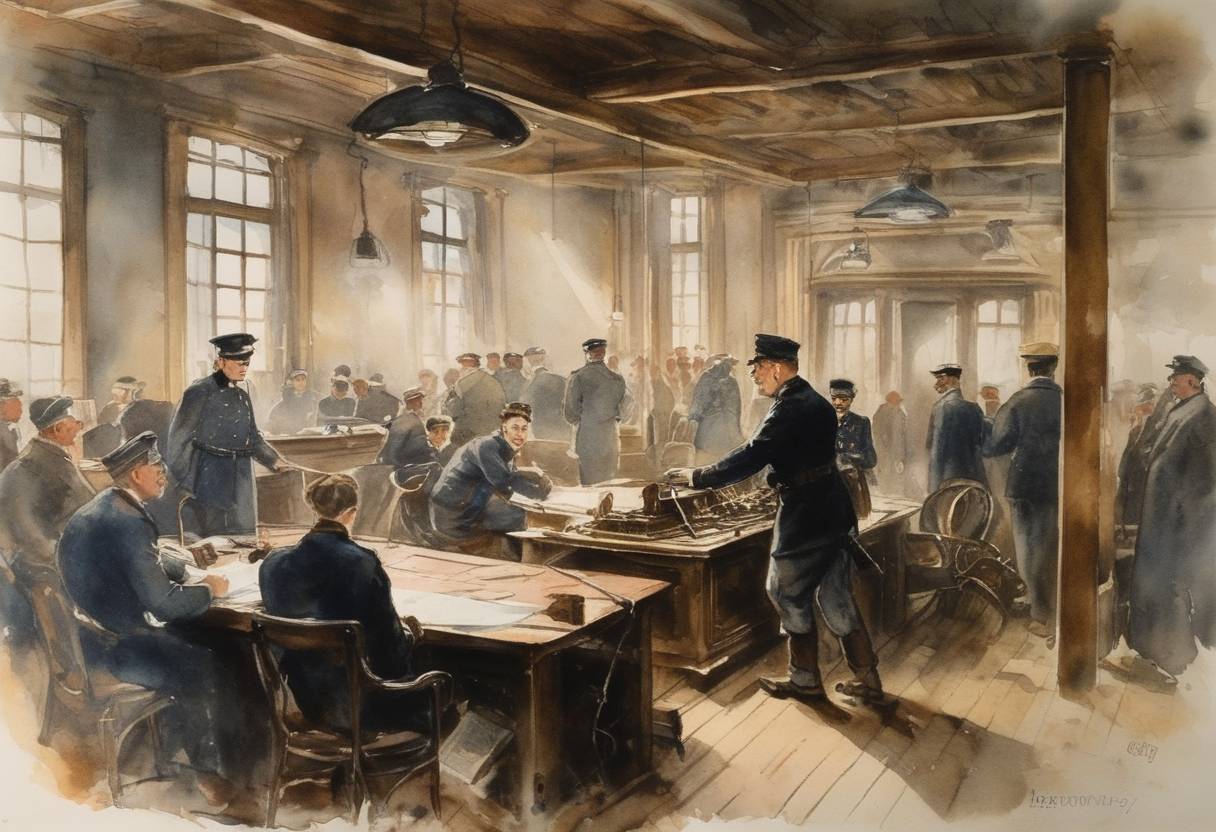
On November 10, 1918, the Western Union Cable Office in New York City received a crucial uncoded cable from Germany. This cable was a formal request for a ceasefire to negotiate an armistice during the final stages of World War I. The message was pivotal as it initiated the final steps towards ending hostilities on the Western Front.
By late 1918, World War I had reached a critical juncture. The Central Powers, comprising Germany, Austria-Hungary, the Ottoman Empire, and Bulgaria, were experiencing severe military setbacks. The Allied Powers, led by France, the United Kingdom, and the United States among others, had gained significant momentum. The German military was particularly strained, both by internal dissent and dwindling resources. Public unrest and demands for peace were mounting within Germany, prompted by the widespread devastation and loss.
The transmission of the uncoded cable was significant for several reasons. Firstly, the choice of an uncoded message emphasized Germany’s urgent desire for an end to the hostilities. This openness in communication indicated a break from typical wartime secretive protocols, reflecting the dire situation Germany faced.
The request prompted immediate diplomatic activity. The Allies, having received assurance through this communication, engaged in intensive discussions to arrange the terms of the armistice. The objective was to ensure a cessation of violence while establishing conditions that would prevent an immediate resumption of conflict.
The reception of the cable led to expedited negotiations that culminated in the signing of the Armistice of Compiègne on November 11, 1918. The armistice agreement officially ended fighting on the Western Front, effective at 11:00 AM that day, famously referred to as the “eleventh hour of the eleventh day of the eleventh month.”
The ceasefire marked a turning point in global history, concluding one of the most destructive wars up to that point. It paved the way for the Paris Peace Conference in 1919, which eventually resulted in the Treaty of Versailles. However, the war’s end brought profound political, social, and economic changes worldwide and sowed seeds for future conflicts.
The uncoded cable on November 10, 1918, thus stands as a critical juncture in World War I’s conclusion, illustrating the complexities of diplomatic communication in terminating prolonged warfare.
Source: www.history.com