The First Stanley Cup Championship Game: March 22, 1894
1894 · Montreal, Canada
The first Stanley Cup championship game was played in Montreal, Canada, marking the beginning of the oldest professional sports trophy competition in North America.
January 18, 1886
Modern hockey is born with the first organized indoor game played at the Victoria Skating Rink in Montreal, Canada.
Montreal, Canada | Victoria Skating Rink
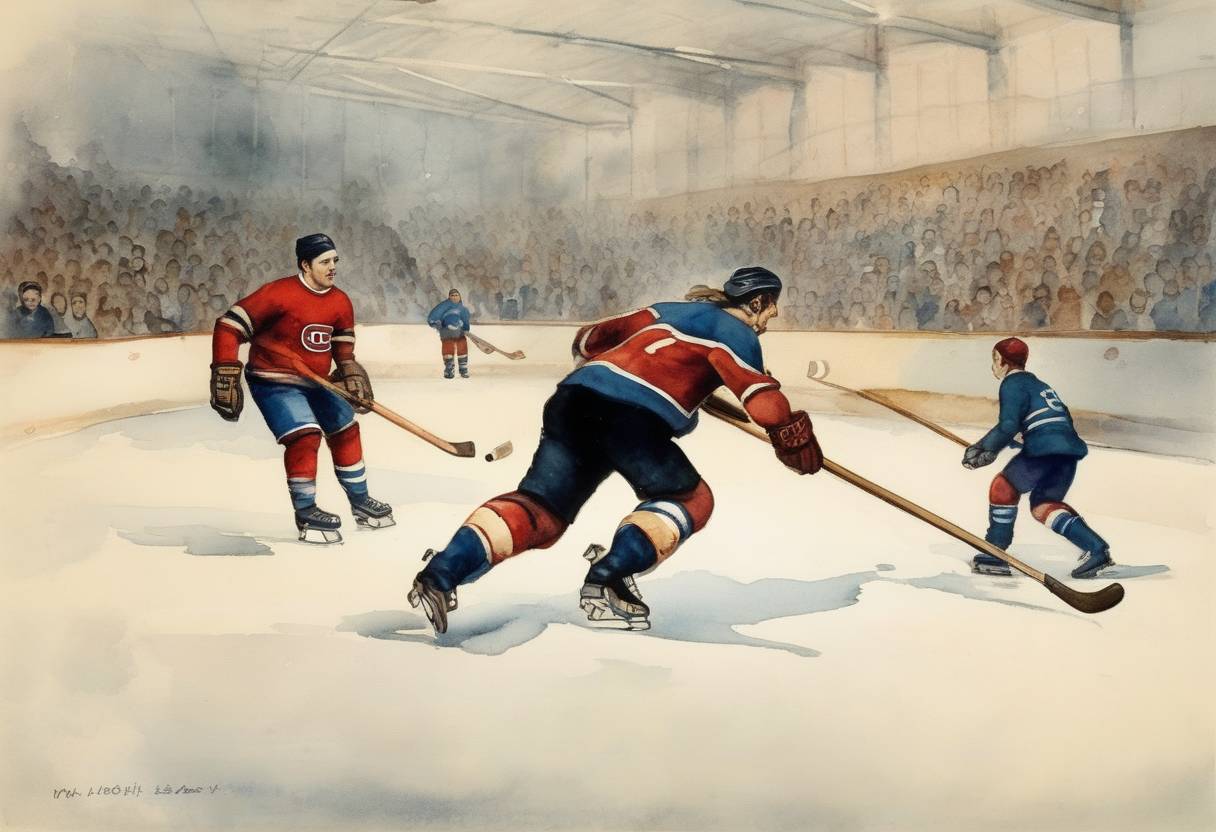
The game of modern ice hockey, as it is known today, is widely considered to have been born on January 18, 1886, with the first organized indoor hockey game played at the Victoria Skating Rink in Montreal, Canada. This pivotal event signaled the transition from informal pond hockey matches to a more structured and recognized sport.
During the 19th century, ice hockey was played informally on frozen ponds and small lakes in Canada. These early iterations of hockey were loosely organized, with varying rules and equipment depending on the region or even the particular game. Within this context, the need for standardization of the rules became clear as the sport began to gain popularity.
This game was significant because it was governed by a codified set of rules, which included:
The 1886 game also initiated standardized equipment and uniforms, further marking the transition to modern hockey. Players donned basic protective gear, marking the beginning of equipment development that would evolve significantly over the following decades.
Shortly after this historic game, organized hockey clubs began to form, such as the McGill University Hockey Club. These clubs fostered greater competition and facilitated the spread of standardized rules throughout Canada and eventually into the United States and Europe.
The successful organization of the first indoor hockey game laid the foundation for hockey leagues and tournaments, directly leading to the formation of the Amateur Hockey Association of Canada in 1887. This institution was pivotal in promoting the game and further refining the rules.
The principles and structures established during this inaugural game influenced the formation of major hockey leagues, such as the National Hockey League (NHL) in 1917, which would become the premier professional ice hockey league in the world.
The evolution of hockey from this significant event in 1886 has deeply embedded the sport into Canadian culture and identity, eventually gaining global recognition and becoming a symbol of Canadian prowess and teamwork.
In conclusion, the organized indoor hockey game at Montreal’s Victoria Skating Rink on January 18, 1886, represents a cornerstone in the development of ice hockey, transforming how the game was perceived, played, and celebrated.
Source: www.thecanadianencyclopedia.ca