Declaration of Sovereignty by Russia
1990 · Moscow, Russia
The parliament of Russia declared its sovereignty from the Soviet Union, an early step towards the formal dissolution of the USSR in 1991.
May 29, 1990
Boris Yeltsin was elected as the chairman of the Russian parliament, a key step in his rise to power during the waning days of the Soviet Union.
Moscow, Soviet Union | Russian Congress of People's Deputies
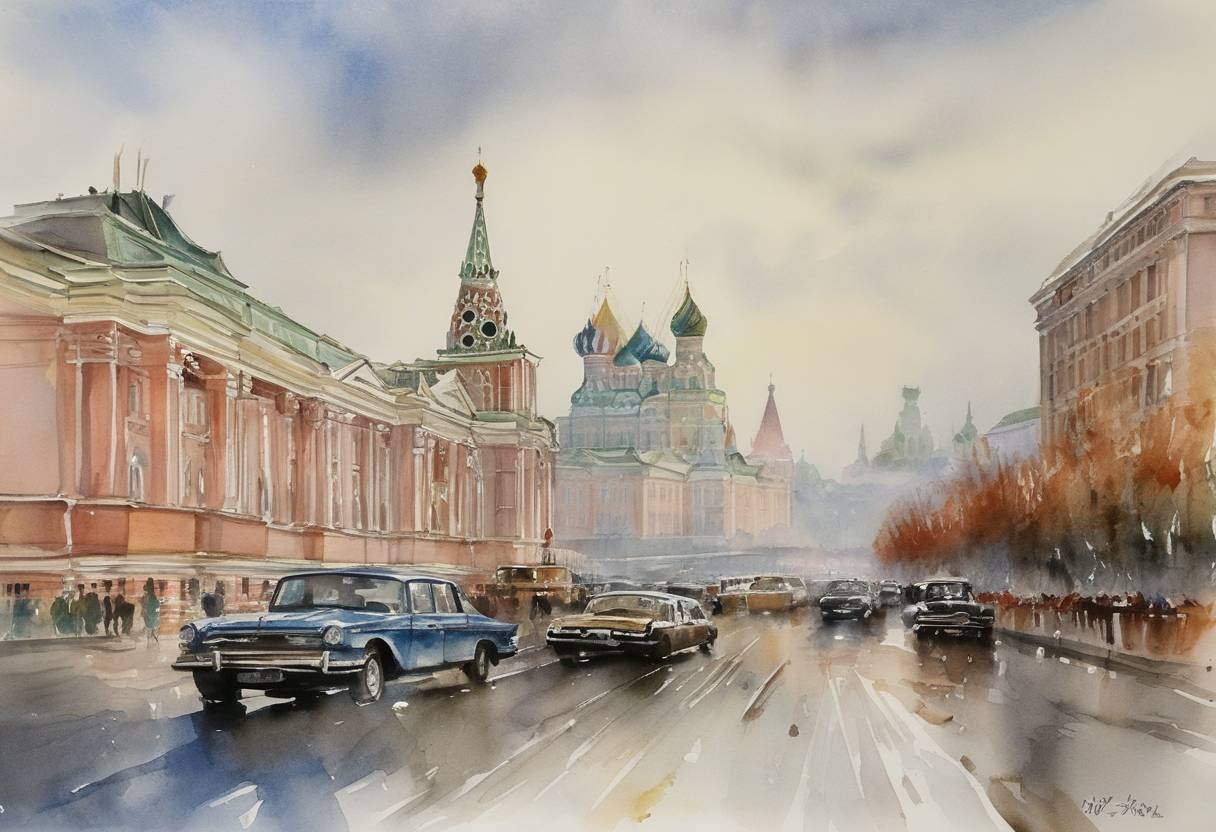
On May 29, 1990, Boris Yeltsin was elected as the Chairman of the Supreme Soviet of the Russian SFSR, marking a pivotal point in his political career and Russia’s transition from Soviet rule. This election was a crucial milestone in the dissolution of Soviet hegemony and the emergence of a new Russian political landscape.
Boris Yeltsin, born in 1931, was a prominent reformist figure in Soviet politics. Initially aligned with the Communist Party, he became known for his advocacy of economic and political liberalization. Yeltsin was initially a close ally of Mikhail Gorbachev, the General Secretary of the Communist Party of the Soviet Union. However, he became increasingly critical of Gorbachev’s pace of reform, positioning himself as a voice for more radical change.
The Russian SFSR’s Congress of People’s Deputies’ election of Yeltsin underscored the changing political climate. During this period, the Soviet Union was experiencing significant turmoil, with various republics seeking greater autonomy. Yeltsin’s victory was symbolic of the shift within republican structures, indicating a growing push for sovereign governance separate from Moscow’s centralized control.
Yeltsin’s election as Chairman was part of a broader pattern of political shifts following the implementation of Gorbachev’s policies of glasnost (openness) and perestroika (restructuring). These policies inadvertently catalyzed demands for greater freedoms and self-determination at the national and local levels.
Yeltsin’s rise to a prominent leadership position in the Russian SFSR set the stage for his eventual election as the first President of the Russian Federation in 1991. His leadership spearheaded significant political and economic reforms, including transitioning Russia towards a market economy and adopting democratic principles.
Yeltsin’s tenure as Chairman was characterized by increasing tensions with the Soviet central government. His advocacy for Russian sovereignty contributed to the broader dissolution of the Soviet Union, culminating in its eventual collapse in 1991.
Yeltsin’s election was more than a political victory; it signified a seismic shift in Russian and Soviet politics. By empowering a reformist leader committed to Russian nationalism and dismantling Soviet institutions, the election catalyzed the disintegration of Soviet control and ushered in a new era of Russian independence and political reformation.
This event remains a critical historical juncture in understanding the end of the Cold War and the political transformation of Eastern Europe, influencing global geopolitics for decades to come.
Source: en.wikipedia.org