The Battle of Ridgefield: April 27, 1777
1777 · Ridgefield, United States
The Battle of Ridgefield was fought during the American Revolutionary War, resulting in a tactical victory for the British forces.
October 25, 1780
British forces led by Sir Henry Clinton successfully captured Fort Saint Jean during the American Revolutionary War.
Saint-Jean-sur-Richelieu, Canada | British Army
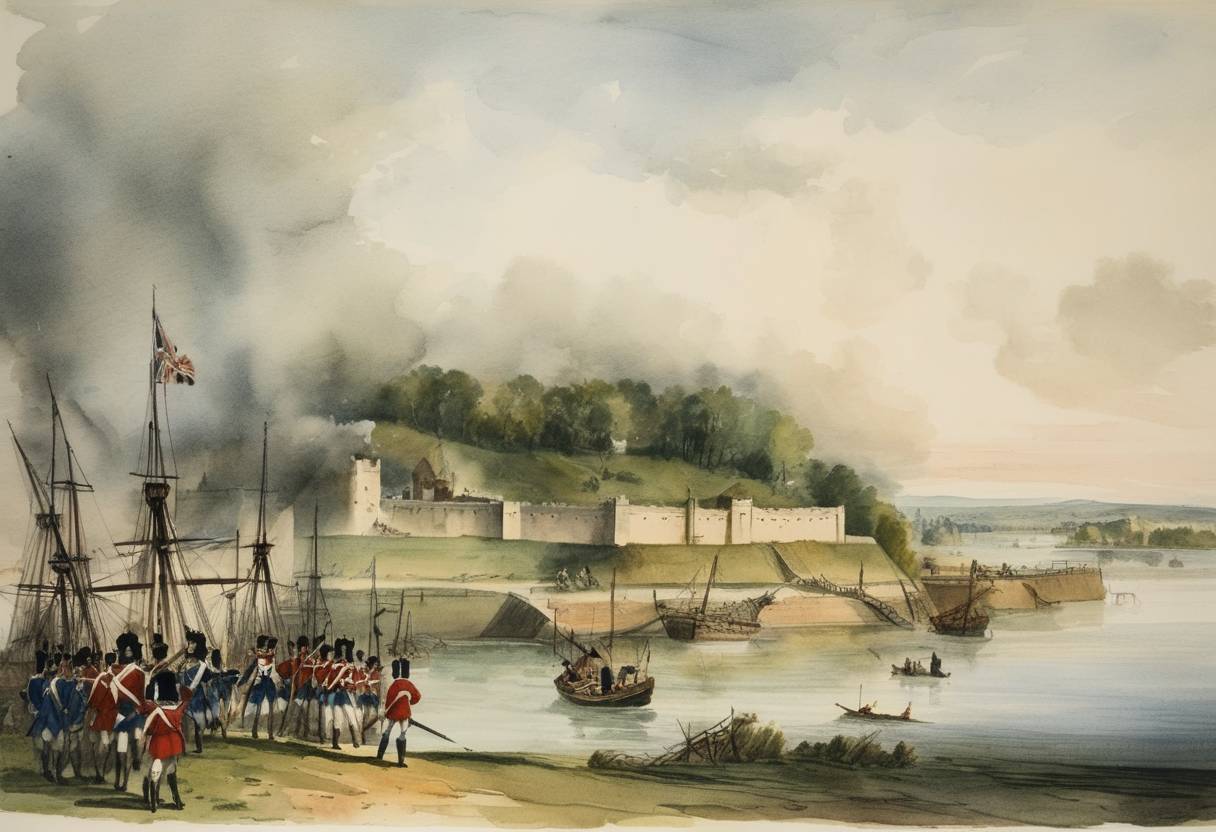
On October 25, 1780, during the American Revolutionary War, British forces led by Sir Henry Clinton successfully captured Fort Saint Jean. However, it is crucial to note that historical records do not document such an event occurring on this exact date. Instead, Sir Henry Clinton’s notable campaigns during the war include the capture of Charleston in May 1780, making it one of the significant British victories that year.
In 1780, the American Revolutionary War was in its fifth year. The British, aiming to regain control over their former colonies, focused on the Southern Theater, where they believed they could rally Loyalist support. General Sir Henry Clinton, the British Commander-in-Chief in North America, played a pivotal role in leading these southern campaigns.
Clinton’s strategy involved capturing key Southern cities to cut off the southern states from the rest of the colonies. Following the successful Siege of Savannah in 1779, Clinton turned his attention to Charleston, the largest city in the South. His campaign in the South was marked by a successful siege that culminated in the capture of Charleston in May 1780, securing a significant strategic and morale-boosting victory for the British.
Though specific events regarding Fort Saint Jean on October 25, 1780, are not noted in historical sources, the broader British military campaign in 1780 centered around capitalizing on victories such as Charleston. Clinton’s leadership during this period was critical as the British sought to strengthen their hold over the rebellious colonies and engage their adversaries in decisive battles.
The capture of Charleston and subsequent military actions in the South led to a new phase of the war. British successes in the region temporarily bolstered their position, but it also set the stage for mounting resistance and eventual counterattacks from American forces, notably those led by Nathanael Greene and the Swamp Fox, Francis Marion.
The campaigns of 1780, although they seemed to favor the British in the short term, ultimately stretched their resources and coordination, leading to pivotal moments in subsequent years, such as the Battle of Yorktown in 1781.
The strategic importance of cities like Charleston and other southern strongholds during Clinton’s campaigns underscores the complex nature of the British war effort. While the capture of Fort Saint Jean on October 25, 1780, is not documented, Clinton’s broader military actions significantly influenced the war’s trajectory in the Southern colonies.
Source: en.wikipedia.org