U.S. Marines Land in the Dominican Republic - April 28, 1965
1965 · Santo Domingo, Dominican Republic
The U.S. Marines landed in the Dominican Republic to protect U.S. citizens during the Dominican Civil War.
June 3, 1924
American soldiers leave the Dominican Republic after eight years of occupation that began in 1916. The occupation was initially aimed at ensuring political stability and safeguarding foreign interests.
Santo Domingo, Dominican Republic | United States Marine Corps
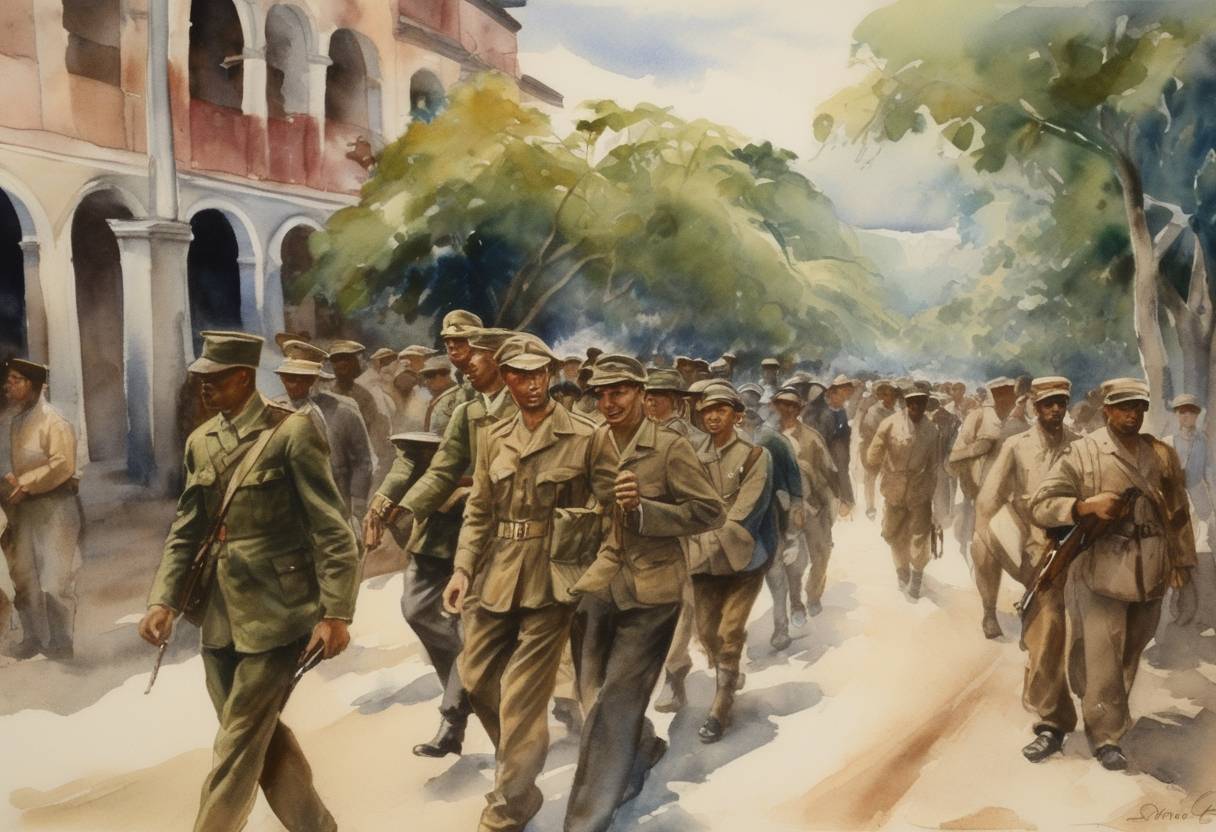
On June 3, 1924, the last American soldiers left the Dominican Republic, marking the end of an eight-year military occupation that began in 1916. This occupation was initiated under the Wilson administration, driven by a combination of motives including the desire to ensure political stability and protect U.S. financial and strategic interests in the region.
The Dominican Republic faced a period of political instability and economic turmoil in the early 20th century. The U.S. Marine Corps first occupied the country on May 5, 1916. The intervention was conducted under the pretext of the Roosevelt Corollary to the Monroe Doctrine, asserting that the United States had the right to intervene in other nations within the Western Hemisphere to stabilize their governments and economies.
During the occupation, the United States established a military government aimed at restoring order and implementing financial reforms. American officials controlled the Dominican government, reorganized the country’s finances, and improved infrastructure. However, this control was often resented by the local population and led to several uprisings and criticisms of U.S. interventionist policies.
The withdrawal in 1924 was a result of diplomatic negotiations and pressure from the local Dominican leadership, as well as changes in U.S. foreign policy favoring less direct intervention in regional affairs. The departure paved the way for constitutional governance and the eventual election of President Horacio Vásquez, whose administration marked a transition to greater autonomy.
The end of the occupation is significant as it set a precedent for a shift in U.S. policies towards non-intervention and respect for sovereign rights in Latin America. This policy reorientation was later formalized in the “Good Neighbor” policy implemented by President Franklin D. Roosevelt.
The occupation and subsequent withdrawal had lasting implications for Dominican-U.S. relations and highlighted the complexities of American involvement in the Caribbean. Despite the intents of stabilization, it ignited nationalistic sentiments and had long-term impacts on the political landscape of the Dominican Republic.
Source: www.loc.gov