The Lumière Brothers' First Private Screening
1895 · Paris, France
Auguste and Louis Lumière held the first private screening of projected motion pictures at their salon in Paris, France.
January 19, 1898
Auguste and Louis Lumière, considered among the earliest filmmakers in history, patent their color photography process, which they called Autochrome Lumière.
Paris, France | Lumière Brothers
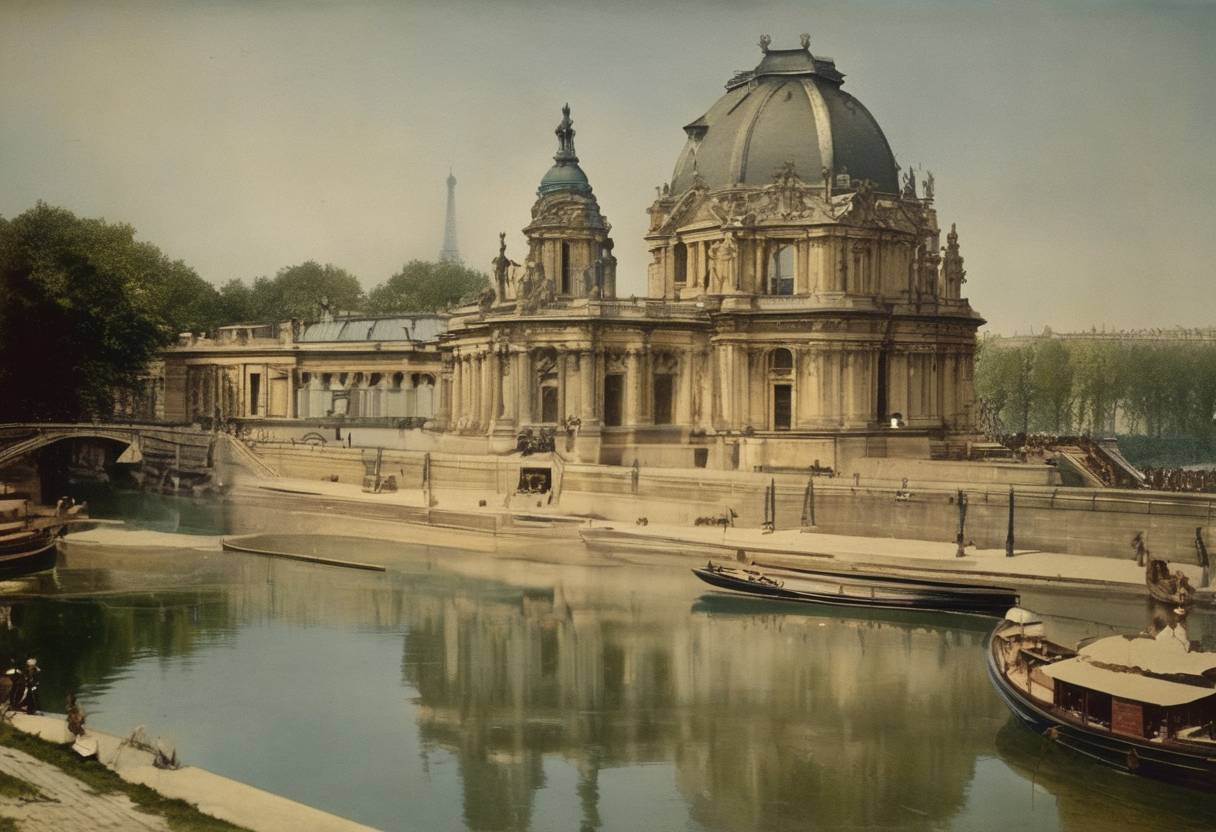
Auguste and Louis Lumière, pioneers in the field of photography and motion pictures, filed for a patent on January 19, 1898, for an innovative color photography process known as “Autochrome Lumière.” This patented method would later revolutionize the way color was captured in photographic images.
The Lumière brothers were already celebrated for their contributions to the development of cinema. They held a successful demonstration of their Cinématographe on December 28, 1895, marking a significant moment in the birth of motion pictures. Building on their experience and technical prowess, they turned their focus to color photography.
The Autochrome process was a groundbreaking technique. It utilized a plate coated with a layer of minute grains of potato starch, dyed red-orange, green, and blue-violet, which acted as color filters. Over this layer, a photographic emulsion was applied. When light passed through the colored grains to expose the emulsion, it captured images in color.
Although the process was patented in 1898, it took until 1907 for the Lumières to introduce Autochrome plates commercially. The Autochrome plates became the first viable method of color photography, allowing photographers and artists to capture images in a way that closely approximated natural colors.
Autochrome held an esteemed place in photography for several decades, offering vibrant and aesthetically pleasing images. This advancement paved the way for future developments in color photography.
The Lumière brothers’ work in both motion pictures and color photography illustrates the rapid technological advancements of the late 19th and early 20th centuries. Their development of Autochrome affirmatively grounded the use of color in visual documentation long before the advent of contemporary color film technology.
Source: www.lumierebrothers.com