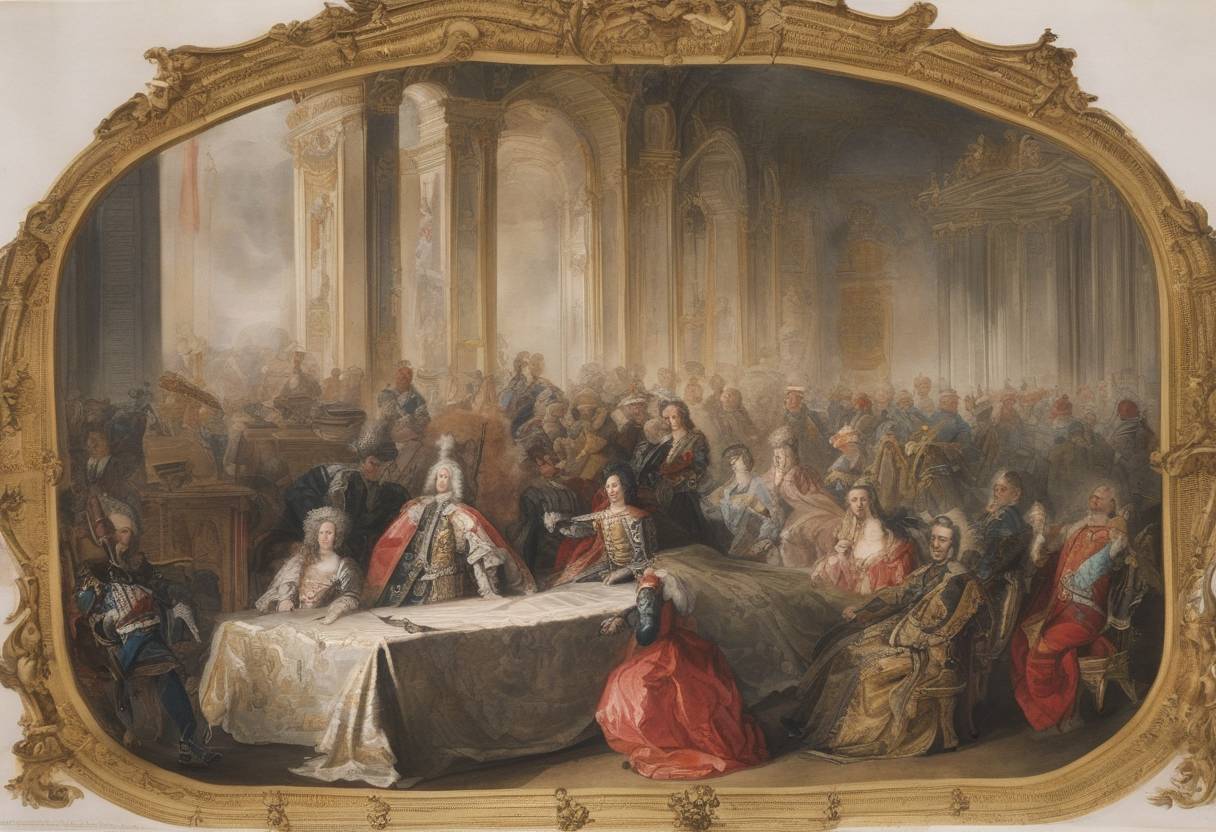
Ratification of the Treaty of Rastatt - August 14, 1714
The Treaty of Rastatt, ratified on August 14, 1714, marked a significant moment in European history as it concluded hostilities between France and the Holy Roman Empire, effectively bringing an end to their involvement in the War of the Spanish Succession.
Background
- War of the Spanish Succession (1701-1714): This conflict was triggered by the death of the childless Charles II of Spain in 1700. As various European powers vied to place their preferred candidates on the Spanish throne, it developed into a broader struggle to maintain the balance of power in Europe.
- Major Allies: France supported Philip of Anjou (a grandson of Louis XIV) for the Spanish throne, while opposing factions were primarily led by the Grand Alliance, consisting of the Holy Roman Empire, Great Britain, the Dutch Republic, and several other European states.
Key Provisions of the Treaty
- Territorial Adjustments: As part of the treaty, France agreed to cede its territories in the Rhine Valley gained during the conflict. Specific strategic points, such as Kehl and Freiburg, were returned to the Empire.
- Restoration of Status Quo: The treaty also reinstated pre-war borders in other contested areas, restoring a degree of stability within central Europe.
- Recognition of Philip V: Importantly, the treaty recognized Philip V, a Bourbon, as King of Spain, ensuring Bourbon influence in Spain but stipulating that the French and Spanish crowns could never be united.
Consequences and Significance
- End of Major Conflict: The Treaty of Rastatt, together with the Treaty of Utrecht (1713) and Treaty of Baden (1714), effectively ended the War of the Spanish Succession, reshaping the geopolitical landscape of Europe.
- Balance of Power: These treaties re-established a balance of power that acknowledged the rise of Britain as a major colonial power while limiting French expansion.
- Holy Roman Empire Focus: The Treaty of Rastatt specifically addressed the concerns of the Holy Roman Empire, offering them a satisfactory conclusion to their part in the protracted conflict.
The ratification of the Treaty of Rastatt brought an end to a series of grueling wars, influencing the future political boundaries and alliances that would play out across Europe in the subsequent centuries.