The Great Kantō Earthquake: September 1, 1923
1923 · Tokyo, Japan
The Great Kantō earthquake strikes the Kantō region of Japan, causing widespread destruction and loss of life in Tokyo and Yokohama.
March 21, 1857
An earthquake strikes Tokyo, then known as Edo, with significant destruction.
Edo, Japan
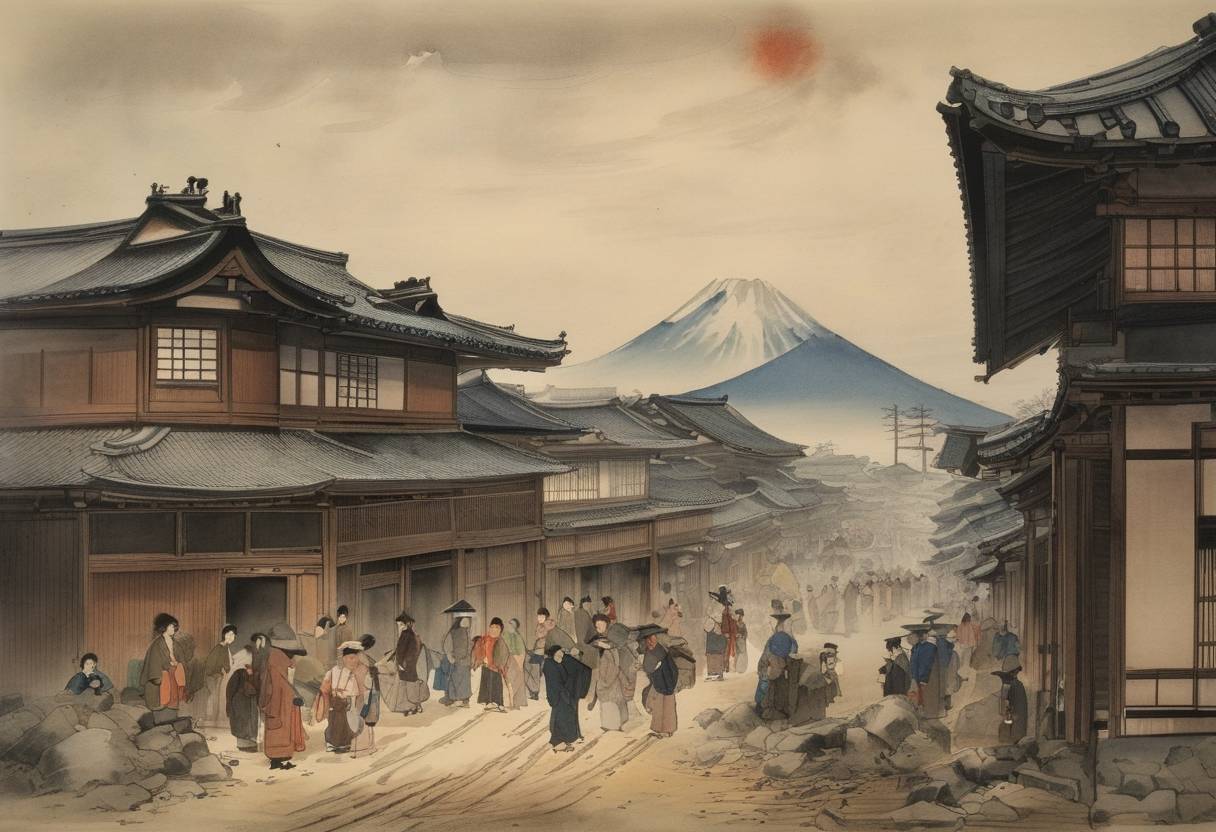
On March 21, 1857, a severe earthquake struck Edo, which is present-day Tokyo, during the Ansei era of Japan. This earthquake is one of the several significant seismic events that occurred during the Ansei period, which lasted from 1854 to 1860, a time marked by social unrest and natural catastrophes in Japan.
The mid-19th century was a turbulent time for Japan, both socially and geologically. The Ansei earthquakes were a series of major seismic events that rattled Japan between 1854 and 1855. The March 21, 1857, earthquake hit Edo particularly hard, in a period followed by profound changes in Japanese society including the eventual end of the Tokugawa shogunate.
The continual natural disasters during the Ansei era, including this earthquake, contributed to a growing public sentiment that the Tokugawa shogunate had lost the Mandate of Heaven. This sentiment helped fuel the rise of movements that eventually led to the Meiji Restoration, a pivotal period that transitioned Japan from feudal rule to the modernization and industrialization of the Meiji period.
The Ansei Edo Earthquake is a reminder of the seismic activity prevalent in Japan due to its location along tectonic plate boundaries, which has shaped the country’s history and continues to influence its resilient approach to disaster preparedness and management.
Source: en.wikipedia.org