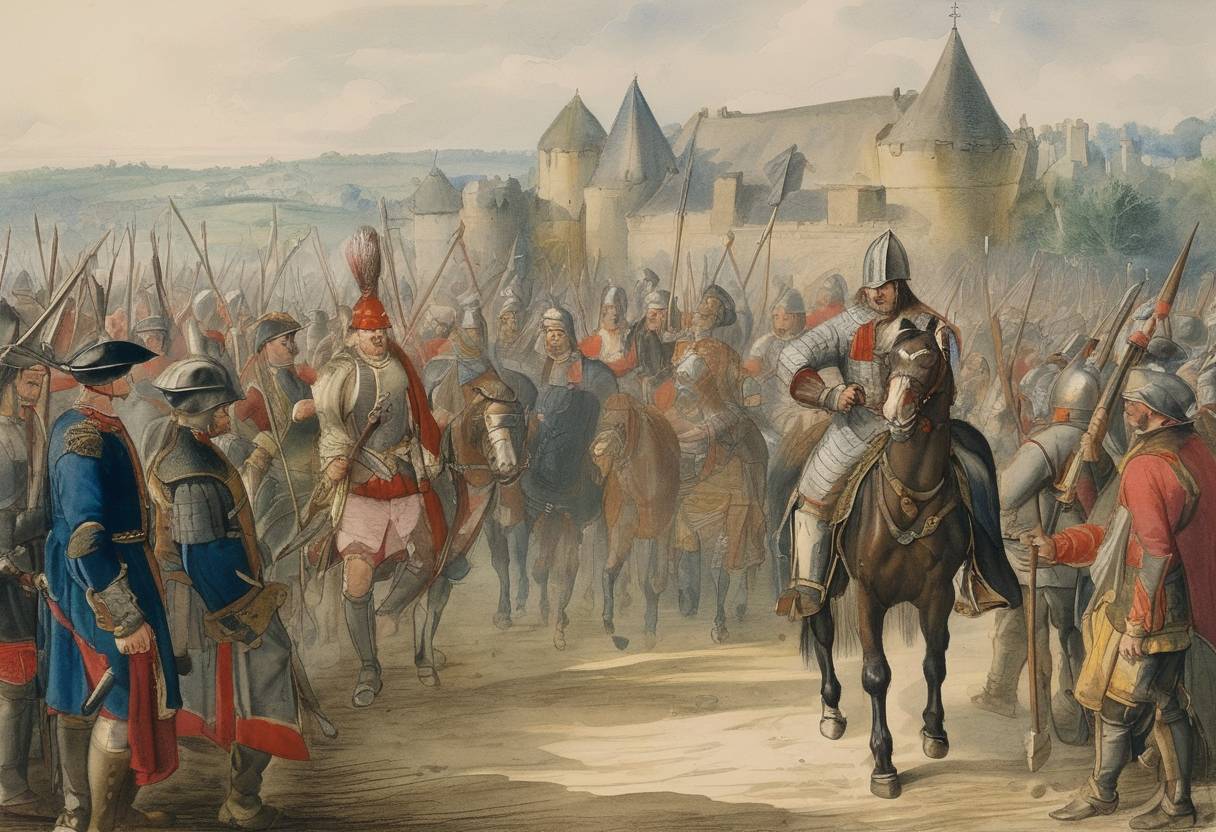
Treaty of Brétigny: April 14, 1360
Context and Background
The Treaty of Brétigny marks a significant milestone in the series of conflicts known as the Hundred Years’ War, fought between the Kingdom of England and the Kingdom of France from 1337 to 1453. The war arose from complex territorial disputes and issues of sovereignty, primarily concerning English-controlled territories in France and the claim to the French throne by the English crown.
By 1360, the war had reached a stage where both sides were exhausted from prolonged military engagements, which included the famous Battle of Crécy in 1346 and the Siege of Calais a year later. The tensions culminated in the Peace of Brétigny, necessitated by the socio-economic toll of war and the devastation of the Black Death, which ravaged Europe during this period.
Key Provisions
On April 14, 1360, the Treaty of Brétigny was ratified, outlining several critical provisions designed to bring temporary respite to the ongoing hostilities:
Land and Territory Adjustments: The treaty granted significant territorial concessions to England. King Edward III of England was acknowledged as the sovereign ruler over the Duchy of Aquitaine, along with Poitou, Ponthieu, Calais, and other territories. These regions were to be held by the English crown with full sovereignty, meaning they were no longer vassals of the French crown.
Ransom of King John II: Part of the agreement included the release of the French King John II, who had been captured by the English at the Battle of Poitiers in 1356. His release was contingent upon a substantial ransom of three million gold écus, a significant financial burden on France.
Cessation of Hostilities: Both parties agreed to a cessation of acts of war, effectively ending the first phase of the Hundred Years’ War. The armistice was intended to last until an enduring peace could be negotiated.
Marriage Alliance: Proposals for a marriage alliance between the English and French royal families also featured in the treaty discussions but were not immediately realized.
Aftermath and Significance
The Treaty of Brétigny represented a high-water mark for English territorial ambitions in France, but it was a peace of compromise rather than a final settlement. Although it temporarily ceased fighting, the treaty did not resolve the core issues driving the conflict. Disputes over territories and claims to the French throne persisted.
In the longer term, many provisions of the treaty would prove unenforceable. France was reluctant to recognize English sovereignty, particularly in Aquitaine, and the renewed ambition of future French kings would eventually lead to the resumption of hostilities by 1369. This continued conflict would see both sides cycle through periods of warfare and peace, culminating in a definitive French victory that reaffirmed the integrity of the French kingdom.
The Treaty of Brétigny thus stands as a prominent yet transient chapter in the centuries-long struggle between England and France, illustrating both the potential and the limits of medieval diplomacy in resolving dynastic and territorial disputes.