The Opening of the First Underground New York City Subway Line
1904 · New York City, United States
The first underground New York City Subway line opened, running from City Hall to 145th Street.
December 14, 1896
The Glasgow Underground Railway, the third-oldest underground metro system in the world, opened to the public in Glasgow, Scotland, marking a significant advancement in urban transportation.
Glasgow, United Kingdom | Glasgow District Subway Company
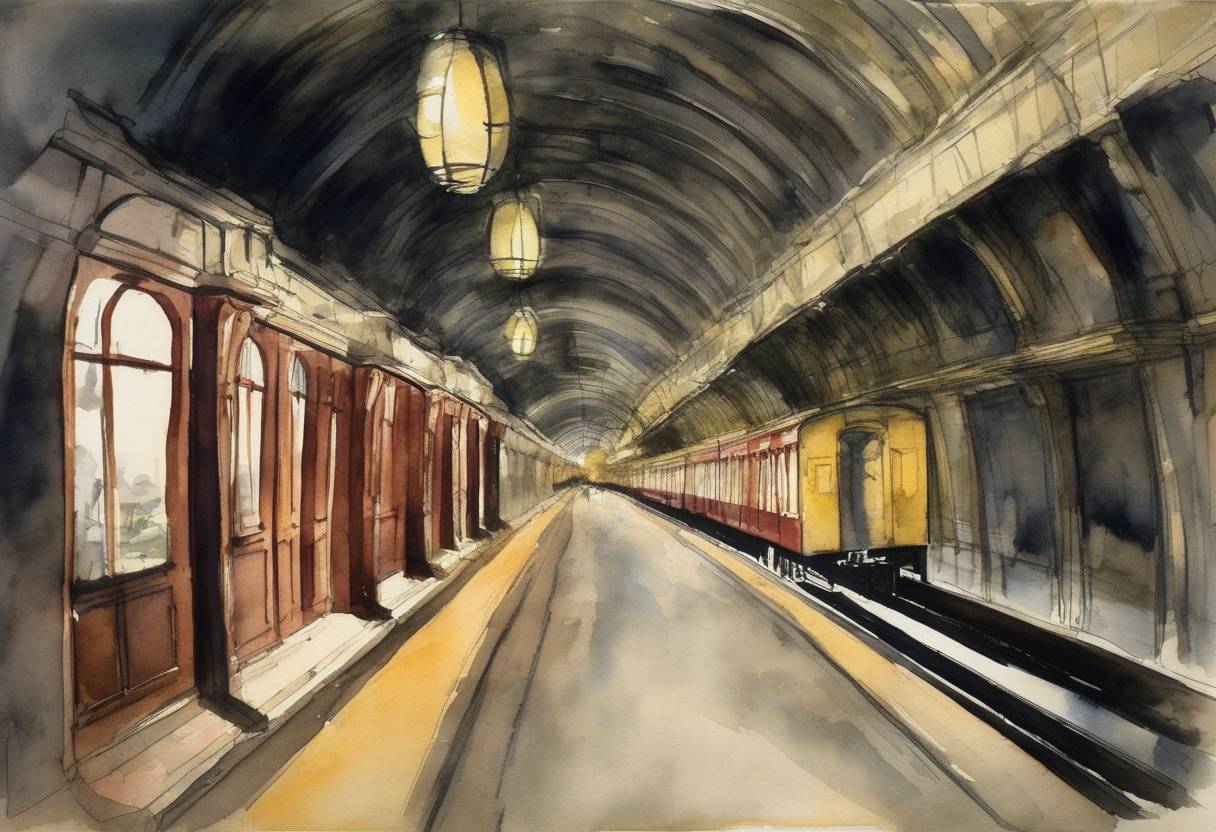
The Glasgow Underground Railway, now referred to as the Glasgow Subway, officially opened to the public on December 14, 1896. This marked a significant milestone in the evolution of urban transportation, as it became the third-oldest underground metro system in the world, following the London Underground and the Budapest Metro.
The need for an efficient public transportation system in Glasgow stemmed from the city’s rapid industrial growth in the late 19th century. As the population increased, so did the demand for reliable and swift transportation options. The Glasgow District Subway Company was established to tackle this challenge, with construction beginning in 1891.
The original loop of the Glasgow Underground comprised a 10.4-kilometer circular route that was entirely underground. It featured 15 stations and operated with twin tunnels, one for each direction of travel. Uniquely, compared to other metro systems of the era, the Glasgow Subway utilized a cable-hauled system powered by stationary steam engines, which was later electrified in 1935.
The opening of the Glasgow Underground had a profound effect on the city, enhancing the ability of citizens to traverse the metropolis quickly and efficiently. The ease of movement contributed to Glasgow’s further urbanization and economic development. Over the years, the system has been modernized and electrified, and remains a pivotal component of Glasgow’s public transportation infrastructure.
The Glasgow Subway’s opening was a testament to the innovative spirit of the late Victorian era, showcasing the possibilities of underground rail systems in urban environments. It remains an enduring symbol of Glasgow’s industrial heritage and continues to serve thousands of passengers daily, illustrating the transformative impact of mass transit systems over a century after its inception.
Source: www.scottish-places.info