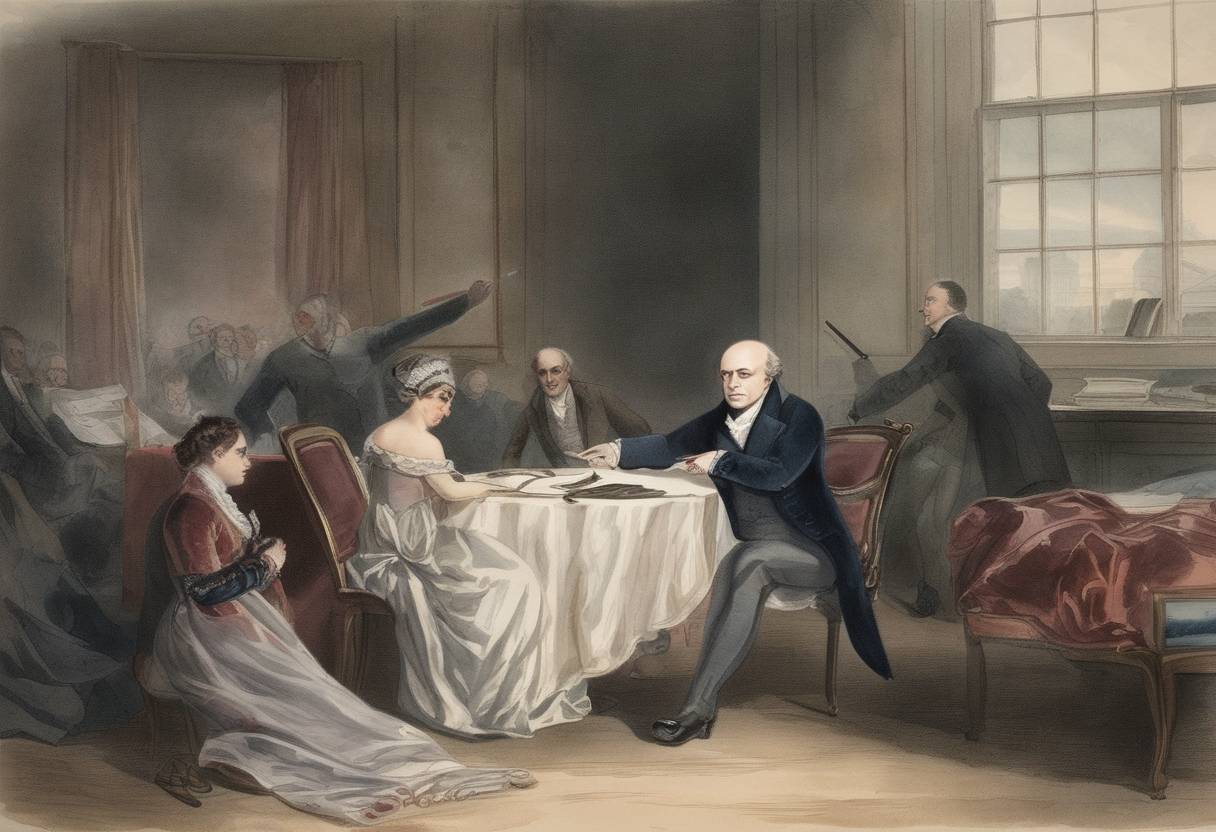
April 26, 1812: Assassination Attempt on British Prime Minister Spencer Perceval
On April 26, 1812, Spencer Perceval, who was serving as the Prime Minister of the United Kingdom, was the target of an assassination attempt. This event took place at a time when Perceval, a member of the Tory party, was embroiled in significant political challenges, including economic difficulties exacerbated by the ongoing Napoleonic Wars and matters concerning domestic unrest.
Context Leading Up to the Attempt
Spencer Perceval had been Prime Minister since 1809 and faced several pressing issues, including the Orders in Council, which were regulations that targeted neutral trade with France and created substantial discontent due to their impact on international commerce. Additionally, Britain was dealing with public dissatisfaction stemming from economic hardship and the suspension of habeas corpus due to fears of internal dissent.
Details of the Assassination Attempt
Despite this background, there are no historical records of an assassination attempt on Perceval’s life occurring specifically on April 26, 1812. Spencer Perceval was, however, later shot and killed on May 11, 1812, by John Bellingham in the lobby of the House of Commons. Bellingham, a merchant with personal grievances against the government, carried out the assassination, an event that sent shockwaves throughout the country.
Historical Significance
Although the non-existent attempt on April 26 did not happen, the assassination that did occur in May marked a significant moment in British history as Perceval remains the only British Prime Minister to have been assassinated. His death highlighted the political tensions and instability of the period, further influenced public and parliamentary discussions regarding governmental policies and the response to dissent.
In light of these historical details, Spencer Perceval’s assassination remains a pivotal event, demonstrating the vulnerabilities even prominent political figures faced in a time of unrest.