The Treaty of Fort Stanwix: November 5, 1768
1765 · Rome, New York, United States
The Iroquois Confederacy signs the Treaty of Fort Stanwix with British colonists.
October 30, 1768
The Treaty of Fort Stanwix is signed between the British government and representatives of the Iroquois Confederacy.
Rome, United States | British Government
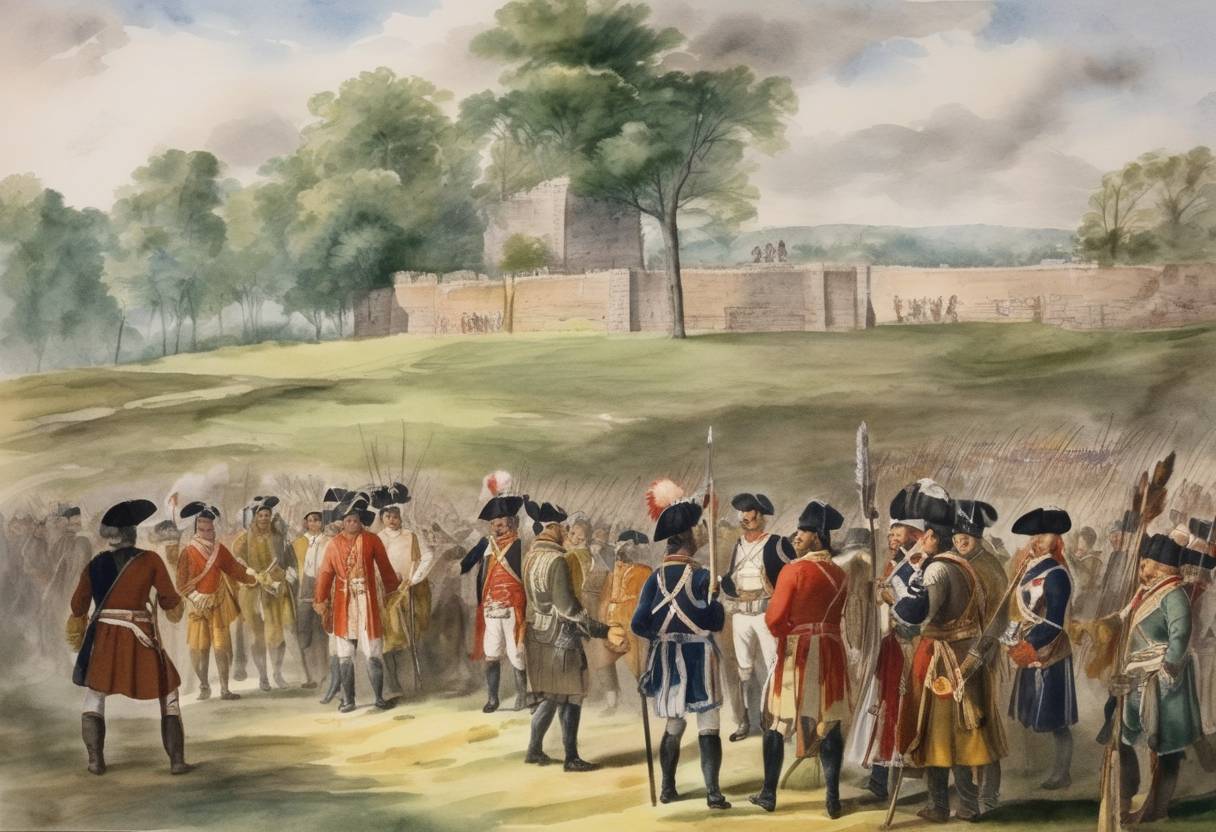
The Treaty of Fort Stanwix was a significant agreement signed on October 30, 1768, between representatives of the British government and the Iroquois Confederacy. The treaty aimed to redefine the boundaries between colonial settlers and Native American lands in the British colonies. In the context of increasing tensions and conflicts over land rights in North America, this treaty was an attempt to provide a clear demarcation to reduce hostilities.
Prior to the treaty, there were frequent disputes and violent encounters between settlers encroaching on Indigenous territories and Native American tribes defending their lands. The Proclamation of 1763, issued by King George III, attempted to manage these tensions by prohibiting settlement west of the Appalachian Mountains. However, the lack of enforcement and clarity regarding boundaries caused continued unrest.
Boundary Redefinition: The treaty established a new boundary line that ran approximately along the Ohio River from western Pennsylvania to Kentucky, effectively opening up lands south and east of the line for colonial settlement while recognizing Iroquois control over lands to the west.
Land Cession: The Iroquois Confederacy ceded a vast expanse of their territory to the British Crown. This included parts of present-day Kentucky and West Virginia, areas that were not directly occupied by the Iroquois but were within their claimed hunting grounds.
Participants: The treaty negotiations were attended by representatives of the Iroquois Confederacy, British colonial officials, and observers from colonial Virginia and Pennsylvania. The British negotiators included Sir William Johnson, the Superintendent of Indian Affairs in the Northern Department, who had established a rapport with several Native American leaders.
Challenges: Although the Iroquois were the primary signatories, other tribes such as the Shawnee and Delaware were also affected by the land cession but were not represented at the negotiations, leading to future grievances.
Expansion: The treaty facilitated westward expansion for colonial settlers, laying the groundwork for future settlements and increasing tensions with western tribes that did not recognize the treaty’s legitimacy.
Indigenous Impact: While aimed at reducing conflicts, the treaty did not account for the interests of all Native American tribes in the region, which contributed to subsequent unrest and coalitions among indigenous groups.
Historical Context: The treaty is considered a precursor to further treaties and land cessions in North America. It highlighted the complex dynamics of colonial expansion and its impacts on Native American societies, setting a pattern of negotiation but often inequitable outcomes for indigenous populations.
The Treaty of Fort Stanwix represents a critical moment in the pre-Revolutionary period, illustrating the tangled relationships between European powers and Native American tribes, as well as the enduring effects of colonial expansion on indigenous lands.
Source: en.wikipedia.org