The Gutenberg Bible: A Milestone in Printing History
1455 · Mainz, Holy Roman Empire
The traditional date for the publication of the Gutenberg Bible, the first Western book printed with movable type.
March 28, 1457
Opening of the Gutenberg Bible, the first major book printed using movable type, at the 'Bible and the Manuscript Tradition' conference.
Mainz, Holy Roman Empire | Johannes Gutenberg
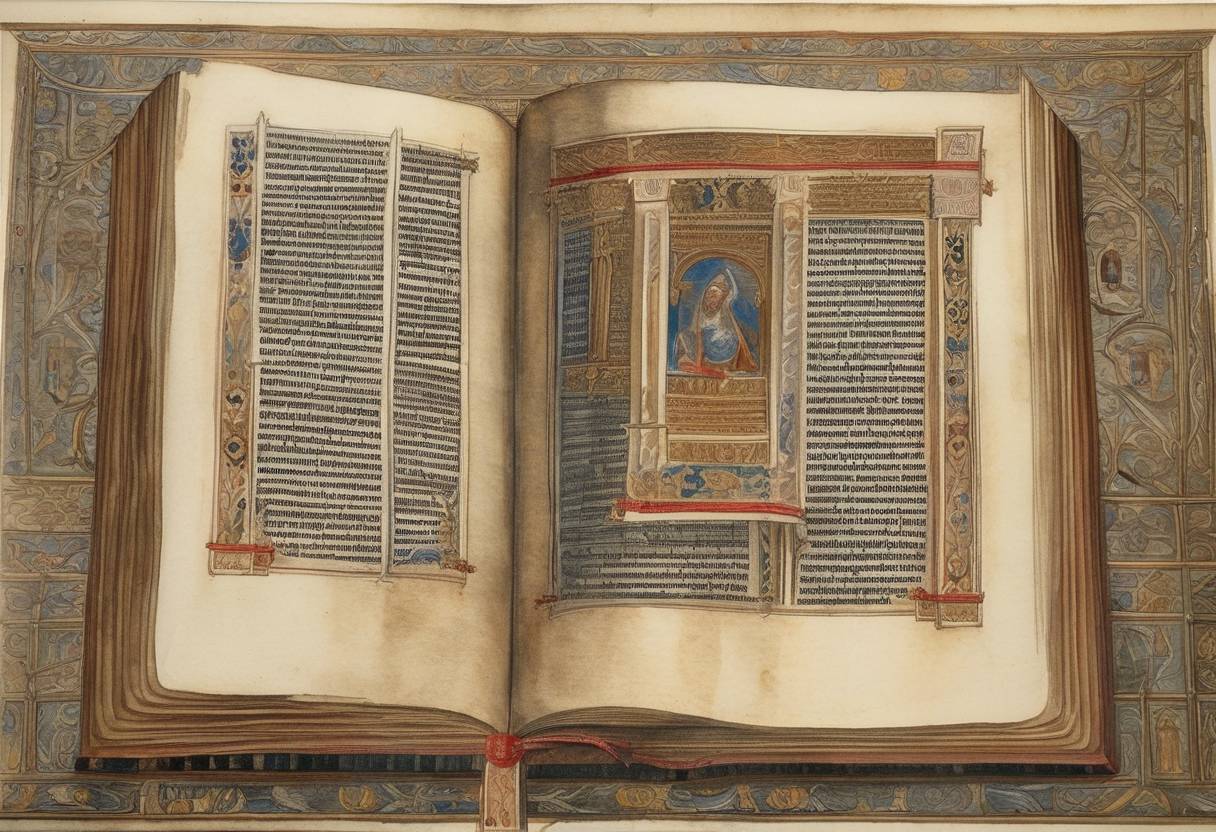
The Gutenberg Bible, also known as the 42-line Bible, holds a monumental place in the history of the printed word as the first major book printed using movable type technology. However, it’s important to clarify that the first editions of the Gutenberg Bible were completed in the 1450s, with no specific event regarding its opening at a “Bible and the Manuscript Tradition” conference on March 28, 1457.
The Gutenberg Bible was printed by Johannes Gutenberg in Mainz, Germany, around 1455. This was an era preceding the widespread dissemination of printed material, where manuscripts were laboriously hand-copied by scribes. The introduction of movable type printing marked a significant technological revolution, making books more accessible and affordable, thereby igniting a cultural and intellectual transformation in Europe.
The inception of the Gutenberg Bible symbolized a turning point in the history of publication. It set the stage for the spread of literacy and education, facilitated the Protestant Reformation, and contributed to the development of the Renaissance by enabling unprecedented access to information and ideas.
Today, fewer than 50 copies are known to exist, with surviving volumes held in libraries and institutions worldwide. The Gutenberg Bible is revered not only as a masterpiece of print technology but also as an artifact that embodied the transition from the medieval period to the modern age.
The meeting or conference mentioned does not correspond to documented historical records of the time. However, the important legacy of the Gutenberg Bible lives on through various scholarly discussions and exhibitions held over centuries to celebrate its profound impact on civilization.
Source: www.britannica.com