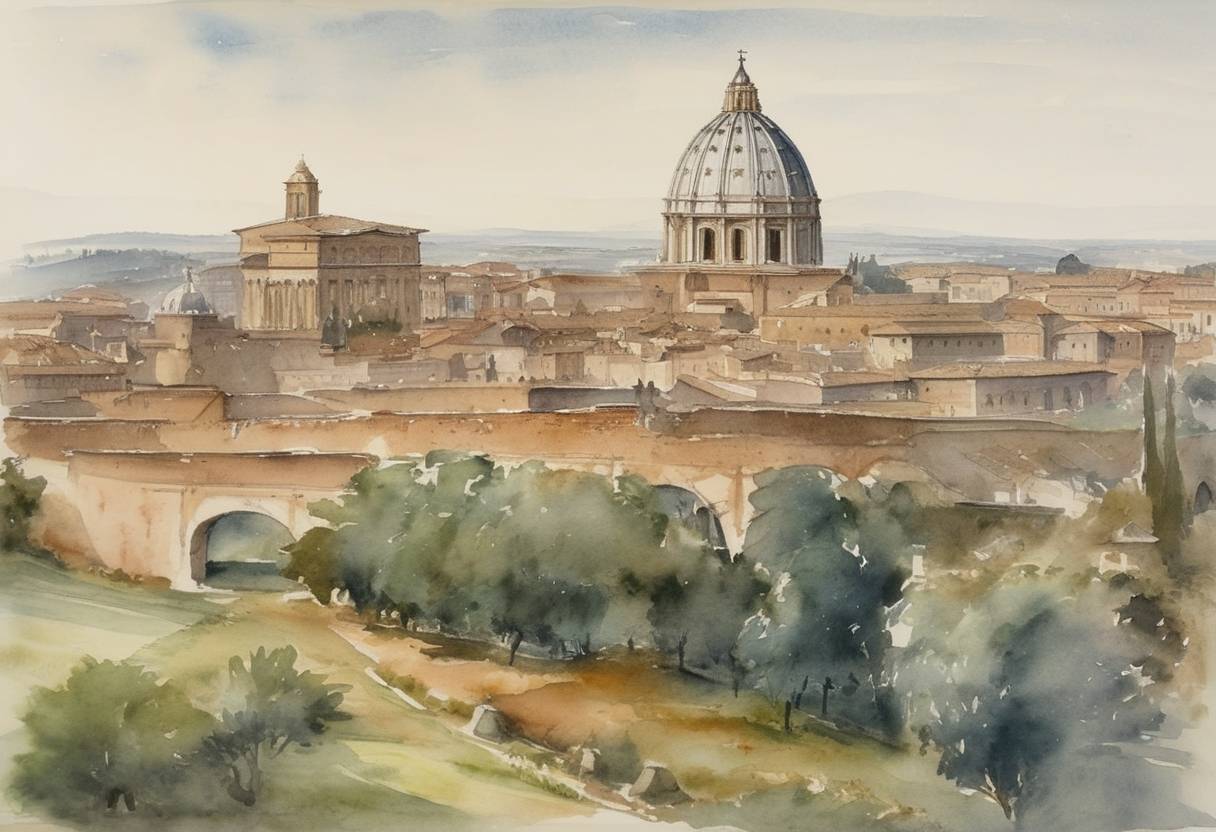
Establishment of the University of Rome by Pope Boniface VIII on April 18, 1303
On April 18, 1303, Pope Boniface VIII issued a papal bull establishing the University of Rome, which holds a significant place in the annals of higher education and the Catholic Church. Known today as “Sapienza University of Rome,” it is among the oldest and most prestigious universities in Europe.
Context
The late Middle Ages was a period of economic and intellectual transformation across Europe. The 13th century saw a surge in the founding of universities, with institutions like the University of Bologna and the University of Paris setting precedents for higher education. These universities not only served as centers of learning but also as hubs for theological and philosophical debates, essential for the development of Western thought.
Founding
Pope Boniface VIII, born Benedetto Caetani, was the head of the Catholic Church from 1294 to 1303. His papacy was marked by efforts to assert the Church’s power. The establishment of the University of Rome was part of this endeavor, intended to strengthen the Church’s influence through education and produce clergy well-versed in law, philosophy, medicine, and theology.
The university was conceived not only as a place for learning but also as a means to consolidate Rome’s prestige as a center of Christian thought. By founding the University of Rome, Boniface VIII hoped to align educational pursuits with ecclesiastical needs, ensuring that the intellectual rigor of the time supported the Church’s theological and administrative functions.
Significance
The founding of the University of Rome was significant for several reasons:
Educational Reform: It contributed to the widespread reform in education, marking a transition from monastic to more secular, urban-based education systems.
Cultural and Political Influence: The institution played a role in bolstering Rome’s cultural and political status, reinforcing its centrality to the Catholic world.
Legacy: Over centuries, “Sapienza” has grown into one of the largest universities in Europe, continuing to be a major center for teaching and research across various disciplines.
Subsequent Developments
The University of Rome has undergone numerous changes since its founding. It became secularized in the late 19th century and has since expanded its curriculum far beyond its original ecclesiastical focus. Today, Sapienza University of Rome boasts a diverse array of faculties that include architecture, engineering, humanities, and sciences, attracting students from around the world.
This institution’s longstanding history reflects the enduring importance of education as a means of both personal and societal development, highlighting the broader narrative of the medieval university’s role in shaping European civilization.