Georgia Declares Independence from the Soviet Union
1991 · Tbilisi, Georgia
Georgia declared independence from the Soviet Union, marking a significant moment in the dissolution of the USSR.
May 26, 1991
Zviad Gamsakhurdia was elected as the first President of Georgia following its declaration of independence from the USSR.
Tbilisi, Georgia | Republic of Georgia
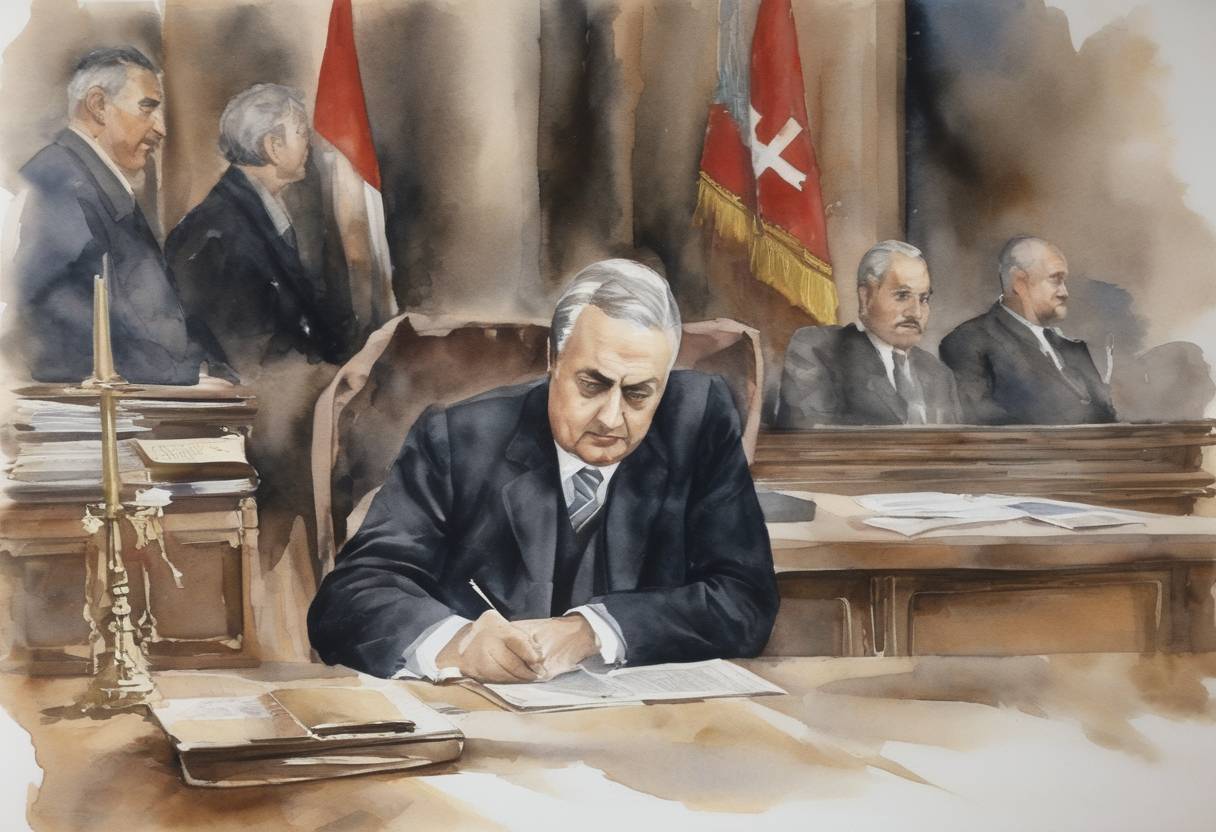
On May 26, 1991, Zviad Gamsakhurdia was elected as the first President of the Republic of Georgia, marking a significant moment in the nation’s history as it declared independence from the Soviet Union. This event was a pivotal step in Georgia’s journey towards establishing sovereignty and self-governance after decades of Soviet rule.
Throughout the late 1980s, the Soviet Union faced increasing internal pressures, with a rise in nationalist movements among its constituent republics demanding greater autonomy and independence. In Georgia, a rich history of cultural identity and desire for self-determination fueled the independence movement. The path towards sovereignty was underscored by traumatic events, such as the April 9 tragedy in 1989, where a peaceful pro-independence demonstration in Tbilisi was brutally suppressed by Soviet troops.
In 1990, Georgia held multi-party elections, which led to the victory of the pro-independence alliance, “Round Table—Free Georgia,” spearheaded by Zviad Gamsakhurdia, a prominent dissident and intellectual leader. This set the stage for a referendum on independence, conducted on March 31, 1991, where an overwhelming majority—about 99% of voters—endorsed secession from the Soviet Union.
Following the successful referendum, Georgia scheduled its presidential elections for May 26, 1991. Zviad Gamsakhurdia stood as the leading candidate, running on a platform that emphasized national unity, cultural revitalization, and international recognition of Georgia’s independence.
Gamsakhurdia won the presidency by securing 86.5% of the popular vote. His election symbolized a broad mandate and marked the establishment of the presidency, a new office in Georgia’s governmental structure. This was significant as it not only represented the culmination of the Georgian struggle for independence but also made Gamsakhurdia the first democratically-elected president in the nation’s modern history.
Gamsakhurdia’s term, however, was short-lived. His presidency faced immense challenges, including political instability, burgeoning nationalism, and economic hardships, which eventually led to a civil war and his overthrow in December 1991. Despite his controversial rule and subsequent exile, Gamsakhurdia’s election was a cornerstone in the re-establishment of Georgia’s identity as a sovereign state.
The election also marked Georgia’s entry into the international community as an independent nation. It fostered a framework for governance based on democratic principles, despite the turbulent years that followed. Gamsakhurdia’s presidency, though fraught with difficulties, remains a crucial point in Georgia’s ongoing narrative of self-determination and resilience in the face of internal and external challenges.
Source: www.britannica.com