Argentina Invades the Falkland Islands: Beginning of the Falklands War
On April 2, 1982, Argentina launched a military invasion of the Falkland Islands, a remote British Overseas Territory in the South Atlantic Ocean. This event marked the beginning of the Falklands War, a conflict that would last for ten weeks and significantly impact both Argentina and the United Kingdom.
Background
The sovereignty of the Falkland Islands, known as “Islas Malvinas” in Argentina, had been a contentious issue for many years. The islands were first claimed by the British in 1833, but Argentina maintained that they inherited the rights to the islands from Spain upon gaining independence. Tensions over the islands had simmered for decades, with diplomatic negotiations failing to resolve the dispute.
In the early 1980s, Argentina was under the rule of a military junta led by General Leopoldo Galtieri. Facing economic difficulties and civil unrest, the junta sought to bolster national pride and distract from domestic issues by asserting Argentina’s claim over the Falklands.
The Invasion
In the early hours of April 2, 1982, Argentine forces landed on the Falkland Islands. The operation, codenamed “Operation Rosario,” involved approximately 600 Argentine troops who quickly overwhelmed the small British garrison stationed there. The British Governor, Rex Hunt, was forced to surrender, and the Argentine flag was raised over the islands.
British Response
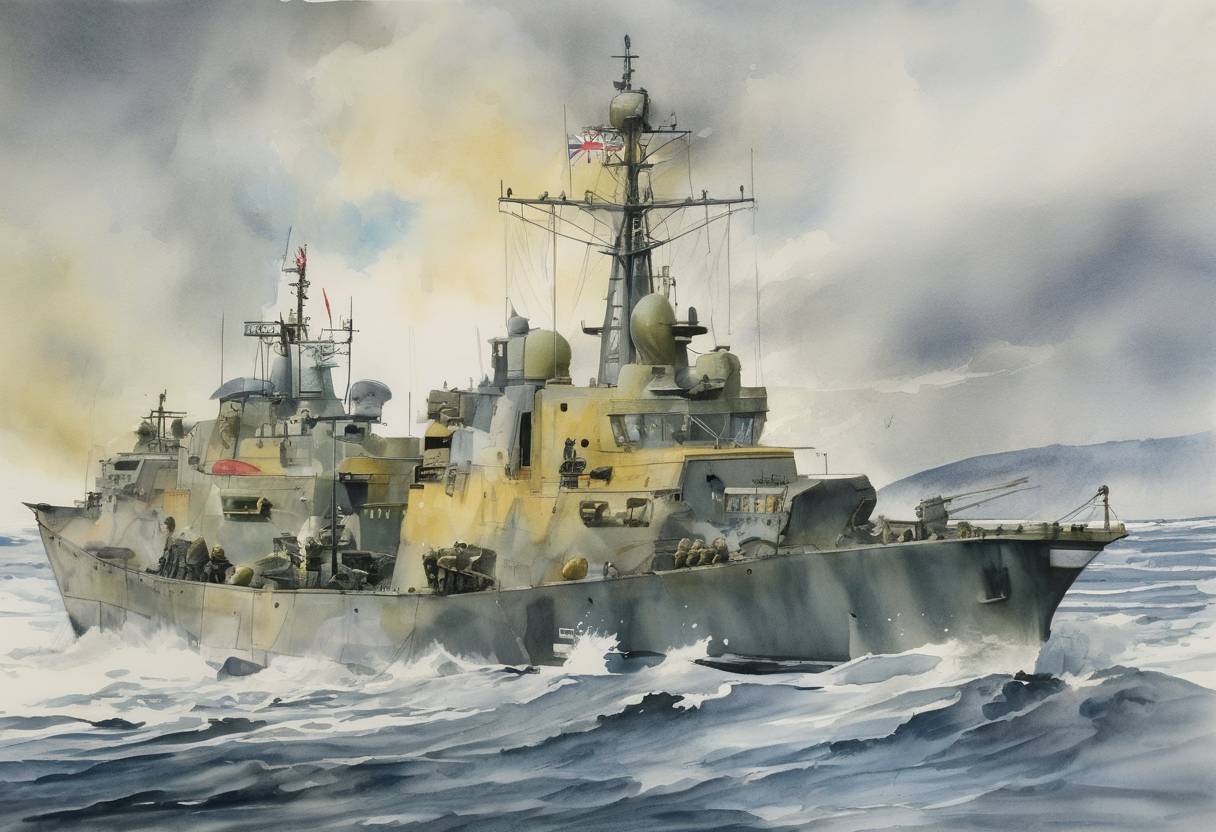
The invasion prompted a swift and decisive response from the United Kingdom. Prime Minister Margaret Thatcher’s government viewed the invasion as an unacceptable breach of British sovereignty. On April 5, 1982, the UK dispatched a naval task force to the South Atlantic to retake the islands. This marked the beginning of a military campaign that would involve air, sea, and land operations.
The Conflict
The Falklands War saw several key battles, including the Battle of Goose Green and the naval engagements around the islands. The conflict was characterized by harsh weather conditions and challenging terrain. Despite these difficulties, British forces gradually gained the upper hand.
On June 14, 1982, Argentine forces in the Falklands surrendered to British troops, effectively ending the conflict. The war resulted in the deaths of 649 Argentine military personnel, 255 British servicemen, and three Falkland Islanders.
Aftermath and Significance
The Falklands War had significant political and social repercussions. In Argentina, the defeat discredited the ruling junta, leading to the restoration of civilian government in 1983. In the UK, the successful military campaign bolstered Margaret Thatcher’s popularity and contributed to her re-election in 1983.
The conflict also highlighted the strategic importance of the South Atlantic and underscored the complexities of post-colonial territorial disputes. The sovereignty of the Falkland Islands remains a sensitive issue, with Argentina continuing to assert its claim, although the islands remain under British control.
The Falklands War is remembered as a pivotal moment in both Argentine and British history, illustrating the enduring impact of colonial legacies and the complexities of international diplomacy.