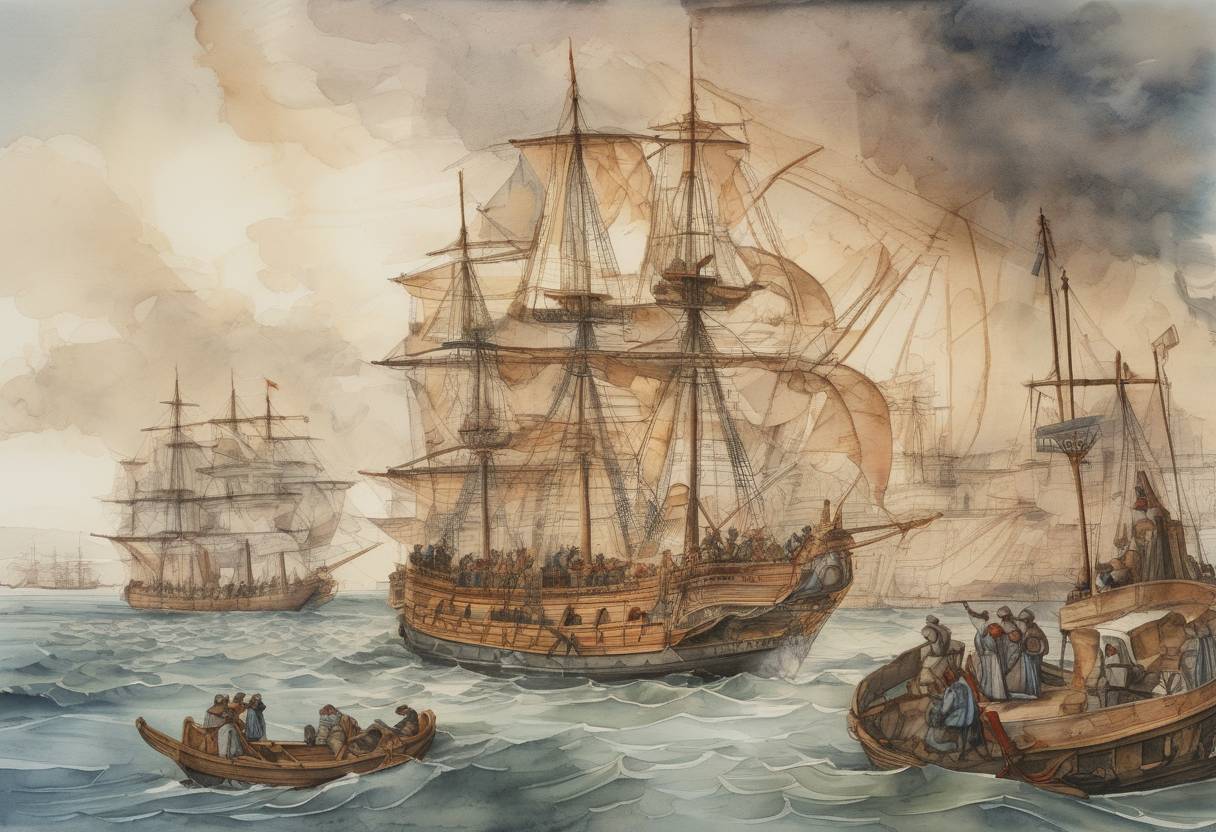
Amerigo Vespucci’s Alleged Departure for the New World on May 10, 1497
On May 10, 1497, the Italian explorer Amerigo Vespucci is traditionally believed to have departed from Cádiz, Spain, on his first voyage to the New World. This event, while significant in the lore of exploration, is surrounded by historical debate and uncertainty.
Context and Background
- Amerigo Vespucci: Born in Florence in 1454, Vespucci was a skilled navigator and merchant. He moved to Spain in the late 15th century, where he became involved in the outfitting of ships for voyages to the New World.
- Age of Exploration: The late 15th century was a period marked by European exploration, driven by the search for new trade routes and territories. Christopher Columbus’s voyages in 1492 had already opened the Americas to European exploration.
The Alleged Voyage
- Departure from Cádiz: According to some historical accounts, Vespucci set sail from Cádiz on May 10, 1497. However, documentation of this voyage is sparse and often considered unreliable.
- Voyage Details: The specifics of this journey, including the ships involved, the crew, and the exact route taken, remain unclear. Some sources suggest that Vespucci reached the coast of present-day Venezuela.
Historical Debate
- Authenticity: The authenticity of Vespucci’s 1497 voyage is disputed among historians. Some argue that the voyage never occurred, citing a lack of contemporary evidence and inconsistencies in Vespucci’s later accounts.
- Vespucci’s Letters: Vespucci’s letters, which describe his voyages, have been scrutinized for accuracy. These letters contributed to the naming of the Americas but are often considered embellished or misdated.
Significance and Aftermath
- Naming of America: Despite the controversies, Vespucci’s accounts played a crucial role in the naming of the Americas. The name “America” was first used in a 1507 world map by cartographer Martin Waldseemüller, who credited Vespucci with recognizing the New World as a separate continent.
- Legacy: Vespucci’s voyages, whether real or exaggerated, symbolize the spirit of exploration and the European expansion into the Americas. His legacy is a testament to the complex narratives that shape our understanding of history.
In conclusion, while May 10, 1497, is traditionally marked as the date of Vespucci’s first voyage to the New World, the historical accuracy of this event remains a topic of scholarly debate. Nonetheless, Vespucci’s contributions to exploration and his role in the naming of the Americas are undeniable aspects of his enduring legacy.