Christopher Columbus Discovers Jamaica - May 3, 1494
1494 · Jamaica, Jamaica
Christopher Columbus discovered the island of Jamaica during his second voyage to the Americas.
February 29, 1504
Christopher Columbus uses a lunar eclipse to frighten indigenous Jamaicans into provisioning his stranded expedition.
Jamaica, Jamaica | Columbus's Expedition
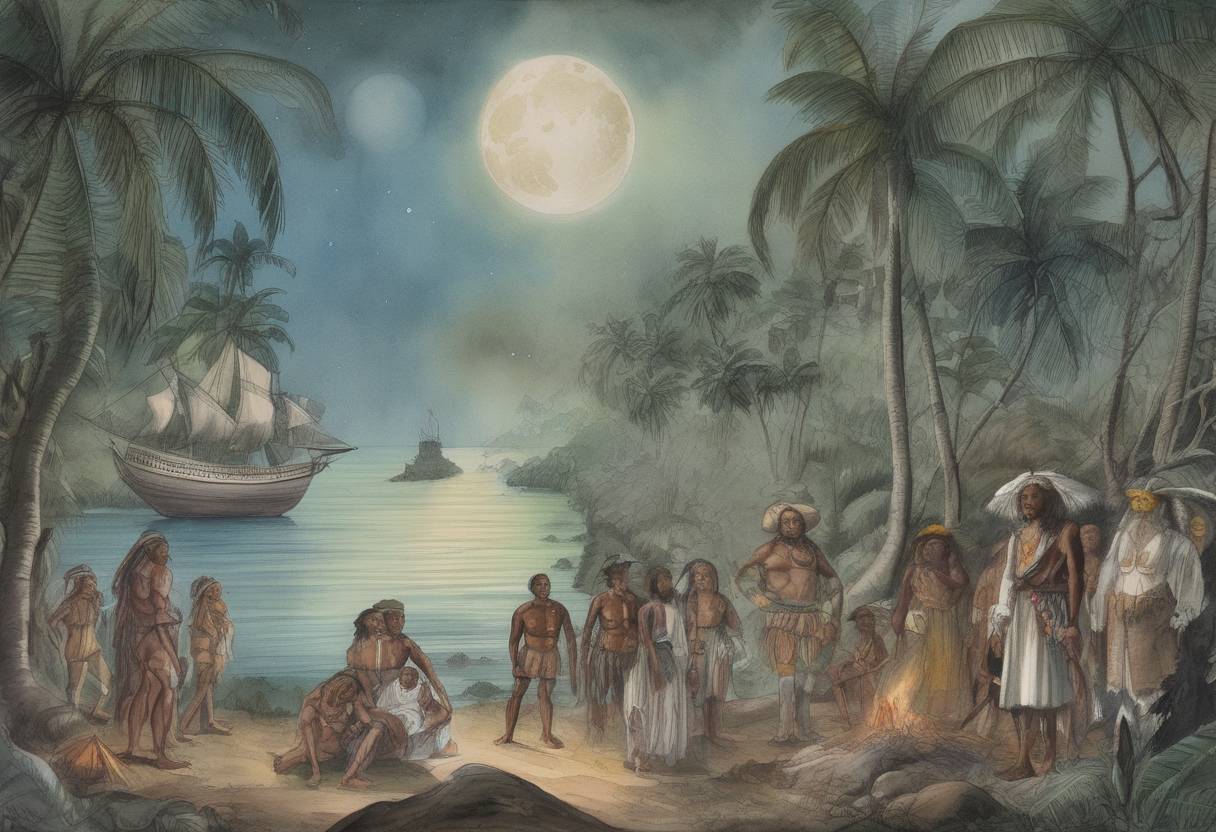
On February 29, 1504, Christopher Columbus, the famed Italian explorer, utilized a lunar eclipse to manipulate and secure provisions from the indigenous people of Jamaica. This event occurred during Columbus’s fourth and final voyage to the New World, which had begun in 1502.
Stranded in Jamaica: By June 1503, Columbus and his crew found themselves stranded on the island of Jamaica. Their ships were severely damaged and unseaworthy, leaving them unable to continue their journey or return to Spain. The crew was dependent on the local Taíno people for food and supplies.
Deteriorating Relations: Initially, the Taíno were hospitable, but as months passed, their willingness to provide for Columbus and his men waned. The Europeans’ demands strained the resources of the indigenous people, leading to tensions and a reduction in the supplies being offered.
Columbus’s Knowledge: Columbus was aware of an upcoming lunar eclipse, having access to astronomical tables prepared by the German astronomer Johannes Müller von Königsberg, known as Regiomontanus. These tables accurately predicted the eclipse.
The Plan: Columbus devised a plan to exploit this natural phenomenon to his advantage. He informed the Taíno that his Christian God was displeased with their lack of cooperation and would show a sign of His anger by making the moon disappear.
The Eclipse: On the night of February 29, 1504, the lunar eclipse occurred as predicted. As the Earth’s shadow began to cover the moon, the Taíno were reportedly frightened and believed Columbus’s warning.
Restoration of Supplies: Terrified by the eclipse, the Taíno agreed to continue providing Columbus and his crew with food and supplies. Columbus promised that the moon would return to normal if they complied, which it did as the eclipse ended.
Rescue and Return: Columbus and his men remained stranded until June 1504, when a rescue ship finally arrived from Hispaniola. They returned to Spain later that year, marking the end of Columbus’s voyages to the Americas.
Manipulation of Knowledge: This event is a notable example of how European explorers used their knowledge of science and astronomy to manipulate indigenous populations during the Age of Exploration.
Cultural Impact: The incident highlights the cultural and technological disparities between Europeans and indigenous peoples at the time, often leading to exploitation and misunderstanding.
Legacy of Columbus: While Columbus is often credited with opening the Americas to European exploration, his interactions with indigenous peoples were frequently marked by exploitation and conflict, as exemplified by this event.
This episode is a small but telling part of the broader narrative of European exploration and its profound impacts on the indigenous cultures of the Americas.
Source: www.history.com